

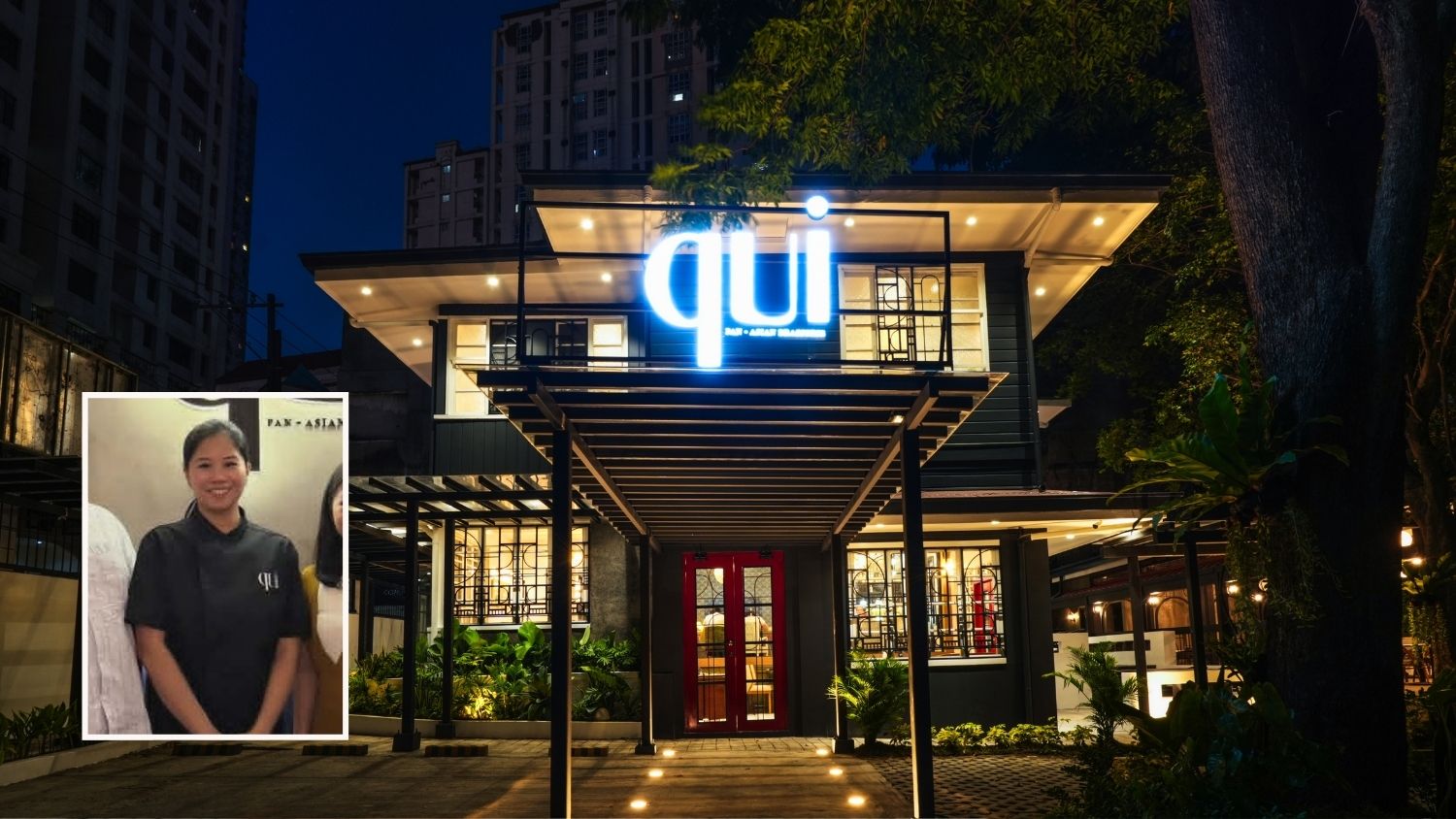


Rachelle Panlaqui, founder and owner of Qui Pan-Asian Brasserie, has tips and advice for people who have plans to put up their own food business.
These lessons she learned from years of experience as an employee and as a business owner.
She opened her restaurant in Valencia Street, Quezon City, in 2023, but she has been in the food industry since 2010.
Her family owns a group of companies that she and her two siblings manage, which includes other restaurants and a food farm where they source some of their ingredients.
Apart from that, Rachelle used to be a government employee. She worked as the chief of staff of a public servant, and had been exposed to a working environment that required her to multi-task oftentimes.
She was mentored by her boss who had had multiple businesses.
As a side hustle, her mentor tapped her to work in some of his businesses, and this taught her invaluable business lessons.
“More than his chief of staff, ako yung humahawak ng rice business niya, real estate property, [poultry],” Rachelle explained.
“Pero hindi naman namin pinagsasabay iyon. Pag government, government kami…
“Pero pag negosyo sa gabi, negosyo sa gabi…
“So ako yung katabi niya lagi, even when going to other countries. So nakuha ko yung acumen niya.”
There was also a time when she had to juggle being a government employee and as a business owner as she started her business just before she stepped away from her chief-of-staff duties.
These days, Rachelle is mainly focused on running her restaurant business, combining all the things she learned as an employee and as a restaurateur.
In an interview with PEP (Philippine Entertainment Portal), Rachelle shared the important lessons she learned in running a food business.
Read: Qui Pan-Asian Brasserie: Pinoy favorites, elevated to new heights
1. LOOK FOR SUFFICIENT CAPITAL
First, Rachelle emphasized the importance of having enough capital not just to start a business but to ensure that there is enough funds to keep it up and running.
Venturing into a business is a risk, and Rachelle does not believe in using all her savings in her business venture.
She opted to take a loan.
Taking cue from her mentor, she said that it pushed her to be on her toes and make sure that her business is earning given her financial responsibility.
“Pag nangutang ka sa iba and you have a sense of responsibility and you have to pay it, wala kang choice, gagalingan mo talaga.
“And then your savings, kailangan gamitin mo yun para sa sarili mo. Pag nag-business ka at nalugi, that's your fallback.
Read: Step-by-step guide: filing for birth certificate correction
2. PATIENCE IS A VIRTUE
In most businesses, patience is an important trait for entrepreneurs.
Patience builds endurance to ride out the setbacks and to stay committed despite trials and errors.
Success won't definitely come overnight.
Rachelle explained, “Kasi, usually, for a restaurant business, para mag-ROI [return of investment] ka, it will take you three years, na [kung mainipin ka] puwede mo na lang siyang in-invest [sana] sa stocks.”
In her case, she and her siblings invested millions for their Filipino-restaurant-with-a twist dining concept.
And she knows that it would take a lot of hard work and right marketing strategy to make more people know about Qui's sumptuous and extensive food menu.
3. GRIT AND LEADERSHIP
Putting up a business is not an easy feat.
Rachelle admitted there were times when she would have sleepless nights because of her overwhelming responsibilities.
“Yung parang you're doubting yourself every day na, ‘Kaya ko ba ito?’ Kasi more than the restaurant, you have people with families to feed.
“So kailangan talaga resilient ka sa lahat ng bagay, no matter what happens… kahit nalaglag ang moon diyan, ang sun, [the] show must go on."
With the current economic crisis, she acknowledges that she and her team are working on creative and strategic ways to address price increase in supplies and still maintain the high standard of service in their restaurant.
4. LEARN TO DELEGATE WORK to your staff
Rachelle explained that she is very hands-on with her business, but that does not mean she solely handles troubleshooting day-to-day concerns.
Currently, Qui Pan-Asian Brasserie employs 30 employees.
So when there's issue among her staff, she pointed out: “I let HR handle yung ganung matter.
"Ang natutunan ko sa business is that, as the owner, you cannot directly call the attention of your staff.
"It has to be procedural sa HR kase hinire ko sila, I trust them to do their job."
Elaborating: “So hindi ako puwedeng mag-micro-manage.
“Dati kasi ganun ako. So, as I go along, natutunan ko na I have to trust them.”
While she demands excellence from her employees, she does not expect perfection, “Kasi nagkakamali naman talaga sila.”
5. BE SYSTEMATIC WITH APPROACH BUT BE FLEXIBLE
Rachelle went on to say that her years of being a government employee taught her to be systematic.
“Sa government kasi, ang training sa akin, hindi ako puwedeng magkamali, kung hindi makakasuhan ako. So, I do everything on paper.”
However, she learned that it's different when it comes to hospitality industry.
As a business owner, Rachelle said she became more flexible because unexpected things could happen on a daily basis.
Citing how she learned to handle poor reviews on her restaurant, she explained, “Kasi pag nakakita ako ng one-star review sa Google Review, hindi na ako makatulog.”
Eventually, she learned that it's okay to allow herself to feel bad for a day, then she makes sure to find solutions for improvement the next day.
Emphasizing the need for collaboration and cooperation from her employees: “Kinabukasan, imi-meeting ko lahat tao, ‘What happened? O, anong tingin mong solutions?'
"Sila lang ang magsasabi ng solutions. Sila din ang gagawa. ‘Hindi ako nagsabi, kayo. Sige, gawin niyo.’”
Rachelle committed to deliver the best food and service through her restaurant, and she followed through, “Kaya if you see yung review sa Google, it's 4.8.”
6. LEARN ABOUT FINANCIAL MATTERS
As a proud Kapampangan who grew up in a family who loves festive food, Rachelle has a natural inclination to be hands on with her restaurant's menu.
But she learned to prioritize and focus on what she needs to do as the owner.
“Usually, kasi sa restaurant, ang alam nila magaling ka lang magluto, you know the kitchen, no?
“In restaurant, mas finance, number one.”
Talking about juggling her responsibilities, she admitted, “Ang hirap maging chef, at the same time, businessman.”
She explained that as a chef, she works with fellow chefs who aims to be creative with their creations for the menu.
But alongside her passion is the reality of budget consideration.
“So the decision-making is very hard. Ang hirap ng trabaho kasi babalansehin.
“Yung mga tao mo sa kusina, they're all creative. Paano mo hindi sisirain yung moral nila dahil ito ang trabaho nila...
“Pero as businessman, we need to thrive, kung hindi mawawalan din tayo ng trabaho.”
7. LEARN MARKETING
Another important lesson that Rachelle shared that she learned about the food business is marketing.
“Dati kasi, ang sarap ng pagkain namin pero hindi siya nalaman ng lahat because as businesswoman, ginagawa ko, tinitipid ko yung marketing. Pero hindi [dapat],” she said.
Rachelle hired the services of a marketing agency to help her market her restaurant. She hopes this effort will expand potential customers.
In sum, Rachelle said venturing into business is not just a mastery of one thing but “an orchestra” of different factors for it to be sucessful.
“Kapag nasa hospitality industry ka, it's finance, operation, marketing, and procurement. Hindi puwedeng gumalaw ng isa lang."
Smiling, she added, “Kung papasok ka sa hospitality industry, it's not for the faint-hearted. It's for the amazon."
But getting positive reviews from customers makes all the hard work, tears, and challenges a worthwhile experience.
And this, she said, gives her keep going.