


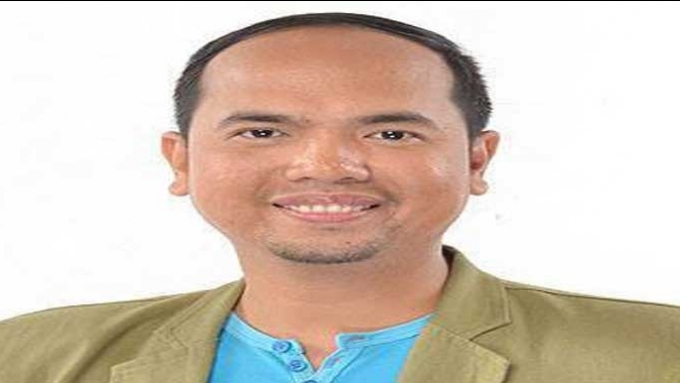
When choosing an aesthetic clinic, Dr. MJ Cadigal-Ebrahimi has a reminder: it should not only enhance beauty, but also prioritize safety.
The treatments and services it offers should go beyond being skin-deep and take into account a patient’s overall well-being.
Dr. Cadigal-Ebrahimi, a doctor to the barrio who worked in a government hospital for 13 years, is a board-certified aesthetics physician under the American Academy of Aesthetic Medicine (AAAM).
According to LinkedIn, AAAM is an organization that trains licensed physicians with scientific and clinical interest in aesthetic medical field of their practice.
She graduated from the University of St. La Salle in Bacolod, Negros Occidental.
In a recent media conference with select members of the press, Dr. Cadigal-Ebrahimi reveals that part of her advocacy is to prevent misinformation about aesthetics treatments.
“The misinformed clients are the dangerous clients,” she says.
She adds that, in her experience, some clients come to her clinic requesting procedures they have read about or watched online but do not fully understand.
“Kasi sometimes sabihin nila na, ‘I want to...’ they’ll say fillers instead of toxin.’”
Fillers are injectable gel-like substance used as dermal fillers, while toxin usually refers to Botulinum toxin, or Botox, that mainly addresses wrinkles in different parts of the body.
“So, you have to sit down with them,” says Dr. Cadigal-Ebrahimi.
“It's up to the doctor on how they educate the patient. Be there for your patient, to guide them, 'cause the moment that you let your patient say, ‘Oh, I want this,’ but in reality, you know she doesn't need that…you let your patient become the doctor.
"And you won't get the right result.
“You, as a doctor, are the one with more knowledge about anatomy, about the safety, about the physiology, how it works...”
She also highlights the value of consulting a registered medical practitioner when it comes to treatments to make sure they are done right.
“You cannot correct one area and leave the other area because our muscles are all interrelated. The fibers of our muscles are all connected.”
She discourages people or patients who heavily rely on the Internet for information.
“Pag ganoon, di ba, if you can get everything on Google, e, di, hindi na sana kami nag-aral,” Dr. Cadigal-Ebrahimi points out.
“It's good that you let your patients really get to know what you can provide them.”
For her, treating patients entails making them fully understand what they are getting themselves into.
“Me, as a doctor, actually I feel obliged to really educate my patients like, ‘Oh, this is what we’re gonna do,’ because sometimes, a patient would think, ‘Oh, I need this because that's what I see in TikTok, that's what I see on Instagram.’
“So, if you are actually an experienced, more principled, and valiant physician, you can actually guide your patients to what are they going to get through.”
Read: Why more and more Filipinos choose live-in set-up
BEAUTY DOCTOR STRESSES SAFETY IS A PRIORITY
Having practiced as a physician for over a decade, Dr. Cadigal-Ebrahimi naturally places great importance on patient health.
Upon becoming a licensed aesthetics practitioner, she integrated this medical background into her practice, creating carefully curated treatments tailored to each patient.
“First, I do proper consultations. I sit down with them. I listen to them; what are their concerns…
“It's not just only making them beautiful, but it's how you make them feel. It's the experience, what they feel if… You really have to take time to listen. So, it's not just only, ‘Oh, you come here and then we'll do this treatment. You pay us.’ No, that's not how it is.
“Because not all treatments [are] the same. Every patient needs a curated treatment.”

Read: Viral jeepney driver’s son among DPWH's new engineers
ADVICE FOR PATIENTS
With the proliferation of beauty and aesthetic clinics, Dr. Cadigal-Ebrahimi warns the public about dubious providers and services.
She also laments the lack of regulation in the country when it comes to cosmetic and aesthetic practitioners.
Her concerns are echoed by the Philippine Dermatological Society (PDS), the country’s leading professional organization for dermatology and cosmetic skin care.
In an article published on the PDS website in April 2025, it warned the public about the risks of availing injectable treatments from non-doctor practitioners in the country.
Simply put, these cases constitute the “illegal practice of medicine.”
This warning relates to reported cases in which procedures and treatments went wrong because they were performed by unqualified providers.
In many instances, such malpractice resulted in irreversible damage to patients.
Dr. Cadigal-Ebrahimi reminds patients to first find out if their provider is legitimate.
“That is the best thing. Number one thing you have to know, who is doing the treatment. Is this person a doctor? A trained doctor? Licensed?
“'Cause anybody can just wear a white coat nowadays and then they can just buy an online certification of saying doctor of aesthetics medicine, but they're not really registered physicians.”
Another reminder is to check the records of the center to make sure it is legit.
The PDS article highlights the importance of avoiding home-based or non-medical settings for procedures.
Dr. Cadigal-Ebrahimi also points out that another danger in questionable aesthetic centers is the use of fake machines.
She explains that one common indicator—seen in many cases—is the surprisingly low price of their services.
According to her, these machines may be refurbished or fake and put the patient’s safety at risk.
“Because anybody can just open a center. Anybody can just invest into devices. But how sure are we that these devices are legit?”
PDS has a similar reminder: “Prioritize safety over cost. Lower prices may mean compromised quality and higher risks.”
Dr. Cadigal-Ebrahimi takes pride in her clinic in Bacolod City, the Delaram Aesthetics and Laser Center, which uses authentic machines from BTL Aesthetics Philippines.
She emphasizes, “So your patient doesn't have to worry of getting burned or the machine will right away flare up.”
Most importantly, "...it's not just the price that you pay. It's, more of your health, right?”