


Did you know that many women experience some degree of bladder leakage at some point in their lives? A weak bladder resulting in incontinence or uncontrolled urination is more common than you think. In fact, it can affect anyone at any age, young or old, but women far more so than men.
Some women learn quickly to bring bladder leakage under control by sitting down or crossing their legs tightly. While for others, incontinence may be a sudden urge to go to the toilet, followed by significant leakage.
Understanding the type of bladder leakage (or urinary incontinence) you have, what causes a weak bladder, and how to fix or, at the very least, manage it should be a priority so that your lifestyle is impacted as minimally as possible.
3 MAIN TYPES OF BLADDER LEAKAGE (OR URINARY INCONTINENCE)
1. Stress incontinence is physical stress or pressure on your internal organs such as a cough, a sneeze, or even a laugh when your bladder is full.
2. Urge incontinence is the inability to hold on for more than a few minutes once you have a sudden overwhelming need to urinate (may pakiramdam pero hindi na mapigilan na pag-ihi).
3. Overflow incontinence is characterized by leaking with no warning or urge to urinate (kawalan ng pakiramdam na ma-iihi kaya hindi na mapigilan).
Having a weak bladder is something that you shouldn’t feel embarrassed about. If your bladder leakage is heavier, it’s quite simple to manage with the use of incontinence products like the DEPEND® Adult Diapers, which are specifically designed for bladder leakage protection.
You can also be prepared for mishaps by keeping a change of clothes and underwear handy just in case.
WHAT CAUSES BLADDER LEAKAGE?
There are lots of potential causes of a weak bladder and subsequent bladder leakage. They can range from weakened pelvic muscles from childbirth to bladder or prostate cancer.
Most of the time though, your bladder leaks simply because your pelvic floor muscles have weakened over time because of pregnancy, childbirth, and the onset of menopause.
Here are some of the other things that can lead to bladder leakage:
- Pregnancy
- Childbirth
- Menopause
- Diabetes
- Age
- Obstructions in the urinary tract (e.g. tumors)
- UTIs (urinary tract infections)
- Bladder infection
- Kidney infections
- Prolapse
- Bladder cancer and prostate cancer
- Bladder and kidney stones
- Enlarged prostate
- Nervous system afflictions including spinal cord injury, stroke, Parkinson’s disease, dementia, multiple sclerosis
- Nerve damage or trauma caused by surgery or certain therapies
- Spinal injury
- Trauma to the pelvis (e.g. due to a car accident)
- Obesity
Do note that for men, the primary reason for incontinence is due to an enlarged prostate. You should see your doctor as soon as possible to ensure your symptoms aren’t masking something more serious.
HOW TO STOP BLADDER LEAKAGE?
As you can see from the long list above, there are many things that can cause a weak bladder and subsequently lead to bladder leakage. Consequently, there are quite a few options to consider depending on the type of incontinence you have.
The first thing to remember is that you’re not alone and that this common condition is easily managed and can, in some cases, be cured altogether.
However, if you find the following methods aren’t helping, there may be another underlying medical problem affecting your particular instance of bladder leakage. Have a chat with your doctor if you’re concerned about it.
Here are some solutions that can help a weak bladder.
1. Use incontinence products
One of the simplest ways to manage incontinence, whether temporary or ongoing, is to use DEPEND® Adult Diaper products. It doesn’t matter if your bladder leakage is light or quite heavy.
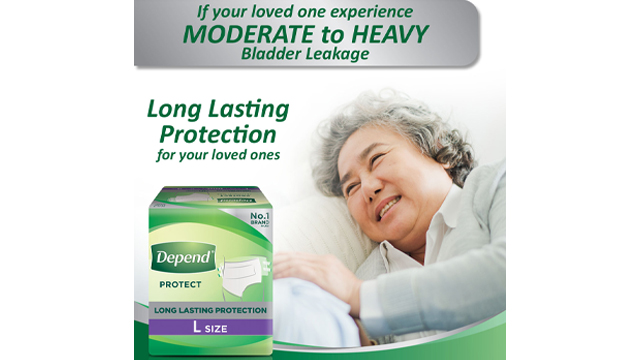
DEPEND® Adult Diaper products come in two formats:
- Diaper Pants – soft, comfortable, and fits like your regular underwear
- Tape Diaper – keeps you dry and is super absorbent that can last up to 12 hours
2. Make some lifestyle changes
- Make it easy to get to the toilet: Make sure there are no obstacles preventing you from getting to the toilet quickly.
- Cut out or reduce your caffeine intake: Coffee, tea, cola, and some painkillers all contain caffeine, which has a diuretic effect (makes you urinate more often). Caffeine itself may also directly stimulate the bladder making urgency symptoms worse.
- Refrain from drinking alcohol: Some people are affected by alcohol in the same way that others are affected by caffeine.
- Drink normal quantities of fluids: Drinking less may seem like a good idea, but in reality, it makes your symptoms worse. That’s because your urine becomes more concentrated, which can irritate the bladder muscle. Aim to drink about two liters of fluid per day — about six to eight cups, and more in hot conditions.
- Go to the toilet only when you need to: You may think it’s a good idea to go often so as not to be "caught short," but all this does is promote an overactive bladder and make your symptoms worse in the long run. It also means your bladder becomes used to holding less urine making it even more sensitive and overactive at times when you need to hold on a bit longer.
- Lose weight: If you’re overweight, there is an additional strain on your pelvic floor muscles, so losing some weight can improve your symptoms.
- Check your medications: If you’re taking medications like antihistamines, tricyclics (antidepressants), or blood pressure tablets, they can interfere with muscle contraction in the bladder and urethral sphincter, making incontinence even worse. Ask your doctor about bladder-friendly alternatives.
3. Do Kegel exercises
Kegels are a mainstay of incontinence therapy. Women with stress incontinence who consistently do Kegel exercises experience a 70% improvement in symptoms. Experts believe building these muscles may also help with urge incontinence.
4. Train your bladder
For those with urge incontinence, bladder training may help. With this form of behavior therapy, you make yourself wait when you feel the urge to urinate, gradually increasing the intervals between bathroom trips.
5. Take a medication
If things don’t improve with bladder training, there are some medications called antimuscarinics (also called anticholinergics) that your doctor may recommend. Ask your doctor about it beforehand and do not self-medicate.
Don’t let bladder leakage restrict your life!
DEPEND® Adult Diapers are highly absorbent and are expertly designed for the ultimate and discreet comfort that you deserve. Buy starting today until December 31, 2020, and get 30% off on any DEPEND® Adult Diaper products in Lazada!
For more details on the causes and how to stop uncontrolled urination or incontinence, you may visit DEPEND® Adult Diaper’s website here.
PEP.ph makes no warranties or representations regarding the completeness and/or accuracy of the information in this article. The information should be used only as a guide and should not be relied upon as a substitute for professional medical or other health professional's advice.

Read the story? Tell us what you think!
-
0

 Didn't know that!
 -
0

 Hmmm....tell me more.
 -
0

 How and where can I get this?
 -
0

 I’m already a loyal fan!
 -
0

 Will share this ASAP!