



The woman who arrives at the Summit Studios complex one rainy Saturday afternoon in late August is small and unassuming, barely reaching five feet.
And yet the people tasked to shoot her, luminaries in their respective fields (and all undoubtedly taller than she is), have adjusted their own frenetic schedules at least four times to match her volatile calendar.
They are determined to style, photograph, and make her up, not to mention control the production design around her pictorial, declaring openly that they are thrilled to be working with her.
She is embarrassed by all the fawning attention, insisting that she be treated like everyone else. Yet you get the sense that she knows the special place she occupies in pop culture—nay, Philippine culture as a whole—and that she expects, without throwing her weight around, to be accorded the respect she deserves.
The woman sheepishly confesses that she never knows what to do during photo shoots. She prods us to tell the young photographer with the bohemian air to give her directions about holding a pose—tilting her head this way, freezing her arm that way—because these don’t come naturally to her.
But the same photographer has just told us that you can spot natural-born models by the way they move their feet. And this diminutive woman’s feet—a child’s size two-and-a-half!—instinctively know where to turn, so that her body faces the optimum angles to catch the light, and they know how to shuffle around quickly in sneakers with the heels turned inward, to cut the downtime in between setups.
On top of that, when she is told to hold that look—bemused, pensive, gay, in control, sophisticated—she not only gets it just right, she adds subtle variations of these emotions for the photographer to play with.
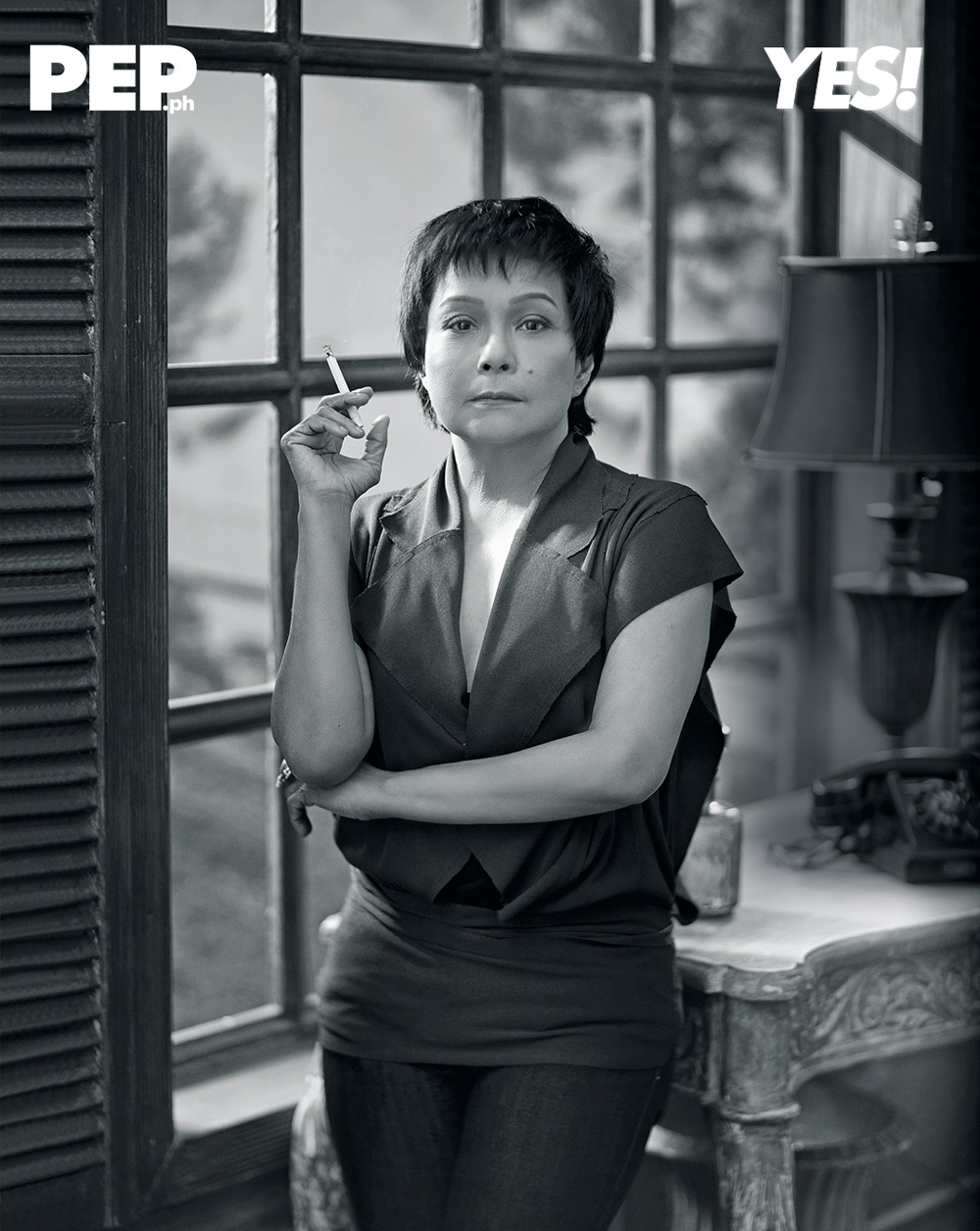
Needless to say, this afternoon’s photographer, who was not even born when this movie star shone brighter than anyone else in this showbiz country, is elated at the results.
It has been close to a month since August 2, 2011, the day she came home on Philippine Airlines Flight 103, at 4:11 a.m., to a euphoric crowd at the NAIA Centennial Terminal. But Nora Aunor’s ability to generate excitement has not dimmed.
Nora Cabaltera Villamayor was born on May 21, 1953, and almost from the start she seemed destined for a life of dramatic lows combined with ecstatic highs.
She was born to abject poverty in the town of Iriga, Camarines Sur, a sickly child prone to chills and convulsions. When she was seven years old, she experienced a particularly horrible convulsion during which she coughed up blood. But the child recovered and suffered no more fits after that.
By all accounts, Nora was a first-honors student from Grade 1 to 5. But she discovered pop music and movies in sixth grade, at which point she started singing.
In 1963, during her first year of high school, her elder sister, who was then in senior year, needed 20 pesos to complete her tuition. Nora joined the Darigold Jamboree singing contest in Naga, and won exactly that amount when she was proclaimed winner.

But Nora’s win did not change her circumstances. Her family still had to deal with hunger and starvation every day. One night, when her Papay still hadn’t returned from the train station with his daily earnings as a porter, Nora walked from store to store, begging to be given rice on credit.
The difference now was that Nora’s victory fueled sly digs from storeowners telling her to join more contests so that she could pay for the rice. To make matters worse, when she finally got the rice, she spilled some of it and was forced to pick up every single grain before she could return home.
And when she got back to the family’s two-room nipa hut, her mother pinched and scolded her for her carelessness. The weeping 12-year-old began to wonder if her victory in Naga was more of a curse than a blessing.

Swinging between boon and bane was to be a recurring theme in Nora’s life.
In the article “Golden Girl,” originally published in a July 1970 issue of the Philippines Free Press and reprinted in the book Nora Aunor and Other Profiles (National Book Store, 1977), National Artist Nick Joaquin, writing as Quijano de Manila, put it this way: “It looked as if the poor, thin, homely child had, after all, a fairy godmother to take care of her. It must be a funny sort of fairy godmother because when this fairy godmother grants a blessing she always mixes a heap of trouble with the good fortune.”
Nora herself has her own explanation for that “heap of trouble” that has been her lot since birth. In an interview with YES!, award-winning scriptwriter Ricky Lee recalls Nora telling him that her mother, when pregnant with Nora, had taken a liking—in local parlance, ipinaglihi—to the Mater Dolorosa, the weeping image of the Virgin Mary with seven daggers stabbed into her heart.
Ricky says Nora told him: "Kaya, kuya, pag tinitingnan mo ako sa mata ko, maski ako nakatawa, malungkot ako dahil sa lalim ng pagkakatarak."
She added, "'Yong punyal doon sa birhen, nakalantad. Kaya ako, wala akong maitago, e. Nakatarak ang punyal sa dibdib ko, nakalantad sa tao, all these years."
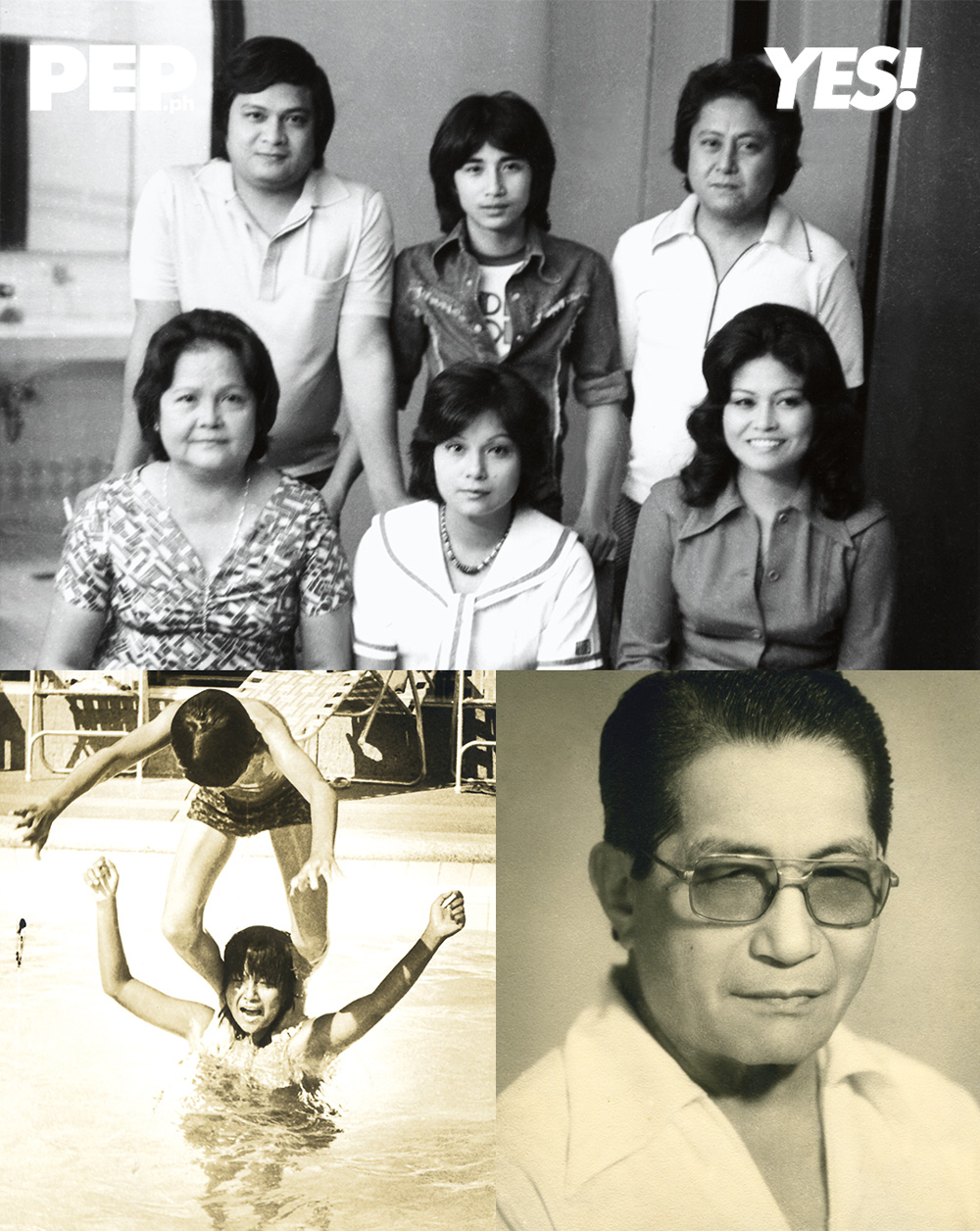
NORA AUNOR AND HER FAMILY
One of the sharpest of the knives in Nora’s heart came from her own family.
In December of 1963, Nora’s mother, Antonia "Mamay Tunying" Cabaltera-Villamayor, visited her sister Belen Cabaltera-Aunor in the latter’s home in Nichols, Parañaque.
The two secretly hatched a scheme to bring Nora to Manila during the Christmas vacation, so that the young girl could try her luck in singing competitions in the Big City.
Belen Aunor—whom Nora would call Mamay Belen—trained her niece to sing, accompanied her on guitar, accompanied her while she made the rounds of auditions, and introduced her as Nora Aunor.
Nora was accepted as a contestant in the Darigold Bulilit Show—and retired as undefeated champion after 14 weeks.
At the start of the following school year, Nora transferred to Centro Escolar University in Parañaque, where she would study for three years, though her high-school credits would remain incomplete.
The young singer’s next stop was the Holy Grail of all amateur singing competitions, Tawag ng Tanghalan. She had a rocky start, winning first prize on her first try, but losing the following week because of nervousness. Undaunted, she re-applied for a second try. She was accepted.
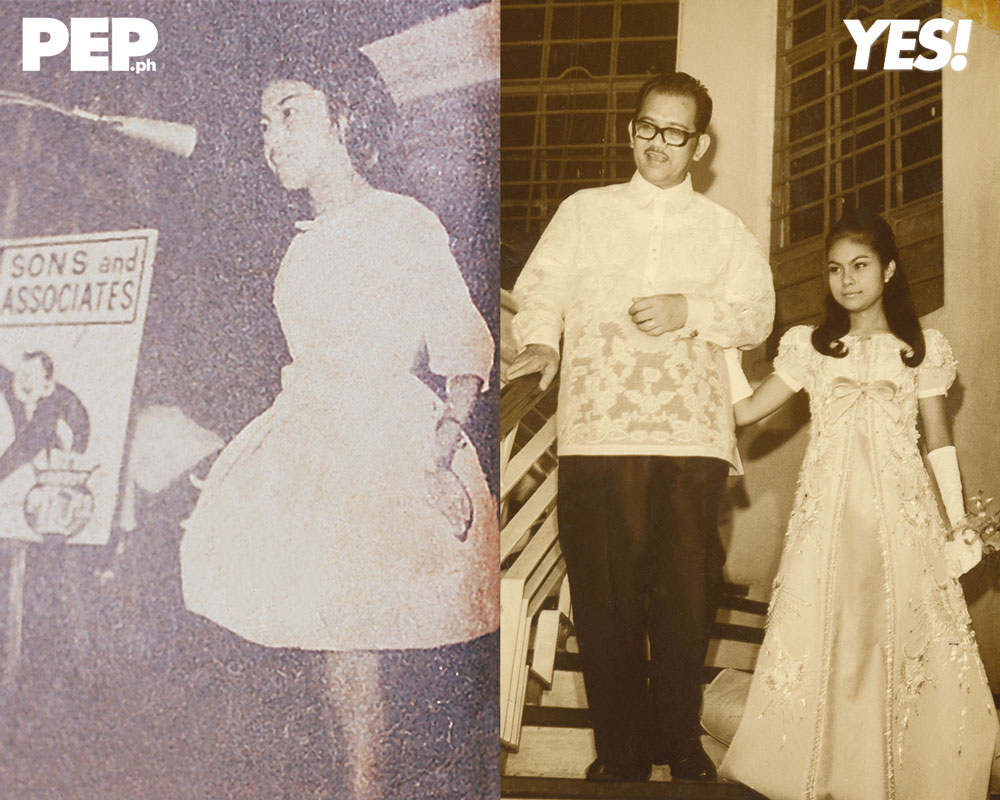
It was around this time that Nora’s magic touch with the masses first started manifesting itself.
"The poor folk, the common folk," Nick Joaquin wrote, "crowded round the radio and TV that night their little girl sang—and she sang to them and about them. She sang 'People.' Nora was singing of her own kind: all the poor people who have nothing but each other… When Nora sang, a number of people felt less lonely. They had Nora."
The lass from Iriga went on to slay the competition in Tawag ng Tanghalan week after week, retiring again as undefeated champion after 14 weeks in 1967.
She moved on to the early-evening variety show Oras ng Ligaya and the radio program Operetang Putol-Putol. When Alpha Records signed her up, she had a repeat of her Tawag ng Tanghalan experience: her first disc flopped, but her second recording did better.
Eventually, the movies beckoned. Dr. Jose Perez of Sampaguita Pictures sent comedian German Moreno to ask Nora if she would like to try out acting with his film outfit on a non-exclusive basis.
Nora had some misgivings, but eventually accepted the offer because she was intrigued enough over the question of how someone with her physical type would look on celluloid.
Mar D’ Guzman Cruz, now a radio anchor on DZRH (known to his listeners as Kuya Mar) but back then a fledgling reporter, remembers meeting Nora in the Sampaguita compound.
"Kapapanalo lang niya noon sa Tawag ng Tanghalan. Nandoon lang siya, naglalaro sa isang sulok—typical na bata na inaaliw ang sarili. Ang bata pa niya noon, nakamedyas na hanggang tuhod, maitim...
"Si Nora, sa personal—lalo na noon—napakasimple. Hindi mo nga mapapansin. Pero once na kinuhanan mo ng litrato, nag-iiba. Ang ganda. Walang anggulo. Kahit saan mo kuhanan, maganda siyang lumalabas."
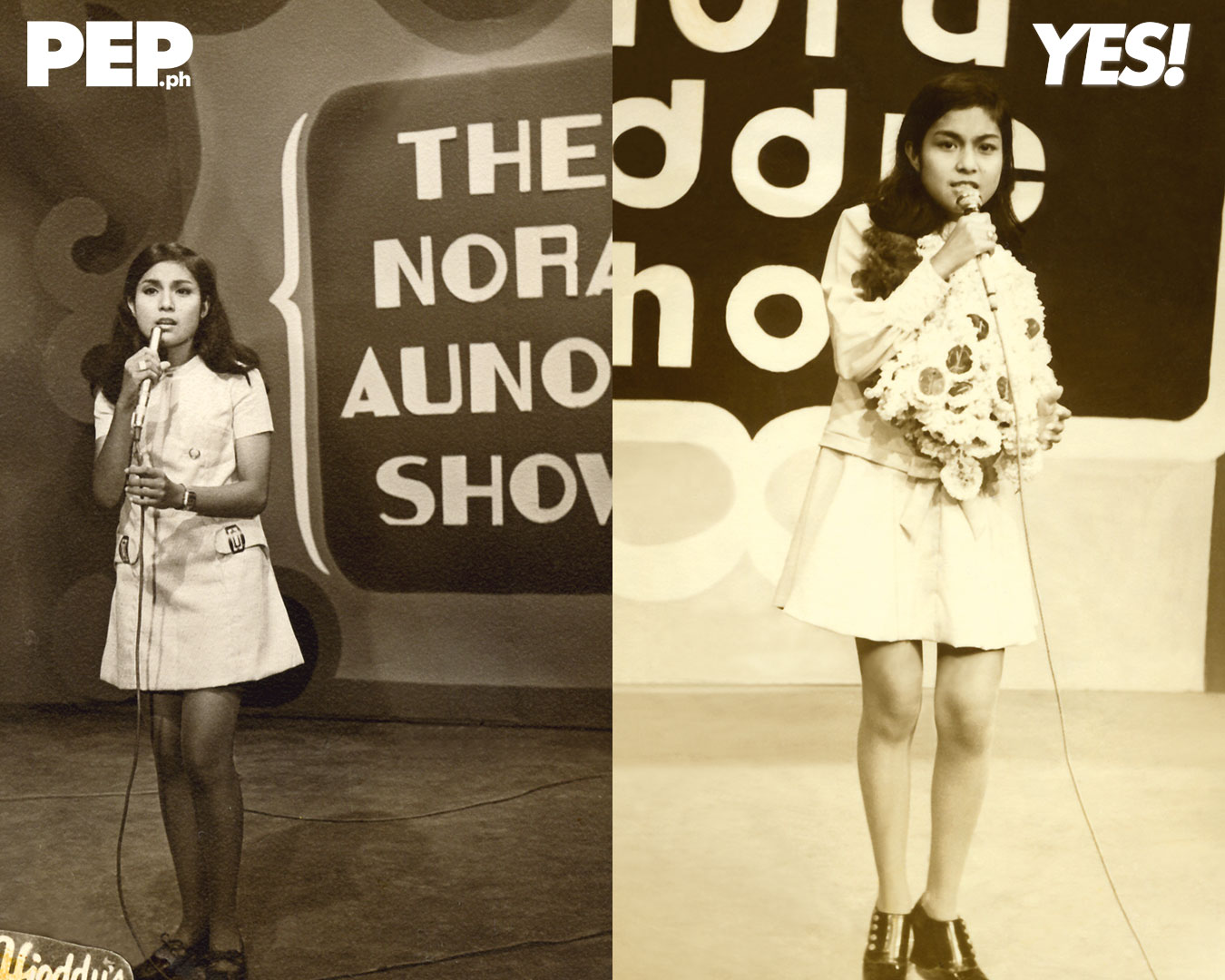

Nora made her movie debut in 1967, as a bit player in the musical numbers of All Over the World, which starred Eddie Gutierrez, Josephine Estrada, and Rosemarie Sonora.
In 1969, after two years of doing guest appearances in the movies of Sampaguita Pictures and other companies, Nora was cast by director Artemio Marquez as the lead in his Tower Productions’ D’Musical Teenage Idols, co-starring Tirso Cruz III.
The film’s stellar box-office showing proved beyond the shadow of a doubt that a movie star had been born.
Nora’s fairy godmother, Nick Joaquin would later write, "was still goofing, mixing up joy and sorrow."
A long-simmering sibling squabble between Nora’s mother and aunt, Mamay Tunying and Mamay Belen, came to a boil two years after Nora first came to live with the Aunors.
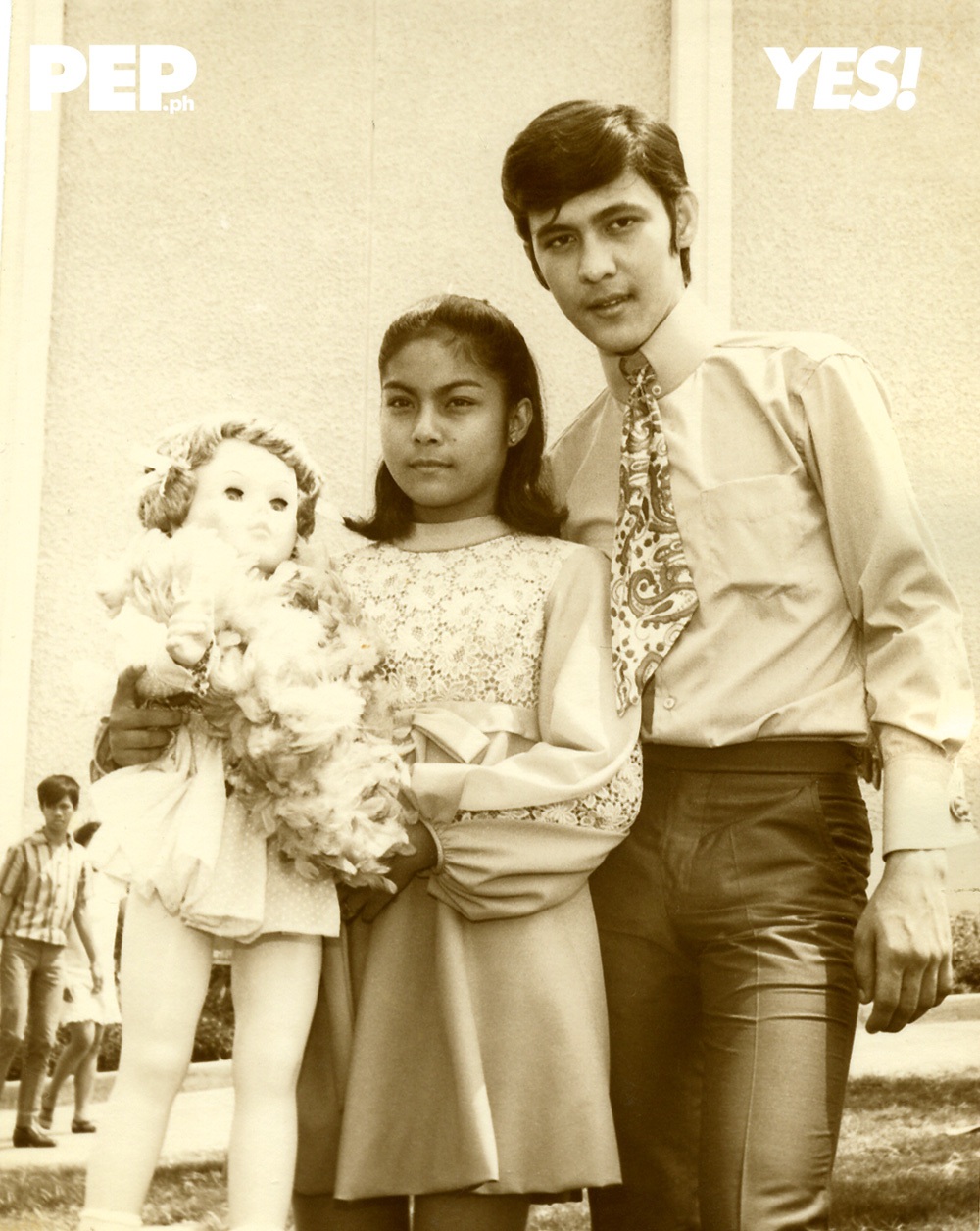
NORA AUNOR: MENDING TIES
Nora had been the front act for her childhood idol, Timi Yuro, during a concert at the Araneta Coliseum in the late ’60s, and the blue-eyed American R&B singer was sufficiently impressed by the little brown singer from Bicol to believe that she would click in the U.S. Nora and Mamay Belen showed up in Iriga, telling the Villamayors that Timi Yuro’s mother wanted to adopt Nora.
Of course, for Mamay Tunying, letting her teenage daughter go to America was out of the question. Mamay Belen then proposed that a document be drawn up showing that Nora could not be adopted because the Aunors had already adopted her.
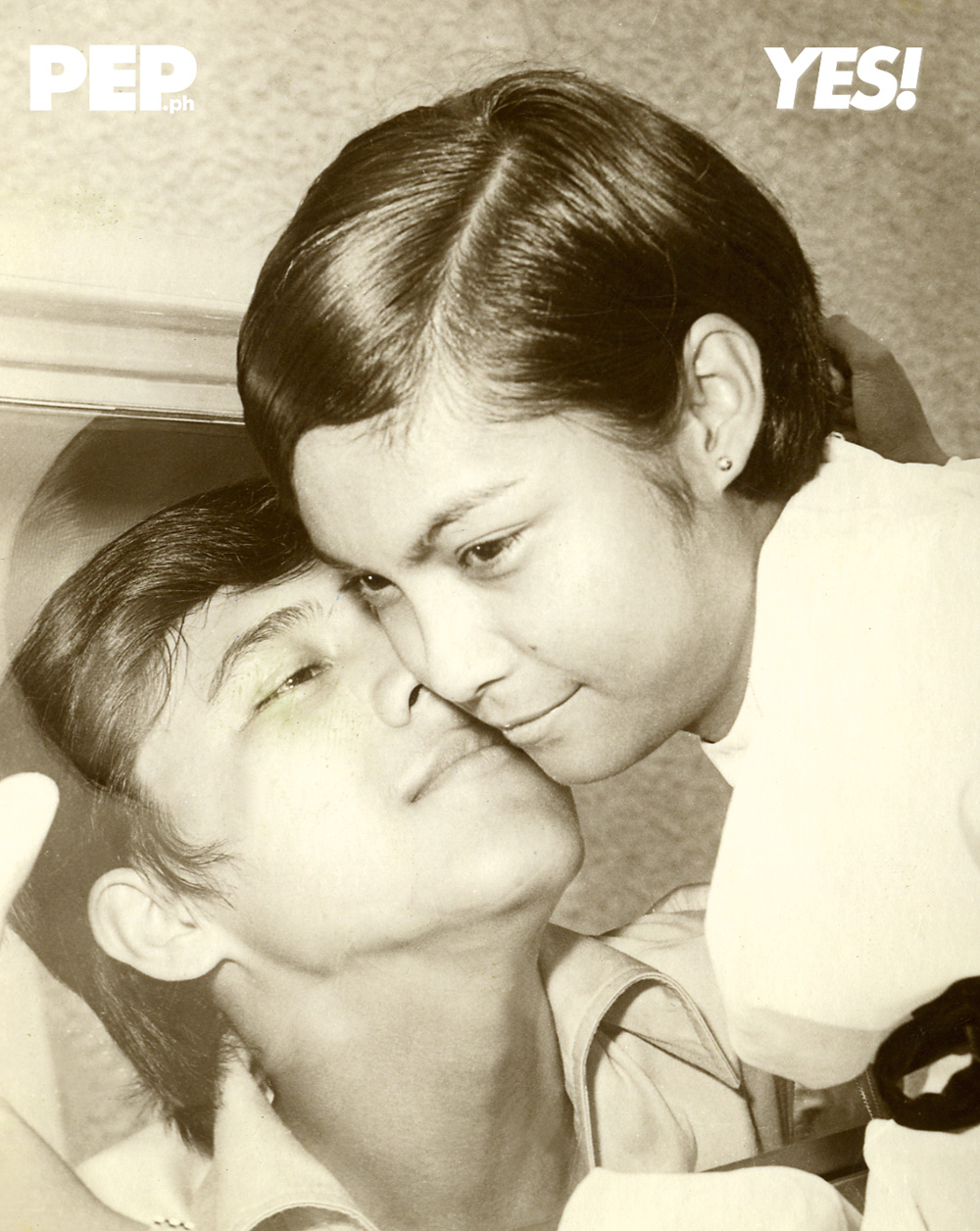
Against a lawyer’s advice, Mamay Tunying affixed her signature to the document, on the pretense that it would merely be something to show Timi Yuro.
Besides, the lawyer added, such a document would have no legal value, seeing as no child could be adopted while both of its parents were living.
In late 1969, around the time Nora went to work for Tower Productions, Nora began to make noises about reuniting her family under one roof.
Mamay Belen proposed that the whole family come live with them, but Mamay Tunying felt renting a separate place would be better.
It was then that Mamay Belen allegedly took out the adoption document and declared that Nora could not be taken away because the Aunors had legally adopted her.
And so it happened that what should have been an exciting time in Nora’s career was marred by an internal dispute.
Nora eventually moved out of the Aunors’ place and into an apartment in Cubao, where she stayed with her mother, elder sister, and brothers, while her father remained in Iriga.
It was only after Nora tricked her mother and her aunt into sitting next to each other during one of her performances that the sisters finally had a tearful reconciliation.
Most recently, during Nora’s first press conference back in the Philippines, at the EDSA Shangri-La Hotel on August 2, 2011, Mamay Belen was again reunited with her “adopted child.”
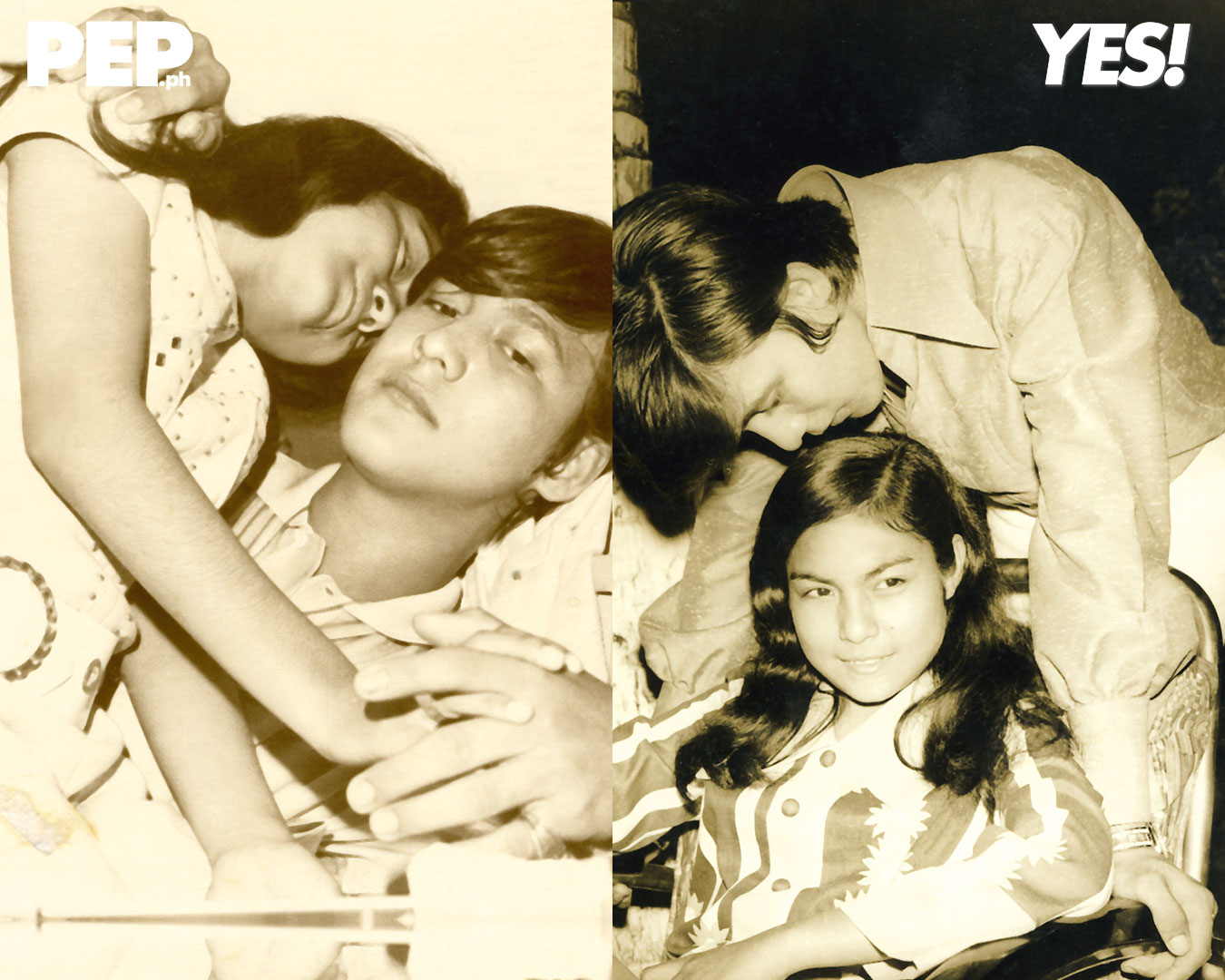
TUG OF WAR
Nora was also the subject of a legal tug of war between Sampaguita Pictures, which insisted that it had first dibs on her services as a movie star, and Tower Productions, which had launched her to full stardom.
But during the months when the case dragged on in court, Nora made hay, shooting pictures for the warring film outfits.
"Sa isang buwan, dala-dalawa ginagawa," Mar D’ Guzman Cruz marvels.
"Kung minsan nga yata, ’yong costume niya sa isa ang nadadala niya sa isa. Pero other than that, walang problema. She delivers."

Presumably, the rising star delivered on both the singing and acting fronts.
Kuya Mar recalls: "Si Guy noon, pag magre-recording, dadating sa studio iyon, doon lang ibibigay ang kanta.
"First time niya pakikinggan ang music, first time babasahin ang lyrics, pupunta ’yon sa isang sulok at doon aaralin ang kanta. First time, ha?
"Walang oras, mga ilang minuto lang, sasabihin no’n, ready na siya. Pagsalang… ang husay! Alam na niya!"
Nick Joaquin spoke highly of Nora’s thespic skills: "Under the tutelage of director Artemio Marquez, Nora is also developing into quite an actress. She has poise, she moves naturally, she underplays rather than mugs. Best of all, she’s one local performer who knows how to react. A person present is mentioned in the dialogue and her eyes automatically turn towards that person… She seems to be really listening to the dialogue, to be paying attention to what’s happening on-scene… Good acting is fifty percent reacting. It seems to be instinctive in Nora."
Nora herself is quick to demur when praised for her acting.
She tells YES!: "Sabi ko nga sa mga artista, hindi naman ako marunong talaga. Lahat naman ’yan, marunong talaga.
"Intindihin lang nila ’yong mga ginagawa nila, intindihin lang nila ’yong bawat eksenang kinukunan. Hindi naman kailangang maging seryoso, kasi hindi nga ako nagbabasa ng script, e.
"Sa set na lang ako nagbabasa ng script, saka itatanong ko lang kung saan nanggaling, saan papunta, ’yong gano’n."
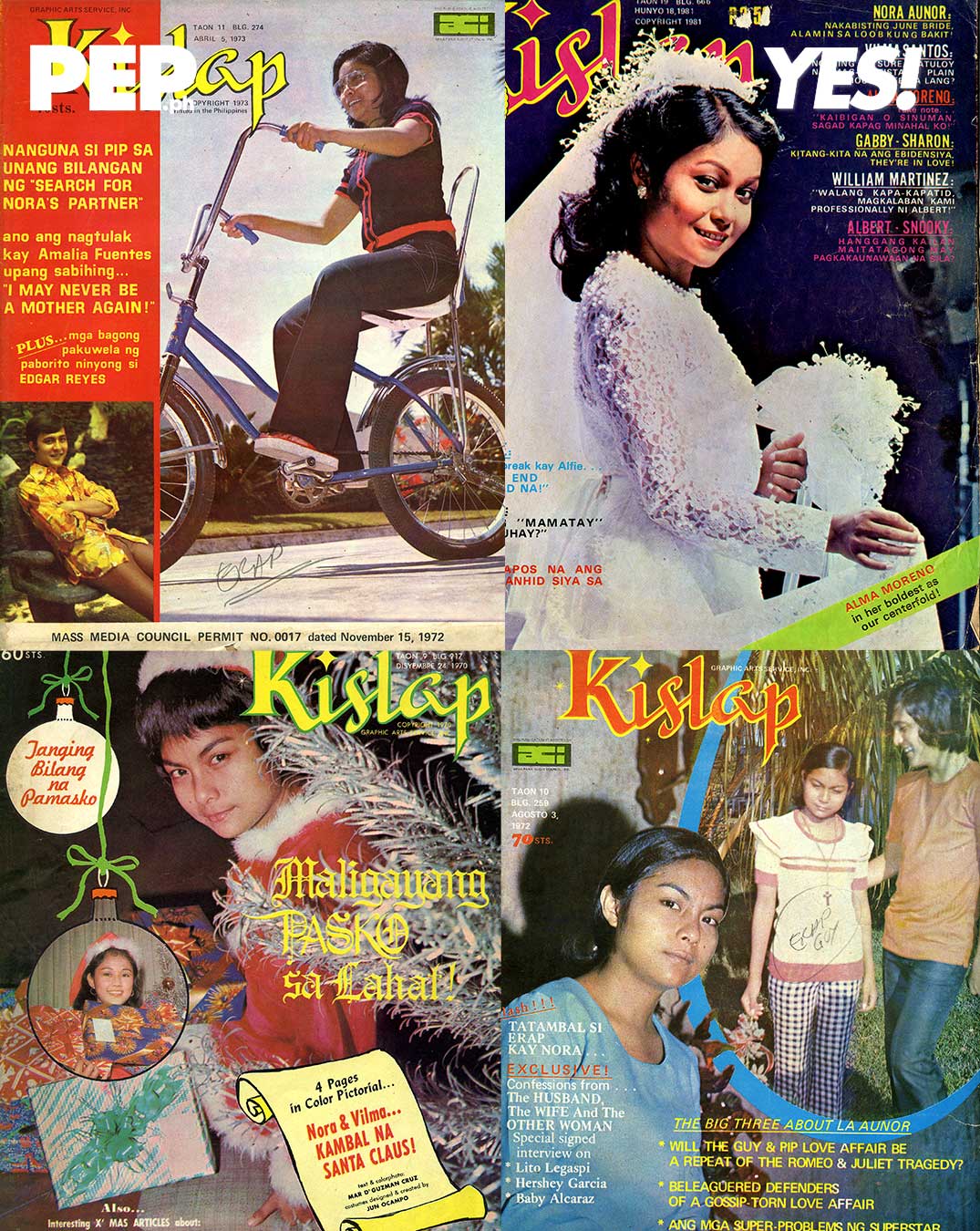
NORA AUNOR: ROAD TO STARDOM
Her movies and recordings may have launched Nora to stardom, but it was her unique persona—the poor, brown lass on whom her adoring masses of fans could project their own fantasies and wishes—that launched her to superstardom.
Kuya Mar elaborates: "Lahat naman ng nananalo sa Tawag ng Tanghalan noon, sumisikat—Diomedes Maturan, Victor Wood… Pero itong Nora, iba. Phenomenal talaga. Talagang sinubaybayan siya ng tao at hindi binitawan."
The veteran reporter remembers many instances of just how phenomenal Nora was.
There was that time, during a fans’ day in Bacolod, when a stadium that could hold an estimated one hundred thousand spectators was filled almost to capacity, and Nora’s show almost had to be cancelled because fans were fainting left and right, so that ambulances had to be put on standby.
And the time when Nora shot a TV commercial for RC Cola at the Quirino Grandstand, where part of the concept had the camera showing the number of fans behind her.
Nora had to be brought to the stage in an armored car because of the crush of people, and there were fears that the multitude that had turned up might halt the shooting of the commercial.
And the time when a Nora movie was about to open—Kuya Mar believes it was the 1977 action-comedy Bakya Mo, Neneng, co-starring Joseph Estrada and Tirso Cruz III—but the Superstar was away, shooting another movie in the States.
Kuya Mar, who was by then also working in radio, decided to do a live patch of Nora greeting her fans as they lined up at the cinemas.
"Naku, pagkarinig ng boses niya, nag-iiyakan! Grabe ang hysteria kay Guy, e."
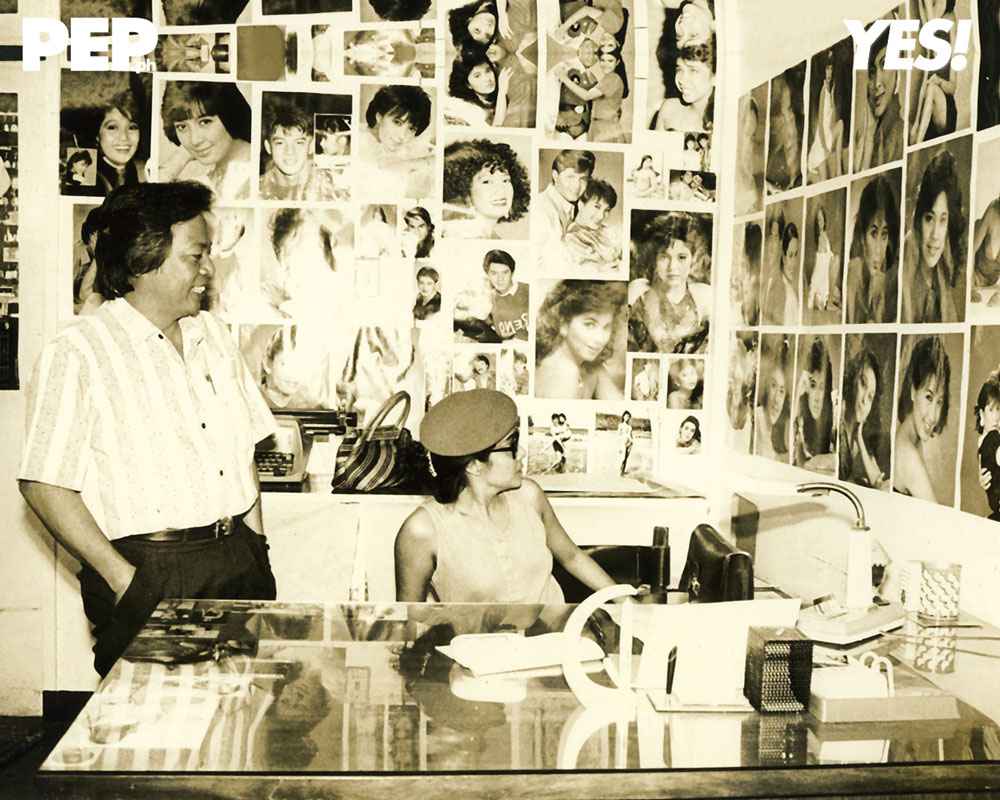
ORDINARY DREAMS AMID EXTRA ORDINARY FAME
But the pressure of such unrelenting scrutiny and adoration unavoidably took its toll on the pop phenomenon.
She found herself yearning for simpler times and the ordinary life.
In “That Gal Named Guy,” an article originally published in the Who Magazine issue of August 28, 1978, and subsequently reprinted in the book The Trouble with Nick and Other Profiles (University of the Philippines Press, 1999), writer Marra PL. Lanot asked Nora what she would like to be if she could be reincarnated.
"Maging pangkaraniwang tao," Nora replied. "Di ko masyadong magawa ’yong mga nagagawa mong magising ka sa umaga, mamasyal ka kasama ng mga kaibigan mo, maging simple, mag-shopping ka… iyon."
Kuya Mar reveals another side of the Superstar who wanted to be a "pangkaraniwang tao," the side that manifested itself, for instance, when she and her reel/real love Tirso Cruz III would have a lovers’ spat.
"Pagka may away sila," Kuya Mar recalls, "hindi ko pinagda-drive iyang si Guy. Mabilis magmaneho iyan, e."
The Superstar’s first car was an Opel Kadett, and she would take Kuya Mar along on long drives from her home in Better Living subdivision in Parañaque—the first house she built for her family out of her showbiz earnings.
Approaching the intersection of EDSA and Shaw Boulevard (which didn’t have a stoplight back in those days), she often floored the gas pedal so hard that he would almost literally fall out of his seat.
Nora tells YES! about the time she was scolded by her Mamay Tunying over her ungodly schedule.
"Saan ka ba nagpupunta?" her mother shouted. "Para kang lalaki! Ang aga-aga aalis ka ng bahay, ’tapos darating ka alas-dos, alas-tres ng umaga!"
On another occasion, Nora came home in the wee hours to find her mother fuming. It turned out that Mamay Tunying had imbibed some alcohol.
Nora says she went straight back out and took refuge in the home of a fan.
Nora giggles when she recalls the incident now: "Sila ba, tumira na ba sila sa bahay ng fans nila? Ako, tumira sa bahay ng isang fan!"

Driving too fast and coming home late were not the only complaints raised against Nora.
At the time Nick Joaquin wrote his Nora Aunor profile, in 1970, he was already mentioning some showbiz insiders’ observation that the Superstar was starting to miss appointments, that she was turning into a prima donna.
While Joaquin was quick to defend Nora, saying that perhaps an afternoon shooting had extended to an all-nighter, or that her schedule was so tight she simply felt the need to escape, Nora herself attributes her erratic behavior to a case of simple rebellion.
First of all, she informs YES!, she did not miss her appointments: "Actually, mali ’yong sinasabi nila na hindi ako sumisipot. Sumisipot ako, nale-late lang ako. Iba ’yong hindi ka sumisipot sa nale-late ka."
She recounts a shooting she had for the now-defunct film outfit Lea Productions, where the producer chewed out the production manager for bringing an inadequate amount of petty cash.
Nora says she was so incensed that one of the "small people" was being bawled out publicly that she devised a scheme to get back at the bullying producer.
"Ayoko ng nakakarinig na ’yong maliit na tao minumura ng producer.
"Ang ginawa ko kinabukasan, alas-otso ng umaga ’yong call ko, dumating ako sa set alas-otso ng gabi para inisin lang ’yong producer.
"E, hindi ko na naisip na ako masisira, basta naipagtanggol ko ’yong kasama ko."

Still, the entertainment press today insists that Nora did indulge in many of what writer-TV host Butch Francisco calls "disappearing acts."
He attributes this unprofessionalism to a deep-seated desire on Nora’s part to lash out at people who took advantage of her. He cites instances where producers reportedly made three Nora Aunor musicals by having the singer shoot one song number after another, yet only paying her the equivalent of one project.
In his "Star Bytes" column for The Philippine Star dated August 23, 2011, Francisco writes: "Showbiz analysts point to this as the reason why she rebelled and became difficult to work and deal with. Perhaps in her young mind, she was always conscious of the sad fact that everyone was out to take advantage of her."
Longtime fan Albert Sunga attests to this: "Alam nating napakaraming umabuso, nagsamantala, nanloko kay Ate Guy.
"Like, meron kaming dati ’yong isang staff ni Ate Guy. ’Yong lahat ng expenses, siyempre pinipirmahan na lang niya, di ba?
"’Yong tao na in charge sa pagpapa-renovate no’ng music room ni Ate Guy, pina-renovate na rin pala niya ’yong buong bahay niya—at ’yong charge do’n, kay Ate Guy!"
In the same breath, Sunga criticizes the star for being too soft: "Si Ate Guy, napakalambot ng puso na pag may ginawa kang kalokohan sa kanya, mag-sorry ka sa kanya, nakakalimutan na niya. Okey na ’yon sa kanya."
Nora remembers that during her film production days, her checkers alerted her to the fact that one of her bookers was cashing NV Production checks.
"So pinatawag ko ngayon. Umiyak sa harapan ko ’yong booker ko. Naawa ako, hindi ko pinaalis. Sumunod na buwan, mas malaki pa ’yong kinuha niya."
This was the time when the Superstar had various small-scale business concerns.
In 1978, according to Lanot, Nora had taken over production of her musical variety show Superstar and her drama anthology Ang Makulay na Daigdig ni Nora, so she had TV business offices in the Delta building along Quezon Avenue.
By then her own film imprint, NV Productions, was five years old, with its own offices on Escolta, Manila. For personal matters, she also had an office in her home—then a compound located on Valencia Street, which "Mother" Lily Monteverde of Regal Films would later occupy. Nora even had a fleet of cabs named NV Taxi.
As Nora’s fame and fortune grew, so did the possibilities for getting swindled. At the same time, signs pointed to the new Superstar being an utter neophyte in handling money.
Kuya Mar remembers the time she went out to buy a Mercedes-Benz. He says he accompanied her to the Mantrade automobile shop, along Pasong Tamo Avenue in Makati, because she was carrying wads of cash—in a bayong.
Read: Nora Aunor: Superstar (Part 2)
This article was originally published in YES! Magazine's October 2011 issue and has been republished, in its original form, by Jo-Ann Q. Maglipon in PEP.ph in April 2025. The content reflects the information and context available at the time of original publication.
PRODUCTION CREDITS:
Photographer: Mark Nicdao
Photo Shoot Creative Direction: Vince Uy
Additional Photo Shoot Art Direction: Gabriel Villegas
Shoot Producers: Anna Pingol & Candice Lim-Venturanza
Writer: Andrew Paredes
Additional Text: Jo-Ann Q. Maglipon
Interviews: Jo-Ann Q. Maglipon & Anna Pingol
YES! Editor In Chief: Jo-Ann Q. Maglipon
YES! Executive Editor: Jose F. Lacaba
Makeup: Juan Sarte
Hair: Raymond Santiago
Fashion Stylist: Liz Uy
Assistant Fashion Stylist: Reese Rubin & Pete Rich
Production Designer: Angelo Dindo Panganlangan
Shoot Assistant: Arvee Javier
READ MORE:
