
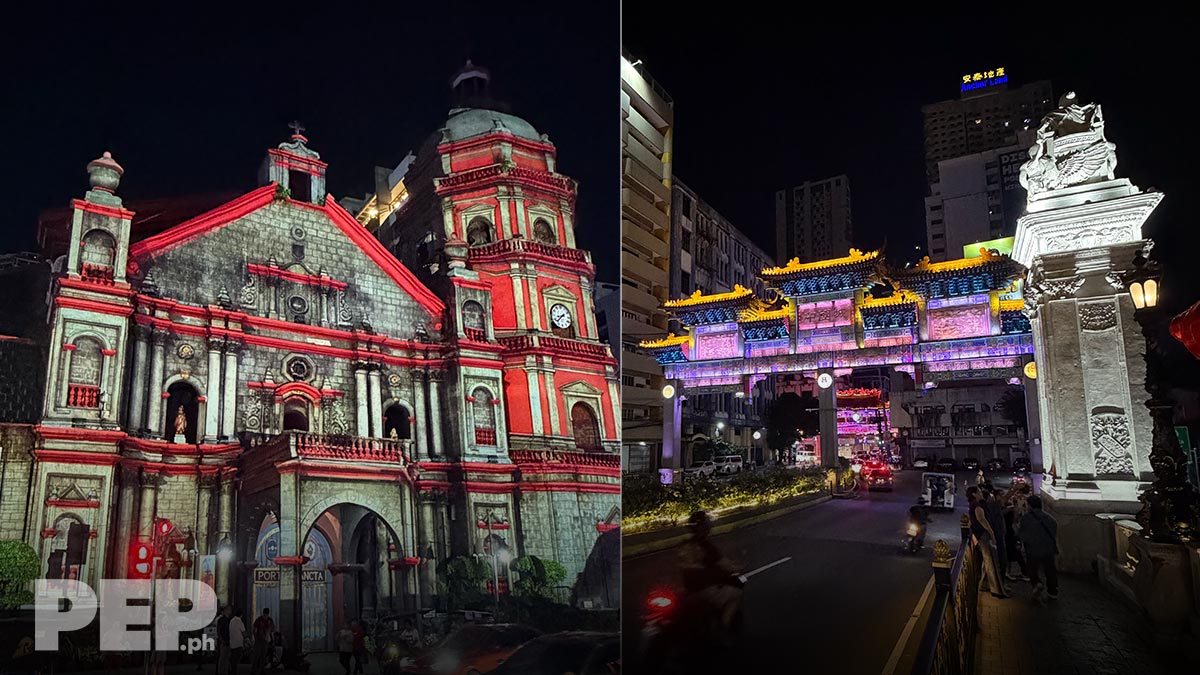


Binondo is glowing—literally—as the launch of the Chinatown Revitalization Phase 2 marks another milestone in transforming Manila’s historic Filipino-Chinese district.
On Thursday, February 12, 2026, members of the press, including PEP.ph (Philippine Entertainment Portal), were among the first to explore the upgraded features designed to draw more visitors into the area.
The world’s oldest Chinatown now showcases dramatic lighting displays, digital projections, and enhanced gateways, reimagining the district as a vibrant cultural and tourism hub.
CHINATOWN REVITALIZATION PHASE 2
Founded in 1594, Binondo has long been a vital center of Filipino-Chinese culture and commerce, but its aging structures and declining foot traffic eventually prompted the PHP200-million revitalization initiative—an effort jointly pursued by government agencies and private-sector partners to restore the district’s vibrancy.
The Chinatown Revitalization Project began in June 2025 with the restoration of the Jones Bridge lamp posts, a symbolic first step that set the tone for broader improvements across the area.
According to Jerika Marquez-Gutierrez, assistant to Benny Techico—President Bongbong Marcos’ special envoy to China for trade, investments, and tourism—the groundwork was laid early on.
"We started way back last year with Phase 1, the lighting of Jones Bridge on June 7, 2025," she recalled.
"From there, we didn’t stop. We continued planning until we were able to launch Phase 2 this year."
Phase 2 continues these enhancements under the leadership of First Lady Liza Araneta Marcos, working closely with the City Government of Manila and major stakeholders from the Filipino-Chinese community.
The Office of the First Lady directs the project, the City of Manila oversees lighting and design upgrades, and the Office of the President—with President Ferdinand Marcos Jr.—provides full support and participates in key events.
The Filipino-Chinese community also plays a crucial role, led by the Federation of Filipino Chinese Chambers of Commerce and Industry, Inc. (FFCCCII), along with numerous community leaders. Private-sector partners—including Converge ICT Solutions, Filinvest Group, LT Group, Megaworld Group, Metrobank Group, SM Group, SteelAsia, Double Dragon Group, and the Filipino-Tsino Magkaibigan Foundation—contribute to lighting installations and heritage improvements throughout the district.
Jerika shared that coordinating all these groups to revive Chinatown’s charm was among the project’s biggest hurdles.
"Phase Two is a culmination of the work of several agencies, offices, the Office of the President, the local government, and the private sector—the entire Filipino-Chinese community coordinated for this," she explained.
"It’s hard to gather everyone and pull everything together for a project this big."
Despite the challenges, the team pressed on, inspired by both the President and the First Lady.
"We were inspired by Phase One and by the Pasig River Bigyang Buhay Muli Project," Jerika added.
"Since we still had funds left from donations from the Filipino-Chinese community, we thought—why not push for Phase Two?
"And as SE Benny [Techico] mentioned, we might even have a Phase Three, considering the remaining funds."
For her, the greatest task was creating a unified, cohesive effort.
"The challenge is coming up with a holistic project—making sure everyone is included and that we maximize what each group brings to the table,” she said.
WHAT'S NEW IN PHASE 2?
The Chinatown Revitalization Project Phase 2 focused on creating a striking nighttime atmosphere that makes Binondo more welcoming, lively, and visually captivating.
Illuminated Streets & Landmark
Key streets—such as Quintin Paredes, Ongpin, and Sabino Padilla—now feature artistic lighting installations that transform the district into a glowing nightscape.
Projection Mapping at Binondo Church
A three-minute digital projection brings the façade of the Minor Basilica of Saint Lorenzo Ruiz (Binondo Church) to life, blending modern technology with its historic architecture to showcase stories from the district’s past.
According to Jerika, the projection will run every Friday to Sunday from 7:00 p.m. to 9:30 p.m., with shows playing every 30 minutes.
For now, the setup remains temporary as the team continues to assess various factors, though no specific timeline has been announced.
"We have so many considerations when it comes to the projection mapping, primarily the utility consumption," Jerika explained.
"So hopefully, we’re able to play it on a weekend basis. But for the rest of the hologram lights, you’ll see them daily, along with the lighting of the gates and the MacArthur Bridge."
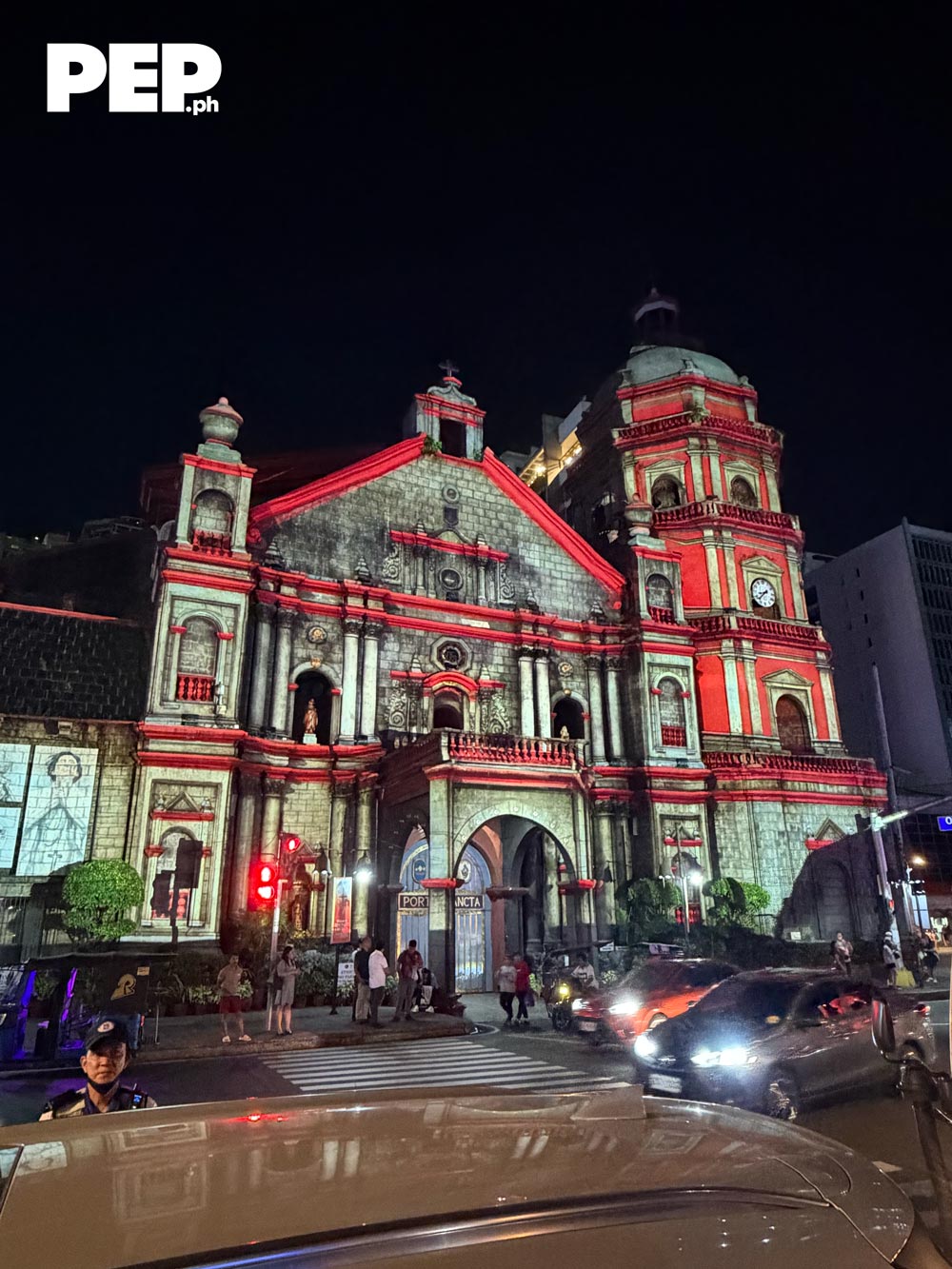
Lit Gateways & Bridges
The project also places emphasis on enhancing Binondo’s major entryways, creating a well-lit passage that links historic Intramuros, across the Pasig River, to the center of the Chinese-Filipino community.
Jones Bridge, restored to evoke its elegant pre-war look reminiscent of Paris’s Pont Alexandre III, now serves as a brilliantly lit landmark and a symbolic gateway—its illumination also marking key milestones such as the 50th year of Philippines–China diplomatic relations.
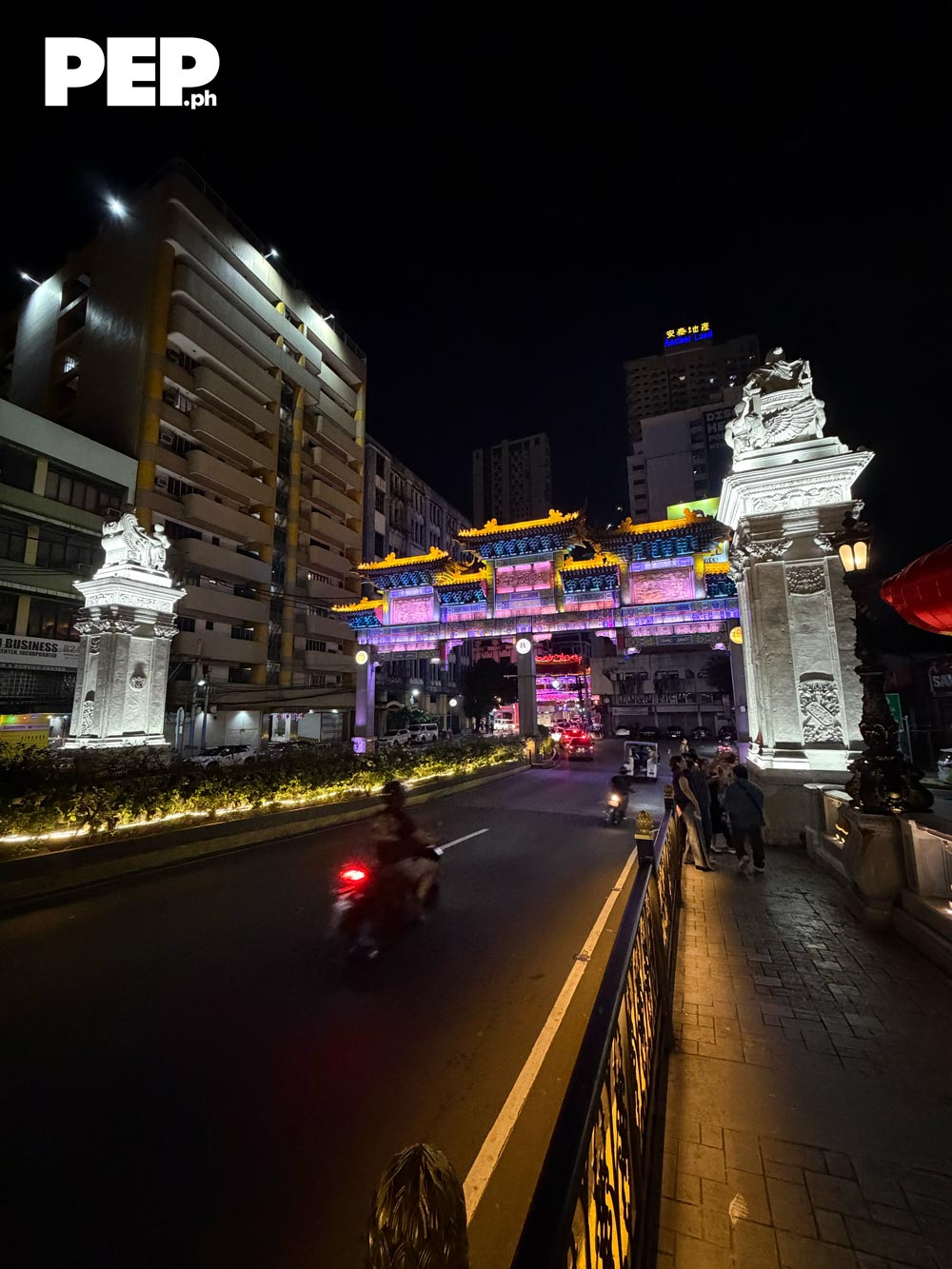
Close by, the La Madre Filipina sculptures—four allegorical figures that survived wartime displacement—have been returned to their pedestals.
Enhanced lighting now highlights their intricate details, offering a glowing tribute to Filipino identity as people enter Chinatown.
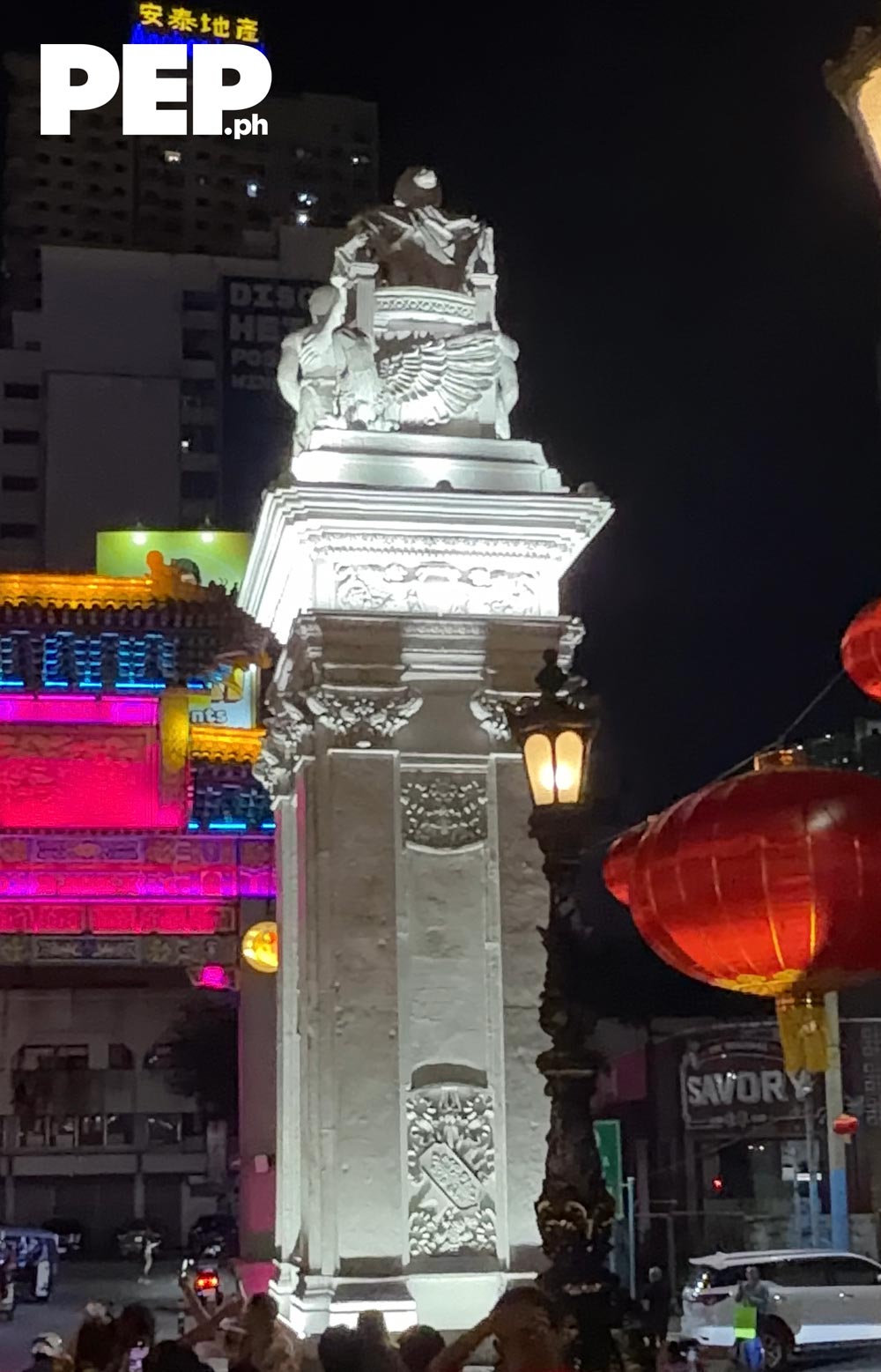
MacArthur Bridge has likewise been upgraded with coordinated lighting, adding to the riverside ambiance and strengthening the visual flow toward Binondo.
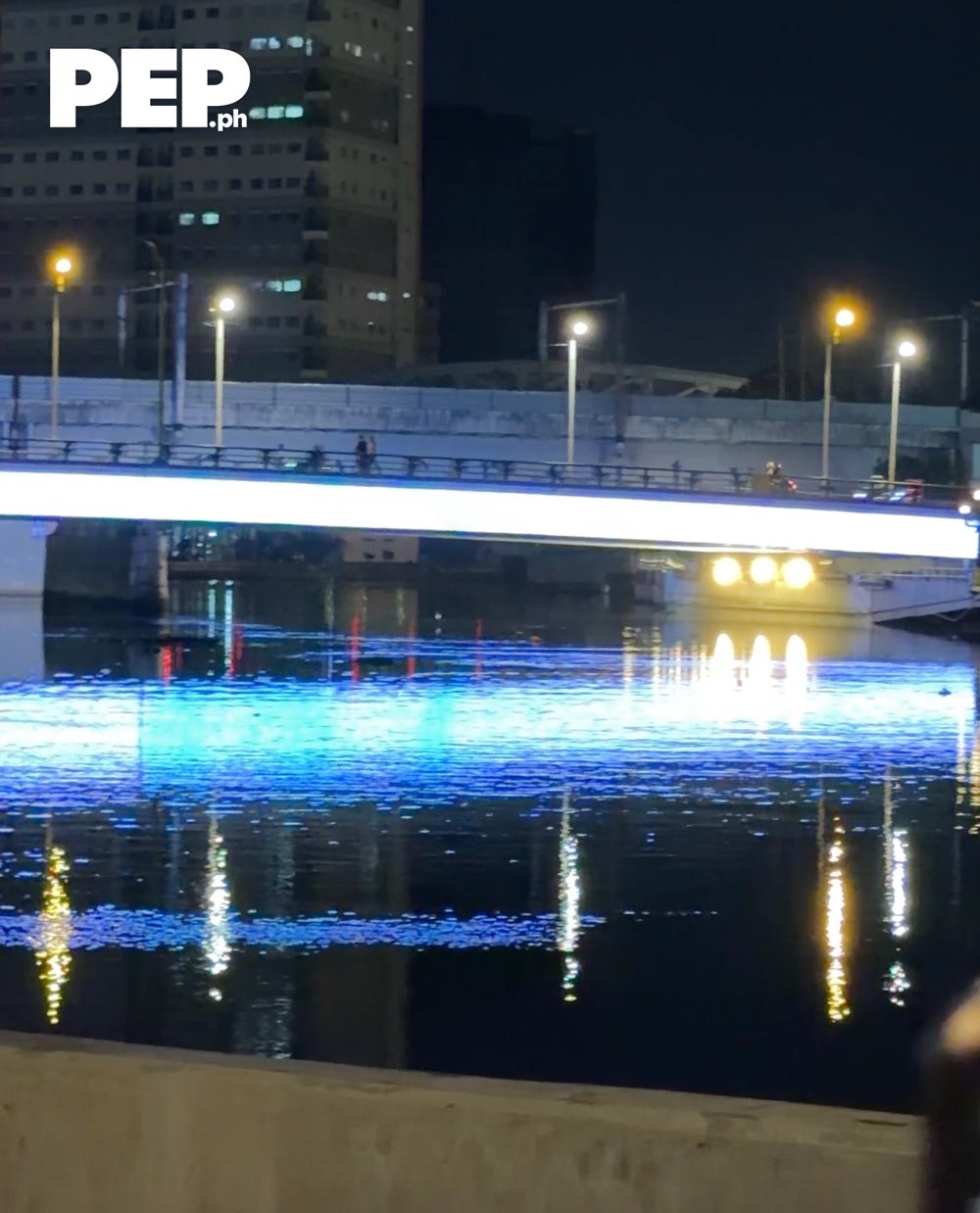
Meanwhile, the façade of Sta. Cruz Church has been illuminated to showcase its stonework and stained-glass elements, reinforcing its presence as a significant spiritual and architectural landmark at the district’s edge.
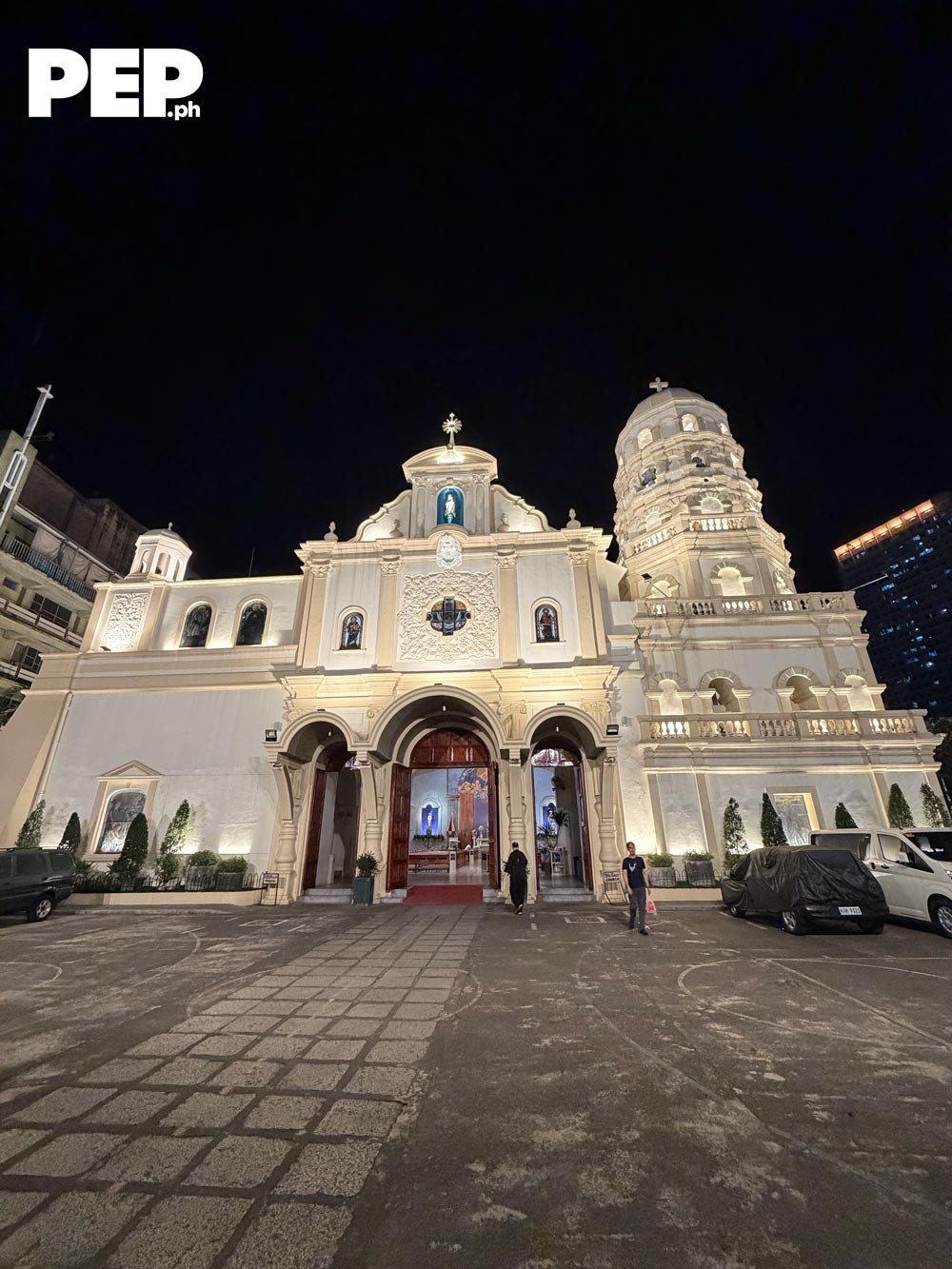
Marking the boundaries of Binondo, the four traditional Chinese arches—Qing Shan Gate, Ongpin South Gate, Ongpin North Gate, and Tuan Jie Gate—now feature hologram-style LED elements that give the structures a modern luminous sheen.
ASEAN SUMMIT 2026 AND LUNAR NEW YEAR CELEBRATIONS
The upgrades were completed just in time for two major occasions in the Philippines, including the ASEAN Summit 2026.
Although most summit events will take place in Cebu, the Chinatown Revitalization Project team is grateful that the improvements were finished ahead of the international gathering.
As Jerika noted, “Thankfully, it’s also in line for the ASEAN—perfect timing. So we were able to add another feature that could help us in the ongoing ASEAN.”
The enhancements also arrive just before another major event—the Lunar New Year—when Binondo traditionally sees a surge in visitors.
However, Jerika emphasized that preparing the district for the expected influx ultimately falls under the responsibility of the local government.
"I think that’s something the LGU will be able to address because every Chinese New Year, that’s the expectation—the influx,” she explained.
"Hopefully with the project, we’re able to add features that visitors of Chinatown can enjoy and develop a renewed interest in."
Concerns about security were also raised during the media tour, but Jerika clarified that these matters also fall under the responsibility of the local government.
"We’re not really in the position to answer that because that’s something we have to coordinate, or something the LGU will have to work with,” she said.
"But as far as we know, there’s security in Plaza Lorenzo, 24/7. The LGU assured us that the security is tight within the area."
She also addressed questions about cleanliness and the lingering odor from the Pasig River.
Jerika explained that national government agencies are already working to rehabilitate the river and reduce the stench.
"We all know that this is a work in progress. We work together with the national government, including the Office of the President and the DENR," she said.
"It’s something that requires everyone’s cooperation. It’s already being addressed and is in the works."
WHAT'S NEXT?
With Phase 2 of the Chinatown Revitalization Project now successfully launched, what comes next?
According to Jerika, the team will soon return to the drawing board to begin planning the next stage of development—this time with the goal of making the revitalization more inclusive and expanding improvements to additional parts of Chinatown.
"After this, the team would have to regroup again because we have been preparing for Phase One and Phase Two for the past year—almost three years,” she said. “So from here, we have to regroup and plan again for Phase Three. But for Phase Three, we also intend to include the rest of the community.”
She emphasized that the next phase aims for broader participation and wider coverage.
“Basically, an inclusive development,” Jerika explained. “But rest assured that it will also feature more enhancements, and more areas or districts of Binondo will be considered.”
Special Envoy Benny acknowledged that the team will continue pushing forward despite the financial constraints they face.
"First of all, the funds are limited,” he said. “We’re trying to optimize the spending to make sure that every peso we use will help attract foot traffic.”
He also clarified that the project is not focused on “renovation” in the sense of altering structures, but rather on enhancing Binondo through lighting in order to preserve its historical character.
"We are not trying to change the original design. That’s why we use light—to ensure everything is preserved and respected,” he explained.
"We won’t make major changes to the original structures; instead, we’ll highlight them with lighting."
He added that this approach was applied to the bridges as well.
"For example, with the bridges, we did not change anything. We simply emphasized their features using lights,” he said.
READ MORE: