
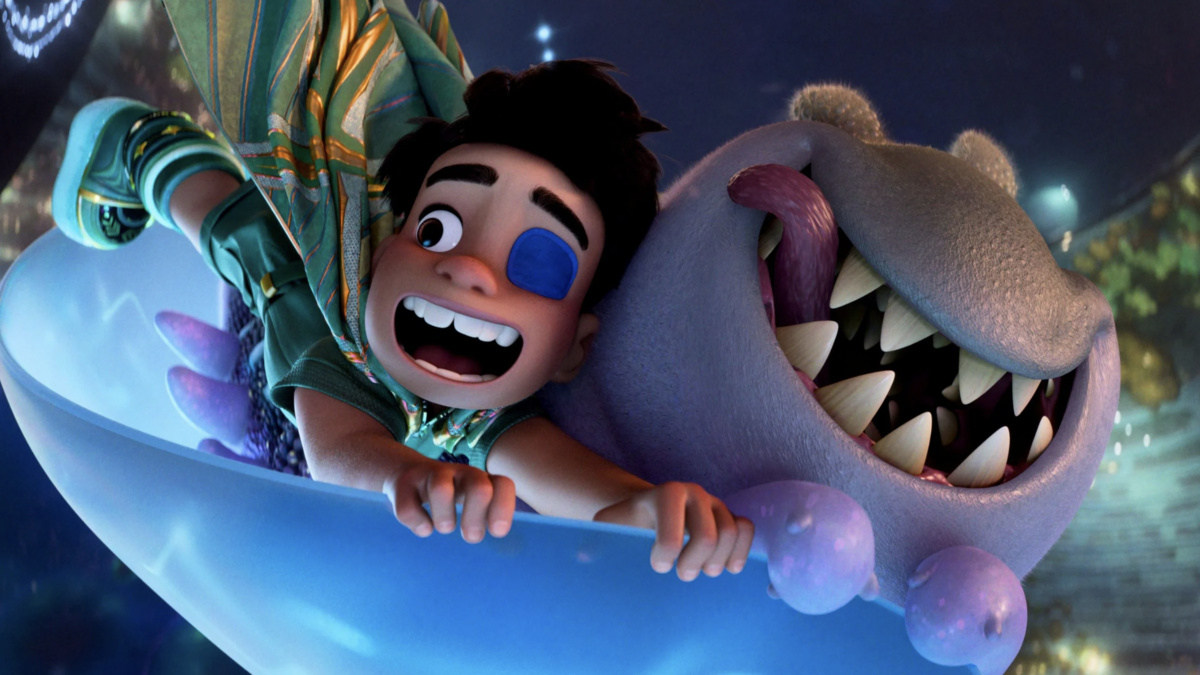


Spoiler Warning: This article contains spoilers!
“Are we alone?” That’s the first question that greets the audience, and the whole movie never quite stops trying to answer it.
It’s about a boy who feels completely out of place on Earth. Eleven-year-old Elio Solis doesn’t belong at school, doesn’t belong among kids his age, doesn’t seem to be understood by the world around him. He develops this odd, endearing obsession with wanting to be abducted by aliens just to escape to elsewhere.
And in the very Disney-Pixar way we’ve come to expect, the universe actually answers.
On the surface, it looks like every other sci-fi kids’ movie—of a child on the precipice of outgrowing boyhood, believing all answers can be found in the farthest place he can imagine himself running off to.
Elio remarks: “All I ever wanted was to find a place to fit in.”
But then there’s Tía Olga, Elio’s aunt and guardian, who gave up her dream of becoming an astronaut to raise him after his parents died. She tries to do right by him, even when she doesn’t always know how.
One of the things Tia Olga says is: “This isn’t what I thought my life would be.”
Their lines remind viewers of the futility of control; how we can go for broke in trying to turn a corner, only for life to reboot without our permission.
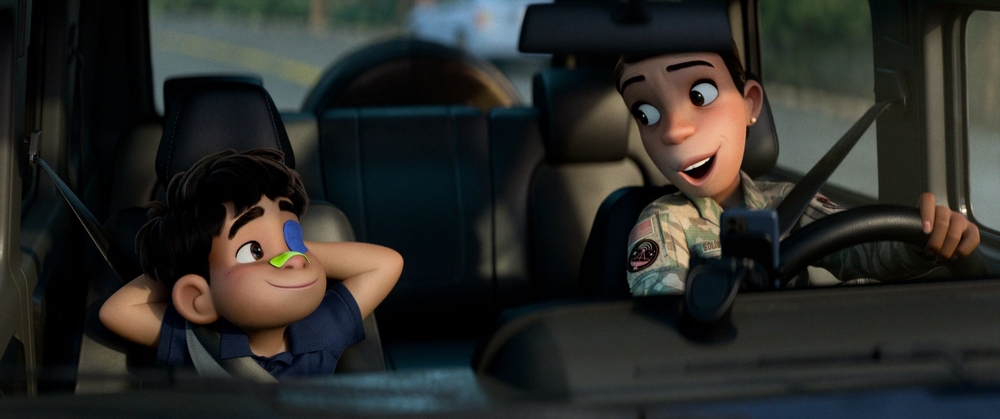
ELIO EXPLORES THE WEIGHT OF FEELING ALONE
Emptiness doesn’t spare anyone. Children and adults carry it in different shapes and silences. All stages of life welcome their own version of this.
Tía Olga and Elio didn’t ask for the circumstances they’ve been handed. They didn’t prepare for such a detour, but they’re trying mightily to live through it.
The film captures this emotion. It understands the slow ache of being denied space even in a universe as vast as ours.
Because when Elio reaches his dream of being acquainted to the interplanetary organization, Communiverse, as the chosen delegate of Earth, his loneliness still doesn’t let up.
There’s a moment when Elio, already deep into his otherworldly journey, tells his alien friend Glordon: “Back home, I didn’t fit in. I thought Earth was the problem. But… what if it’s me? What if there’s nothing about me to want?”
Without wasting a second, Glordon responds: “Well, I like you. You seem fine to me.”
And the way Glordon smiles with many of his canines out, makes us believe him. We have to. We’ve got to.
It’s how we press pause on the exhausting work of trying to belong somewhere, anywhere. It’s why we join clubs, pledge to religions, claim national flags, chase fandoms, and name ourselves after the people we follow online.
It’s the delicate math of unlocking side quests to feel part of a bigger mission. We search for clusters to fold ourselves into, just to blur the edges of our aloneness.
Yes, this world has its ugly parts. But it also has scenes like this.
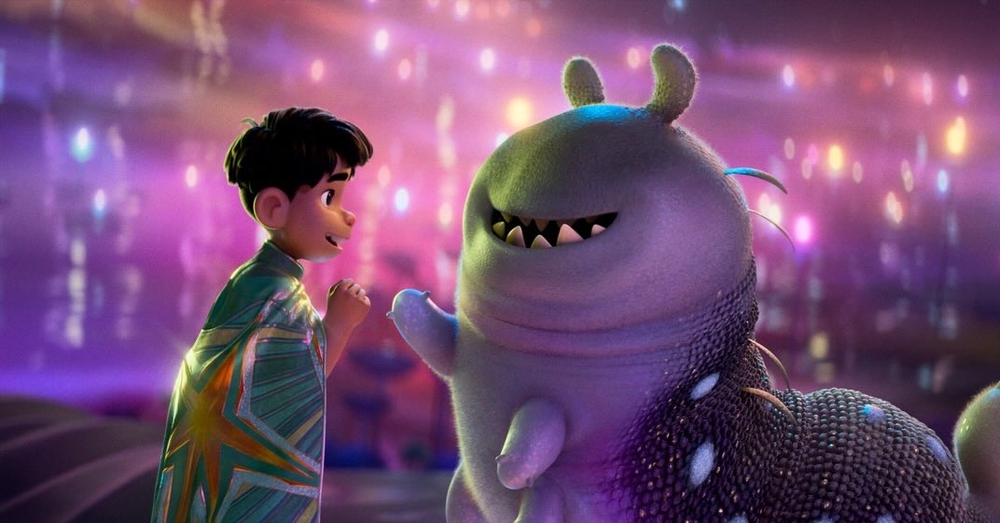
FINDING GALAXIES IN EACH OTHER
When Glordon begins dying on Earth, Elio and Tía Olga board a spacecraft to bring him back to his home planet. But mid-flight, chaos hits them: asteroids, cosmic debris, and a failing shield system.
Their ship is down to 83%, then 65%, 47%, 29%, 16%. The controls stop responding. They can’t steer. The ship is about to crash.
And then— France chimes in. Then Italy. Germany. India. Vietnam. Japan.
From across the globe, airspace controllers unite to help Elio and Tía Olga chart a clear path through the havoc. They guide them safely into a light-speed jump across galaxies.
That scene is immaculately symbolic. We are, in fact, never alone.
Sometimes a city, or a life, can feel like a living archive of poor decisions and disappointments. And we, people within it, can feel like micropixels crash-coursing how to develop god-knows-what big picture.
As a result, we lean towards cynicism. We forget that each moment the world seems like it’s against us—and brutally, it often is—it also finds a clutch, a serendipitous way to show up, every single time.
Elio is a movie that unravels the heartwork of how life’s wonders and life’s wounds are never too far apart. They trail behind each other in the same orbit. It is solely up to us how we survive through the intervals.
No matter how far we run, no matter how many light-years we jump, if we haven’t done the inner work, we’ll always struggle to reconcile our past with our destination.
This bruised-up little life is all we’ve got. It’s nowhere near flawless, but it is all ours to crack.
The good news is, we don’t need spaceships to find tiny galaxies in people, in hugs, in childhood dreams, and in late-night rides from one home to the next.
With me in the theater, adults who had come to accompany the kids could be heard sniffing. The movie is emotional.
READ MORE:
- The Pinoy storyteller behind Disney movies Up, Inside Out
- Pixar to showcase first CGI Filipino characters in short animated film Float
- Meet the Pinay animator behind Gael Garcia Bernal-starrer Coco
- Finding Dory animator's dream project: Doing a film about patintero, jolens and Pinoy games