
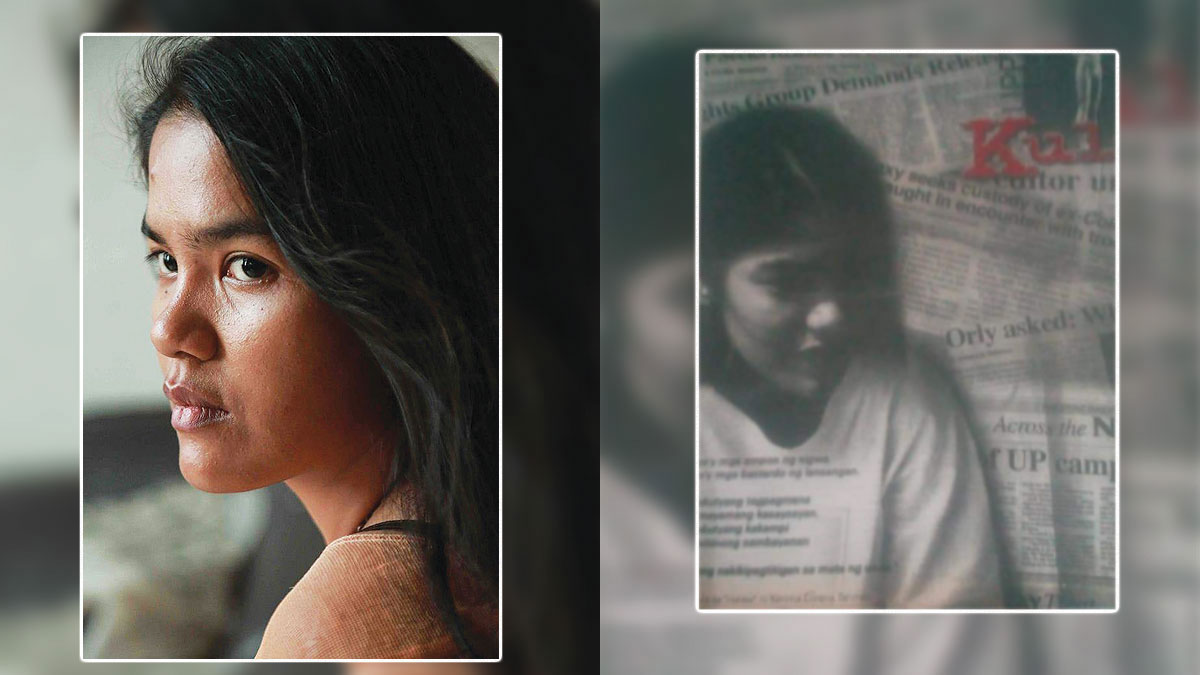

Poet, activist, and former managing editor of the University of the Philippines student publication, Kerima Tariman was slain on Friday, August, 20, 2021.
She died in a clash between the New People’s Army (NPA) and the Philippine Army's 79th Infantry Battalion.
The exchange of fire took place in Silay City, Negros Occidental.
Kerima, a.k.a. Ka Ella, 42, is survived by her husband, Ericson Acosta, a poet, musician, and activist and their 18-year-old son Emmanuel.
THE ENCOUNTER
August 20, at around six in the morning, an estimated 10 NPA rebels clashed with 79th IB troops, in Barangay Kapitan Ramon, Silay City, Negros Occidental, reported the regional media outlet Digicast Negros.
Two NPA rebels and a soldier were the casualties in the encounter, according to Major Cenon Pancito III, spokesperson of the Philippine Army’s 3rd Infantry Division.
The soldier killed was Private First Class Christopher Alada of Barangay Indorohan, Badiangan.
Alada, 31, was recognized for his “bravery, selflessness, and heroism.”
Silay Mayor Mark Golez posted on Facebook: “The City of Silay mourns the passing of a great soldier who embodied bravery, selflessness, and heroism.
“Pfc. Christopher Alada made the ultimate sacrifice. Our deepest condolences and prayers to [his] bereaved family. We pray that all citizens recognize that because of you, they have the freedom of speech and much more.”
His remains were brought home to his family in Barangay Indorohan, Badiangan, Iloilo, the Global Daily Mirror reported.
Meanwhile, the Apolinario Gatmaitan Command, the NPA Regional Operational Command in Negros Island (AGC-NPA), in its own statement, identified the slain male rebel as "Comrade Pabling," and the slain female rebel as "Comrade Kerima Lorena 'Ka Ella' Tariman."
The NPA statement read: “Ka Ella, a leading Party cadre of the RJPC-NPA (Roselyn Jean Pelle Command-New People's Army), hailed from Legazpi City, Albay.
“She was a renowned poet, writer, and revolutionary artist who chose to share the life-and-death struggle of the masses of Negros Island.
“She gave up her life to serve the people and the revolution."
Both the AFP and the NPA regarded their fallen comrades as “heroes.”
In a report by Rappler, Major Pacito talked about the incident, "A 35-minute firefight ensued after the troops responded to the reports from concerned citizens on the presence of armed men doing recruitment and wide extortion activities in the area."
He also said that their troops seized weapons, personal belongings, a radio charger, medical paraphernalia, and “subversive documents.”
In the Digicast Negros report, the officer went on to describe the state of Kerima’s body when it was discovered.
“She was found during clearing operations near the encounter site and may have died due to loss of blood," the major said.
Adding, “Her shoulder had been hit by bullets and was nearly severed.”
Kerima’s father, Pablo Tariman, 72, a veteran music critic for one of the national broadsheets, confirmed that the slain female was his daughter.
But his story of how his daughter died is very different.
“I was shown a photo of her in the encounter site," Pablo said in an interview with Digicast Negros.
He said he spoke to a friend of Kerima in Silay about the photograph.
“I asked her to describe how she looked, and I’m certain she was my daughter. The person who described the photo also confirmed that it was her.”
This is when Pablo said, "She was alive with just one bullet wound in her hands, but the military finished her off.”
Pablo revealed that he found out only two years ago that his daughter, who had gone Underground to join forces against the government, was in Negros.
He also revealed that his daughter Kerima's death did not come as a surprise.
“I was ready for this death years back. When it happened, it was not surprising,” he told Digicast Negros.
Of Kerima, Pablo said, “I am proud of my daughter. She was consistent all the way.
“I like the way she lived her life. In poetry and commitment.
“I am proud of her.”
At this writing, Pablo, with Kerima's son Emmanuel, is on his way to Negros.
Kerima’s body is at a Silay City funeral parlor. Grandfather and grandson are expected to bring Kerima’s remains home to Manila.
In reports, Kerima is just another casualty in the 52-year-old conflict between the Philippine government and the NPA.
But for people close to Kerima—who knew her also as Ka Ella and Kelot—she is far more than that.
She is daughter, wife, mother, friend, colleague, and comrade—who had talent and intelligence and purpose in a short but fully lived life.
Such is the picture painted on Facebook by Kerima's father and her friends whose testimonials have not stopped pouring in since the announcement of her death.
KERIMA, THE DAUGHTER
Names carry a meaning, and the name Kerima is said to mean noble and excellent.
People close to Kerima wrote descriptions of the poet and rebel that matched those qualities.
Kerima Lorena Tariman is the second of three daughters of Pablo Tariman and wife Merlita Lorena.
Merlita was herself a campus writer who represented her school, the Bicol Teachers College, at the College Editors Guild of the Philippines 1969 Legaspi conference. When Ferdinand Marcos declared martial law on September 21, 1972, Merlita was 22 years old, a journalist writing a column for the Bicol Chronicle in Albay and an employee of Bicol University. She was arrested for "subversion"—the generic charge for all political detainees under martial law—and imprisoned in Camp Vicente Lim in Laguna.
Merlita and Pablo's daughter, Kerima, was born on May 29, 1979, in Legaspi City, Albay.
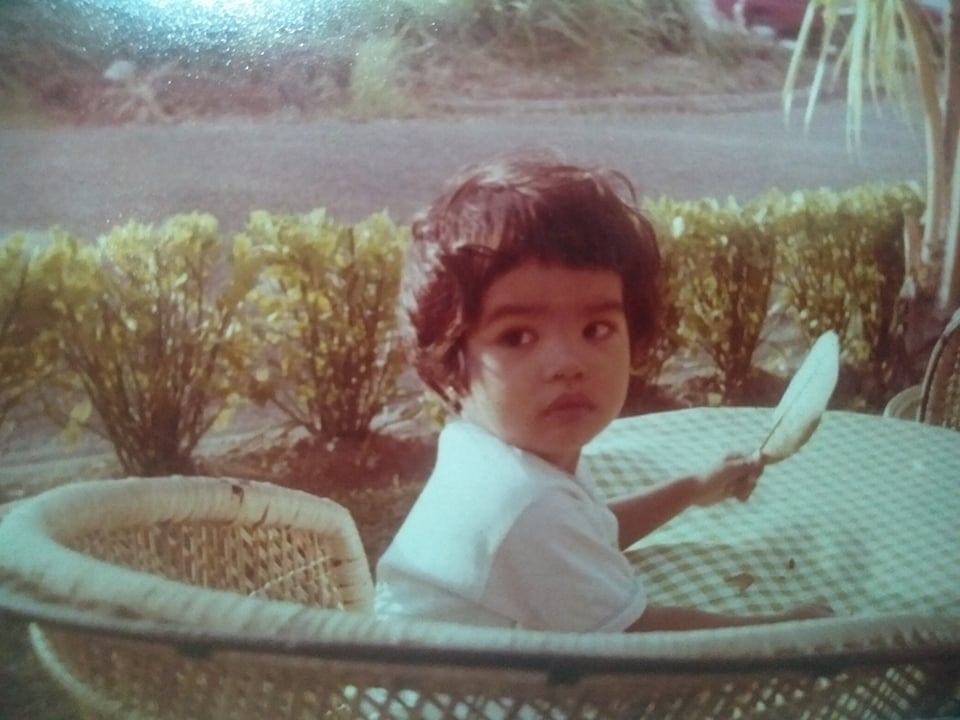 Kerima Tariman at age 2.
The moment she began her schooling, she struck Pablo as an extraordinary child.
“We knew she was different the very minute she went to school and absorbed her milieu,” Pablo wrote on Facebook, August 21, 2021.
“Surrounded by books, she turned to poetry the way swans take to water.
“She was barefoot along with a classmate from the highlands when she finished high school and claimed her diploma.
“She recited a short poem instead of a tedious salutatory address.”
In 1996, Kerima graduated as salutatorian at the Philippine High School for the Arts, in Los Baños, Laguna, where she was a scholar for creative writing.
Next she moved to the University of the Philippines (U.P.) Diliman where she took up Philippine Studies.
It was at the campus that she met her husband Ericson.
Pablo said that his daughter had her first poetry collection published at 16 years of age, and that she won poetry competitions at the state university.
Kerima’s poems were also published in Sunday Inquirer Magazine, Manila Chronicle, and other large-circulation publications.
But before she could graduate in 2000, she went Underground.
In his Facebook post, Pablo offered an explanation to why his daughter dropped out of college and became a rebel.
“It is futile telling her to live a ‘normal’ life when the newspapers are full of stories of corrupt politicians and cops in cahoots with big-time drug lords.
“She will not accept what has fallen on her countrymen still reeling from the shenanigans of kingmakers and wily politicians.
“There is no such thing as compromise for my daughter who has no love lost for public servants turned dictators; she must be cringing to see elected leaders turning traitors in the name of diplomacy."
REBEL WITH A CAUSE
In a separate Facebook post, Sarah Raymundo, professor and current director of the University of the Philippines—Center of International Studies in Diliman, wrote a tribute to Kerima, August 21, Saturday.
Part of Sarah’s post: “Kerima brought the sharpness of her pen and mind to its logical conclusion: revolution.
“Red salute to Ka Ella / Kerima, ‘ang magbuhos ng dugo para sa bayan ay kadakilaang 'di malilimutan.’”
Sarah also shared the screenshot of her article about Kerima published in the Philippine Collegian in February 2012.
In the article, Kerima talked about joining the revolution to fight for a more important cause.
Kerima explained, “When I entered UP, I was particularly struck by the determination of young radicals to establish a broad alliance of mass organizations under the banner of National Democracy (ND).”
ND is a political ideology and movement in the country that aims to establish what it envisions as true democracy, when strategic businesses are nationalized and ownership of land is not in the hands of a very few.
Kerima added, “As you know, it was a very challenging period. National democrats were not very popular.
“With the split in the student movement, the ND line was severely being discredited at the time.”
In 2000, when Kerima was managing editor of the official campus paper, Philippine Collegian, she was arrested in Ilagan, Isabela, for alleged illegal possession of firearms.
The university came to Kerima's rescue.
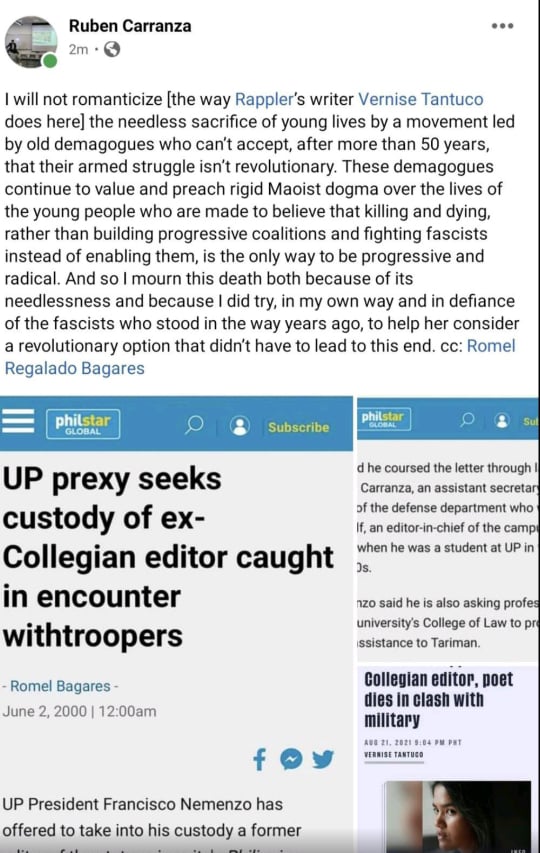
U.P. President Francisco Nemenzo offered to take Kerima into his custody, said a Philippine Star report of June 2, 2000.
The news at the time was that Kerima was wounded and captured by soldiers after an encounter in Delin Albado, Isabela.
"For now, my concern is to bring her here," Nemenzo was quoted as saying about the university student.
He told reporters that he had sent a letter to then Department of National Defense (DND) Secretary Orlando Mercado seeking custody of Kerima.
Nemenzo coursed the letter through lawyer Ruben Carranza, then the DND assistant secretary for plans.
Carranza was editor-in-chief of the Philippine Collegian in the late '80s.
Nemenzo also asked professors at the U.P. College of Law to provide legal assistance to Kerima.
After more than a year, the case was dismissed, and Kerima was set free.
But Kerima's imprisonment had left a lasting impression on her.
“I was in Isabela on a Basic Masses Integration program,” she was quoted as saying in the Philippine Collegian article.
“I was only hoping to gain better understanding of the peasant situation in that area.
“I was all the while keeping an open mind despite petty inconveniences.
“Of course, imprisonment was such a remote idea.
“But the whole experience, from living with the peasants to my arrest and detention, is an indispensable lesson on the reality of class struggle.”
In a 2011 essay, Kerima wrote about how that experience has made her suspicious of her environment.
Part of it read: "The first time I went to the countryside to integrate with farmers, government troopers tried to show me first-hand how fascism, counterinsurgency, and psychological warfare work.
“As if to make sure I don't forget, they gave me a minor grenade shrapnel wound, and a major, lingering fear of any man with a golden wristwatch who'd seem to loiter in public places to watch me."
Eleven years after, her husband Ericson would suffer the same fate.
On February 13, 2011, Ericson was arrested by the Armed Forces of the Philippines in Western Samar and became a political prisoner.
Of her husband's arrest, Kerima said, “Ericson was a volunteer researcher for Kapawa, a local peasant organization in Western Samar."
Kapawa stands for Kapunungan han mga Parag-uma ha Weste han Samar, an organization of farmers and fishermen in Samar.
“He wrote articles and reports on large-scale foreign mining and human rights violations.
“Like most cases of illegal arrests, Ericson has been made to appear like a terrorist, what with trumped-up criminal charges and tedious legal processes that have only delayed the delivery of justice.”
On January 31, 2013, after two years in prison, Ericson was freed.
The case filed against him—illegal possession of explosives—was dismissed for lack of evidence, said a report by pen-international.org.
THE POET
Before she graduated from high school, Kerima had published a book of poetry, Biyahe.
In 2018, one of her other poetry books, Pag-aaral sa Oras: Mga Lumang Tula Tungkol sa Bago, was named by CNN Philippines as one of the best books written by a Filipino.
Aside from poetry, Kerima seemed to have taken after her father, and wrote film and book criticism under the penname Marijoe Monumento. Her works were published in Pinoy Weekly.
Kerima's desire for change in the system echoed in her poetry. Here is a 1999 poem.
HALAW
Hindi mawawala ang araw sa ating panulaan
Dahil ito ang isang bagay na nawawawala sa lipunan
Ipinaghele tayo ng kimi
At pinasuso ng katahimikan.
Tayo’y mga ampon ng sigwa
Tayo’y mga bastardo ng lansangan.
Kinukutyang tagapagmana
Ng mayamang kasaysayan,
Kinukutyang kakampi
Ng sinisinong sambayanan
Tayong nakikipagtitigan sa mata
Ng unos.
Walang mukha, walang pangalan,
Ngunit kaaway ng karimlan
At kawalang katiyakan.
Tayo’y ningas sa mahinang puso,
Tayo’y liyab ng libong sulo.
Tayoy mga andap lamang.
Bahagi at kaganapan
Ng naglalagablab
Na araw ng kasarinlan.
In her poem Pagkilos, she calls for people to act now.
Part of her poem reads:
"A, lahat ng bagay ay saklaw ng ating kilusan,
Katotohanan ito na di maaaring iwasan.
Kung kaya’t habang tayo ay may lakas at talino,
Sa pagkilos natin ialay ang ating bawat segundo!”
Her poem Aralin sa Ekonomyang Pampulitika tackles business monopolies in the country and class struggle.
Part of her poem reads:
“Binibilang ko ang mga bagay
Na mahalaga sa akin:
Bubong, saplot, araw-araw na kakanin.
Binibilang ko ang araw
At ako’y napapailing:
Bawat minuto,
Kinikita ng mga kumpanya ng langis
Ang katumbas ng walong oras kong pawis.
Bakit ba napakahalaga
Ng paghahangad ng labis,
Kung ang labis-labis,
Ang katumbas ay krisis?
"ALAMAT NA NOON SI KERIMA"—COLLEGIAN STAFFER
Kerima made a name for herself as a college student.
A co-staffer at the Philippine Collegian, Kenneth Guda, recalls memories of Kerima in his Facebook post this Saturday.
“Tulad ng marami sa henerasyon ko sa U.P., madalas siyang tambay na sa Vinzons lobby noon, 1996.”
Kenneth said they would see Kerima smoking one cigarette after another.
“Yung parang laging nagmamadali maubos ang yosi. Parang snob din, di masyado namamansin.
“Pero alamat na noon si Kerima. Nakapaglabas na ng libro ng mga tula noong hayskul sa Makiling.
“Mapaglaro pero seryoso, grim and determined, pero cool magsulat si Kelot.
“Parang Brechtian na tambay. Intelektuwal pero taga-Krus na Ligas.”
Brechtian is a term referring to the use of one’s art to spark in the audience a political interest.
“Matalas pero makulit,” said Kenneth.
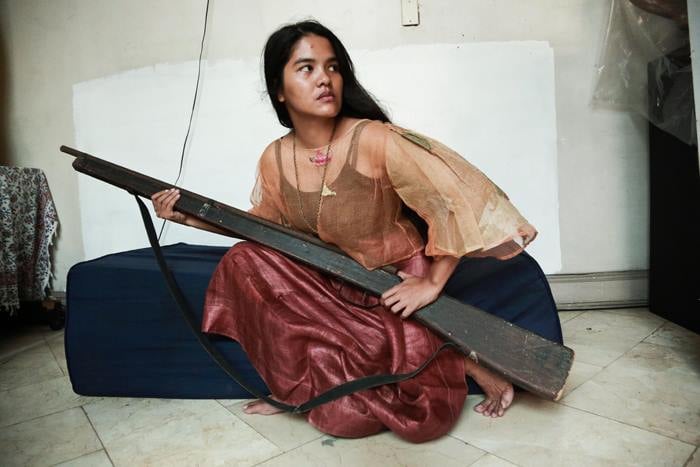
He likened Kerima’s death to the cigarettes she would puff in a rush.
“Sabi ko nga sa isang kaibigan, grabeng maaksiyon naman itong buhay ni Kelot. Parang nagmamadali pa rin.
“Parang yosi niya na mabilis maupos, parang pubmat na dapat maipaskil agad.
“Parang iyung tuyong talahib na biglang apoy, tapos biglang mawawala.
“Pero bago mawala, naapuyan na rin ang ibang talahib.
“Kumalat na ang apoy, kahit namatay na iyung pinagmulan nito.
“Paalam, Kerima.”
On August 22, 2021, Sarah Raymundo wrote a Facebook post that spoke of her bond with Kerima.
One of their special moments was writing together, Sarah said, dealing with topics like activism and the Free Ericson Acosta campaign, launched when Kerima’s husband became a political prisoner.
Sarah shared this memory of Kerima: “A friend and comrade gifted me with a book on the Balangiga Massacre before going back home to Spain.
“Kerima and I read it together—literally sharing one book, fixing our eyes on the same page while sitting close or lying down next to each other. We would gleefully call it the height of suffocation.”
Sarah talked about how supportive Kerima was as a person, and how they formed a long friendship.
“Whenever she can, Kerima supported my own work. My understanding of anti-imperialist politics and revolutionary history however incomplete, I owe to Kerima’s guidance and encouragement since we were very young.
“It is a friendship," Sarah wrote, "that lasted for more than half of my life.”
A LIFE WELL LIVED
Rey Liwanag, a schoolmate, fellow activist, and longtime friend of Kerima wrote a tribute to her in Pinoy Weekly, August 23, 2021.
“SHE WAS ALWAYS READY" his title read.
He and Kerima were both activists in the '90s but belonged to different groups, and they did not become friends instantly.
Rey said Kerima had “this quietly ferocious aura that keeps people away.” To be Kerima's friend, she had to “choose you.” He saw how many attempted to make small talk with her, with most of them failing.
As Rey put it, “You can’t just decide to be friends with her. She rarely initiates interactions and can be very blunt.”
But they eventually ended up being housemates on Maalalahanin Street in Teacher’s Village, near UP.
The housemates became the Jungle Jologz, a name Kerima herself coined.
They bonded over music. “She loved going to gigs. 70s Bistro, Inka Cafe, Risiris, Brother’s Mustache, saan pa ba? Well kung saan man ’yan, napuntahan na ’yan ni Kelot,” Rey says, calling Kerima by her other nickname.
They bonded over cooking and pasta. They just loved food. And they always scouted for the best new carinderia that offered cheap, delicious dishes.
Kerima was good with words and was a voracious hoarder of books from Booksale, a second-hand bookstore. She and Rey loved Dharma Bums, a novel by Jack Kerouac, an icon of the Beat Generation in the U.S.
The Jungle Jologz loved films and watched movies at the U.P. Film Center or met up at the Shangri-La Mall for Cine Europa.
They argued over music, movies, political theory, and revolution.
Rey recalled, “It was shitloads of fun, and not all of it legal or healthy but we were young and felt like we would live forever. We grew up together and did all the notorious things teenagers are supposed to do together.”
Of course, they had to grow up one day.
Kerima was the first one to go. She decided to live with the poor in Isabela, in an effort to integrate with the masses, which ended up strengthening her belief that the world order had to change.
“Back when we were still trying to figure out our lives, Kelot already knew what she wanted to do. It was always clear to her, and she never wavered,” Rey said.
He saw Kerima change as the years passed. To be able to live among common folk, she had to learn to open herself up. She had to learn to communicate with all types of people.
“In many ways she became much more of a leader, quiet but commanding,” Rey said.
He noted that Kerima must be the bravest person he has known.
He said that when Kerima was captured by the military in Isabela in 2000, she did not feel fear.
“She didn’t remember being scared," recalled Rey. "She said she realized she was about to die, and decided there and then that she was ready.”
But it was not yet her time. Kerima was still to become a mother.
“Her joys became simpler in that time, she would write to me about how she enjoyed the quietude of life in the province,” said Rey.
“She doted on Emman as he was such a beautiful baby. When she held her baby, she had this look in her eyes, as if asking herself: ‘I made this human being? Really?’”
Rey added, “I enjoyed seeing her live in domestic bliss, if only fleetingly.”
Rey always felt that the “most painful thing” Kerima had to do for the national democratic movement was to leave her baby to return to revolutionary work full time.
“I met Kerima Lorena Tariman as an irreverent and fun-loving teenager but I saw her become a mother, a fierce warrior and now a revolutionary hero.”
On August 20, 2021, Kerima was killed in an encounter, and Rey saw one of the first pictures of Kerima dead.
He described Kerima in that picture, “She was looking to the side, her gaze strong with a hint of a frown on her brow. It must have been the last moment of her life before they finished her off. She looked brave and ready.
“She was always ready.”
A NEEDLESS SACRIFICE
Ruben Carranza, former U.P. professor and senior expert at the International Center for Transitional Justice, had his own Facebook post about Kerima's death.
The August 22 post of Ruben differed from the posts of Kerima's friends.
He called the plight of Kerima a case of “needless sacrifice of young lives by a movement led by old demagogues who can’t accept, after more than 50 years, that their armed struggle isn’t revolutionary."
Continuing, Ruben said, “These demagogues continue to value and preach rigid Maoist dogma over the lives of the young people who are made to believe that killing and dying, rather than building progressive coalitions and openly fighting fascists instead of enabling them, is the only way to be progressive and radical.”
Ruben said he is saddened by Kerima's death “because of its needlessness and because I did try, in my own way and in defiance of the fascists who stood in the way years ago, to help her consider a revolutionary option that didn’t have to lead to this end.”
the DAUGHTER IN HIS FATHER’S EYES
With his daughter dead at the age of 42, Pablo cannot be blamed for wanting to remember her as an infant.
In a poem he wrote on August 22, 2021 titled “INFANT IN MY MIND,” Pablo paints a picture of his newborn.
This is a father who believes his daughter made a difference.
Thus, while Pablo is aware that when he arrives in Negros, what he will see is his daughter’s lifeless body, what he holds in his mind is the image of Kerima as a baby with only innocence in her eyes.
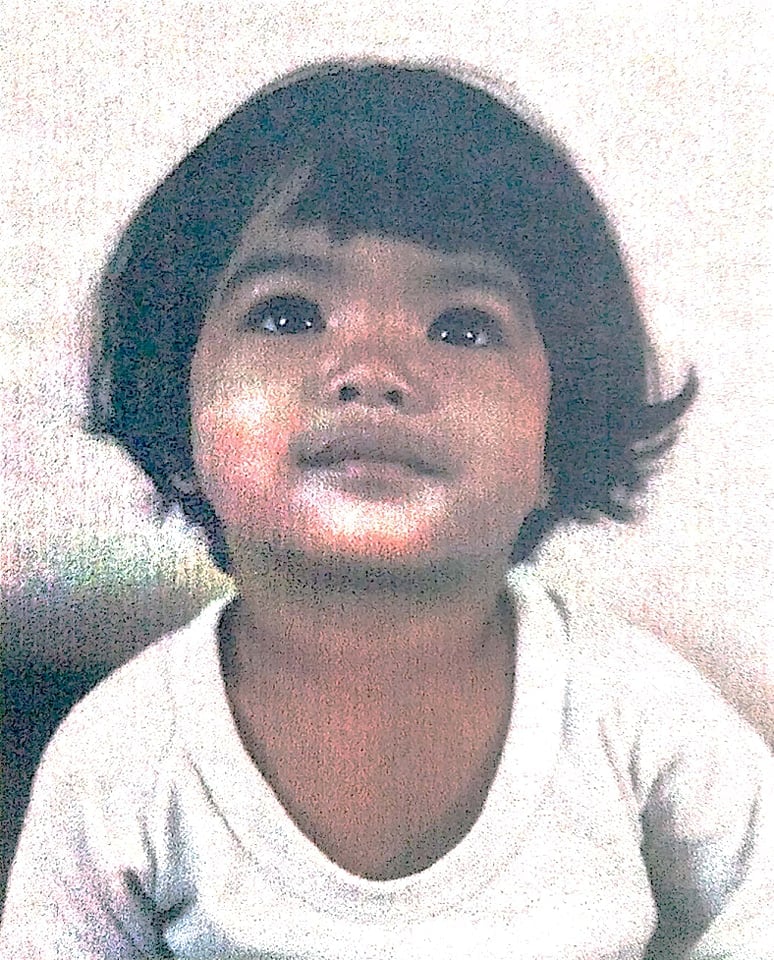 Pablo posts on Facebook this photo of Kerima when she was one year old.
Here is Pablo's poem for daughter Kerima.
"INFANT IN MY MIND"
It's hard to catch sleep
Thinking of the infant
In my mind.
But of course
She has outgrown
Her infant years.
She has ended
Forty two years
Of a life
With her brand
Of heroism.
I think of her now
Lifeless on a cold cement
Waiting for her father and son
To claim her
And share
A last hug.
It is strange
That I will go home
With her body reduced to ashes
Before we fly home.
I like to recall
The infant in my mind
Frolicking on innocence
With not hint of a grim ending
Ahead of her.
I like the innocence
In my daughter's eyes.
I like the angelic face
I treasured
When life was young
If, carefree.
I will soon see
What's left of her angelic face
When I see her cold body
Lying on the cement floor.
It is belated fond goodbye
It is farewell to arms
It is final curtain call
To the infant
In my mind.