
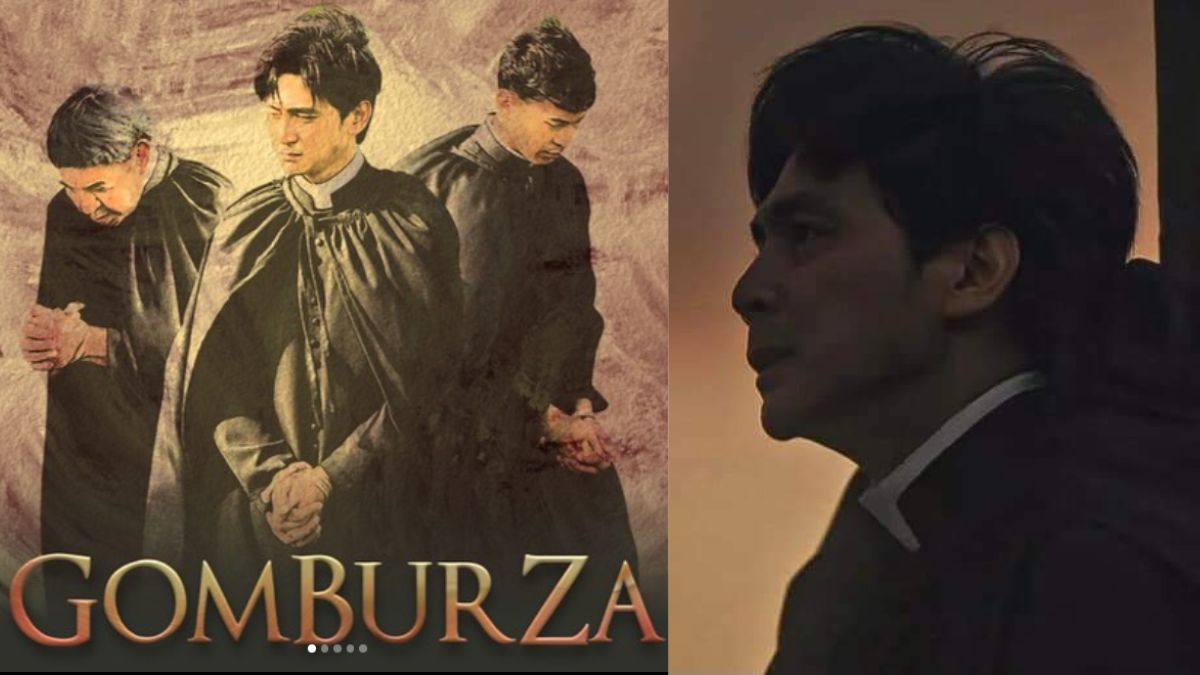

“I hope we learn from history," Cedrick Juan said in Filipino, his voice cracking.
He had just won for Best Actor at the 2023 Metro Manila Film Festival’s (MMFF) Gabi ng Parangal held December 27 at the New Frontier Theater in Quezon City.
He was offering his victory to all Filipinos who have been denied true justice.
Read: Cedrick Juan, big break ang GOMBURZA sa 10 taon sa pag-arte
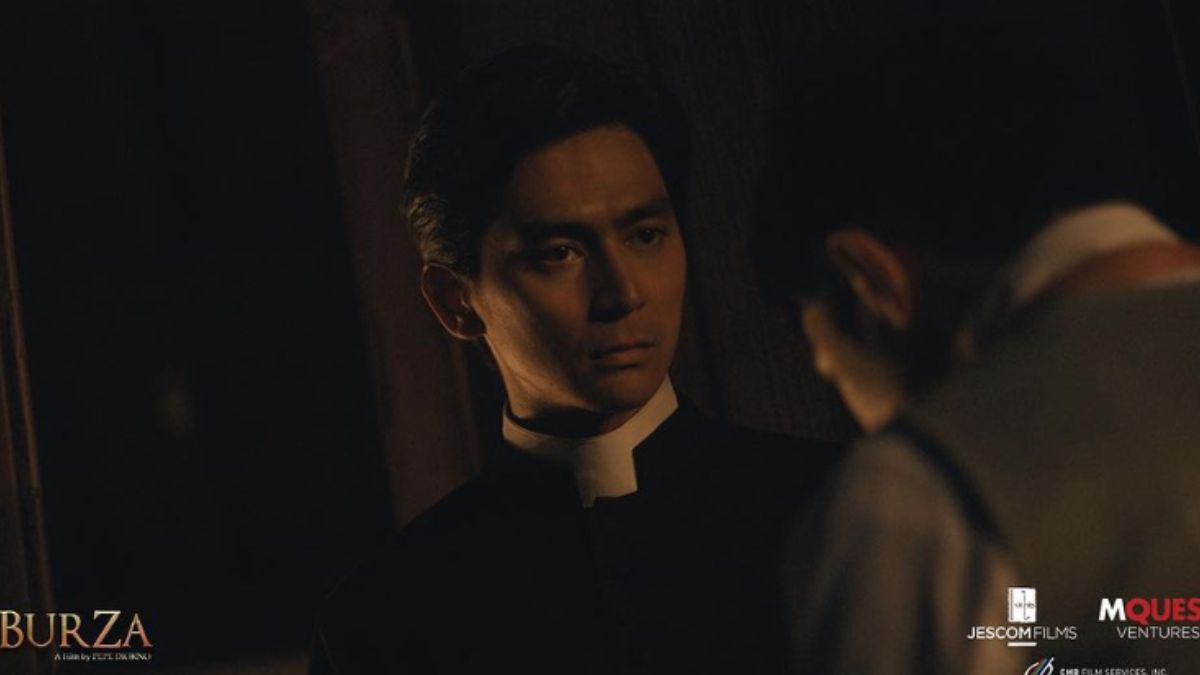
Cedrick Juan as the progressive young priest Padre José Burgos, who is unjustly charged with treason and sentenced to death along with his fellow clerics Padre Mariano Gomez (Dante Rivero) and Padre Jacinto Zamora (Enchong Dee) in the historical biopic GomBurZa.
Juan’s truthful performance in the historical biopic GomBurZa, as progressive young priest Padre José Burgos who is unjustly charged with treason and sentenced to death with two fellow clerics, the wizened Padre Mariano Gómez (Dante Rivero) and the card game-loving Padre Jacinto Zamora (Enchong Dee), is a rallying call for Filipinos to be more mindful of their country’s past and its lessons—no matter how painful, tragic, or too distant to care about.
The movie—which clinched six other MMFF awards including Best Director for Pepe Diokno and 2nd Best Picture—delves into a series of events said to have inspired Filipino nationalism, which eventually led to the Philippine Revolution of 1896.
Read: Vilma Santos, Cedrick Juan, Firefly, Gomburza win big at MMFF 2023 Gabi Ng Parangal
The martyrdom of Gomez, Burgos, and Zamora in 1872 motivated Jose Rizal to write the novels Noli Me Tangere and El Filibusterismo, even dedicating the latter to the memory of the three priests.
Gom-Bur-Za became the mantra of the Katipunan as it took up arms against Spanish rule.
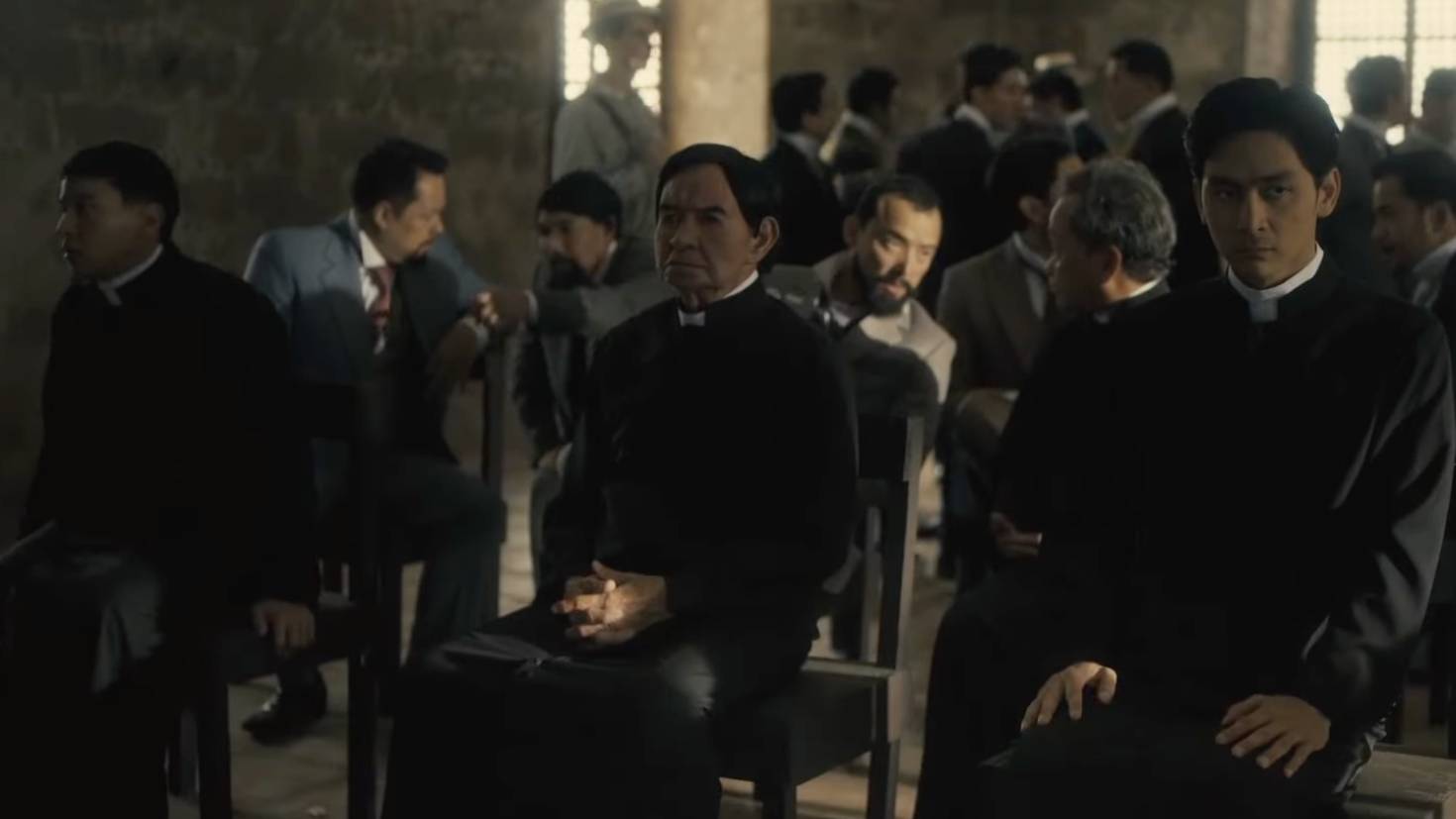
(From left) Enchong Dee as Padre Jacinto Zamora, Dante Rivero as Padre Mariano Gomez, and Cedrick Juan as Padre José Burgos as the three martyred priests
AROUSING CURIOUSITY
The story of GomBurZa comes to light at a time when Philippine history is overlooked, if not totally forgotten, and in some instances shockingly twisted by partisan politics. The narrative exudes a refreshing breeze, arousing curiosity in an incident clouded with confusion and mystery.
Diokno—who also cowrote the screenplay with Rody Vera—begins the story with a brief recounting of an earlier incident, a bloody confrontation between the Spanish military and Hermano Pule, a Filipino who founded his own religious order, the Cofradia de San Jose, following the Catholic Church's rejection of his application as a priest based only on the color of his skin, as an indio (a native born in the Philippines).
Years later, racism causes more conflict as Spanish friars block the appointment of secular local priests to head parishes in the colony of Las Islas Filipinas. The conservative friars not only look down on their native counterparts' origins, they are also threatened by the latter's liberal ideas of equality and independence, gained from studies in Spain itself.
On the other hand, the secular clergy, many of whom are mestizos (born in the Philippines from Spanish or Creole descent), believe they have the right to lead the parishes after proving their competency and building a virtual kinship with the natives.
"LOS FILIPINOS"
Against this backdrop, the secular priests, led by the outspoken Padre Pedro Pelaez (Piolo Pascual), form a group, including Gómez, Burgos, and Zamora, seeking reforms from the Spanish Cortes (Parliament), writing manifestos in newspapers, signing them as “Los Filipinos,” and fraternizing with prominent citizens who are also yearning for a fair shake in their own land occupied by foreigners.
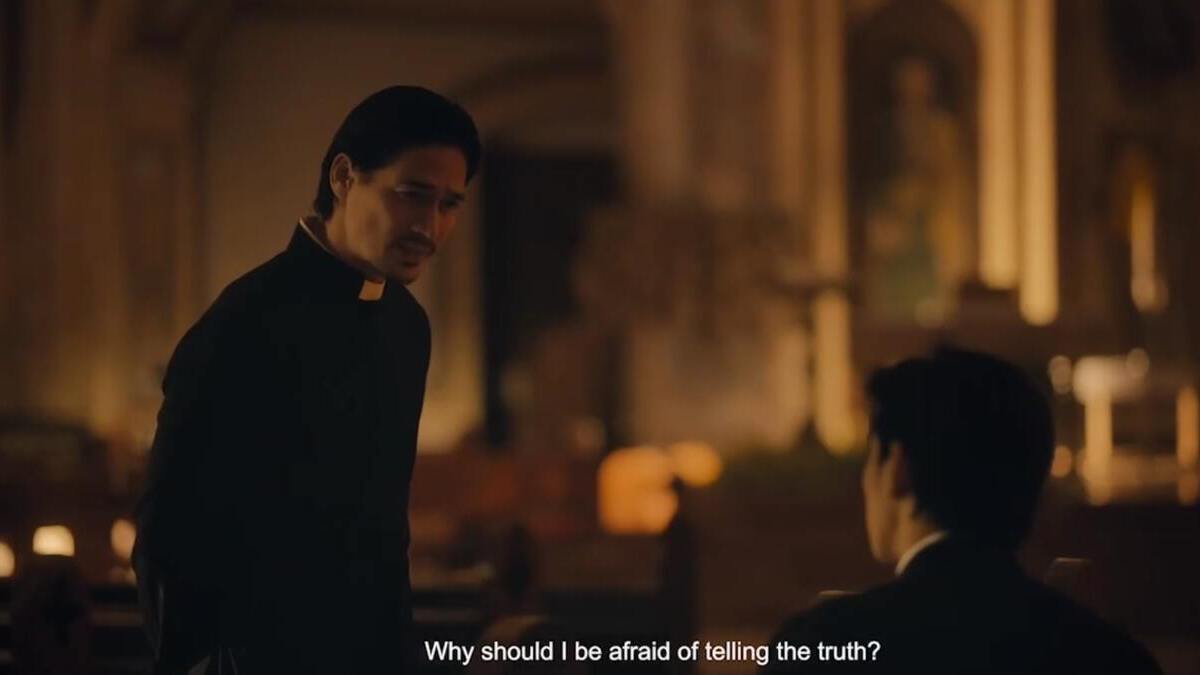
Piolo Pascual plays the outspoken Padre Pedro Pelaez
This angers the friars and marks the first time “Filipino” is uttered to describe identity, following Pelaez's posing the question, “Who are we?”, to his protege Burgos—whose stature rises after completing doctorates in theology and canon law, and becoming the examiner of would-be priests in the Archdiocese of Manila.
When they get implicated in the so-called Cavite Mutiny—a hastily planned and quickly quelled attack by disgruntled marines on the navy yard in San Felipe—Gomez, Burgos, and Zamora are occupying top posts as parish priests of Bacoor, Manila Cathedral, and Marikina, respectively.
The muddled circumstances surrounding the incident, including the charge that Burgos masterminded the attack to become “King”of the Islands, is like many of the fake news of today.
As a viewer, one is inclined to search for more details on this rarely discussed chapter of our ancestors' lives, and finds them in Nick Joaquin's A Question of Heroes and Leon Ma. Guerrero's The First Filipino.
Both books underline the impact of the execution of GomBurZa on Rizal. Joaquín goes one step further by writing about two friars captured during the Revolution who confessed that Burgos was a victim of a murderous plot hatched by the heads of the religious orders.
PAST AND PRESENT
In any case, the movie succeeds in its attempt to relive history as an event linked to the present.
In fact, the abuses heaped on hapless natives by their Spanish rulers are still much evident in recent years, in the form of human rights violations committed by the Philippines' own leaders themselves.
Cedric Juan as Burgos is an excellent choice, and his on-point, nuanced portrayal of an intelligent, doomed character also stands out from the ensemble acting of the supporting cast.
GomBurZa is beautifully photographed by Carlo Mendoza, and much of its cinematic allure lies in the contrast of light and shadow—the subtle light symbolizing the faint hope of redemption from the prevailing darkness of the times.
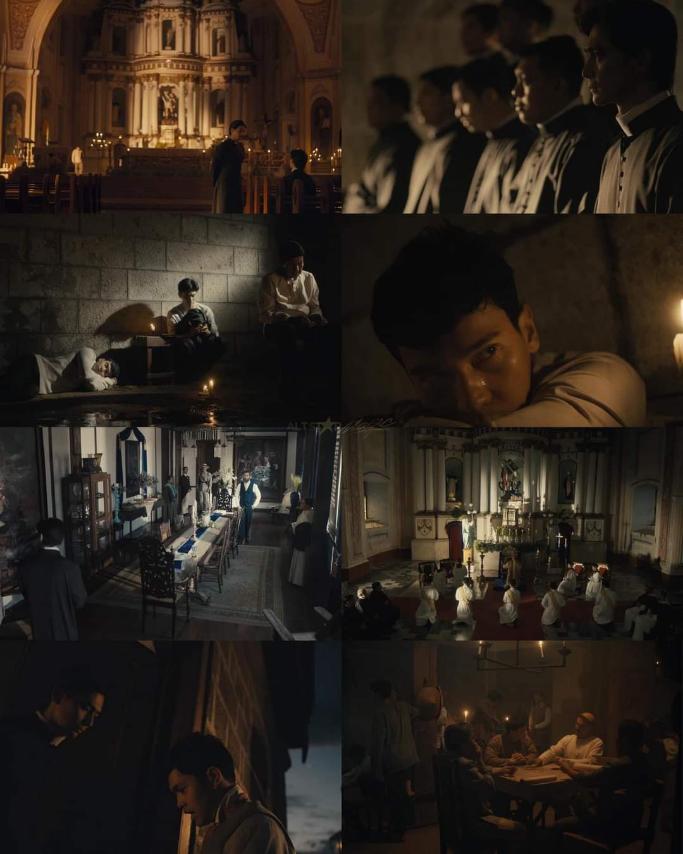
GomBurZa is beautifully photographed by Carlo Mendoza, whose play of light and shadow contrasts the faint hope of redemption amid all the darkness of the times during Spanish rule in Las Islas Filipinas. Composite photo from Facebook
The story likewise llluminates a little-known fact that Rizal's elder brother Paciano is the OG activist, a founding member of the Juventud Escoral Liberal (Liberal Filipino Youth) which supported Burgos's reformist ideals.
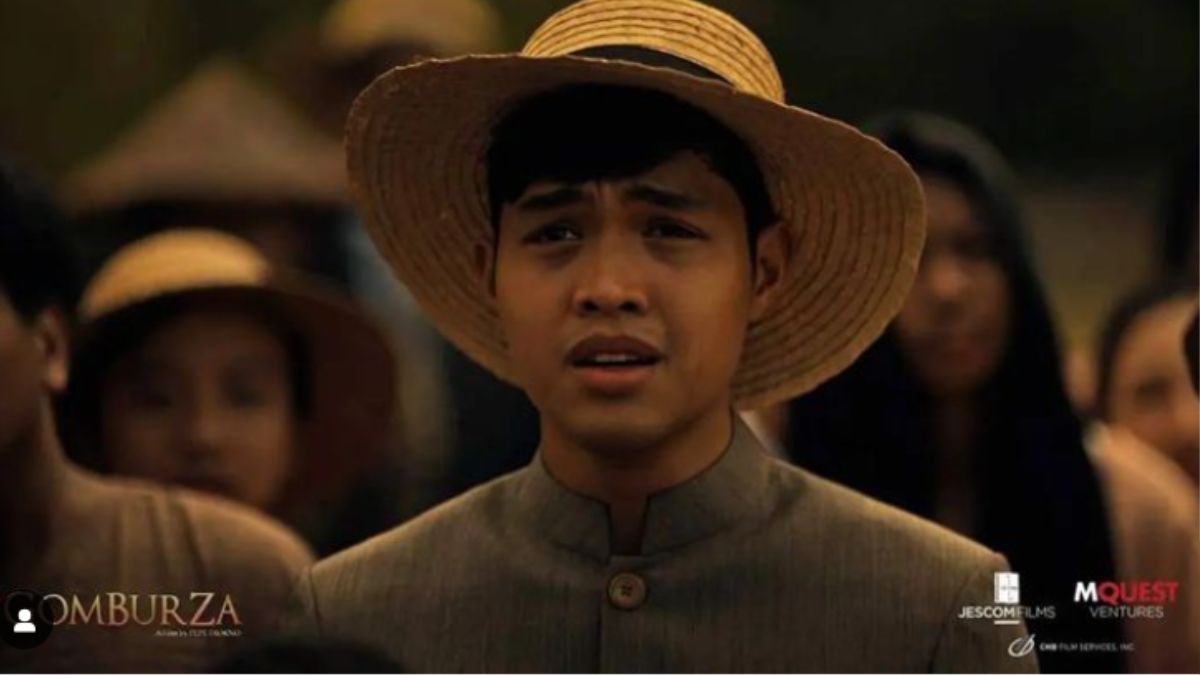
Elijah Canlas plays Paciano Mercado, a student of Father Burgos
In The First Filipino, Guerrero writes that Paciano was a housemate of Burgos. And in A Question of Heroes, Joaquín calls Rizal the successor of Burgos, “both died implicated in the violence they deplored,” and which Diokno manages to capture as he ends his movie with a stylized reenactment of Rizal's execution in Bagumbayan.
Was it sheer coincidence that Burgos and Rizal were both 35 when they died?
It is said that those who don't learn from history are bound to repeat it. Do yourself a favor and catch GomBurZa which runs till January 7, 2024.