
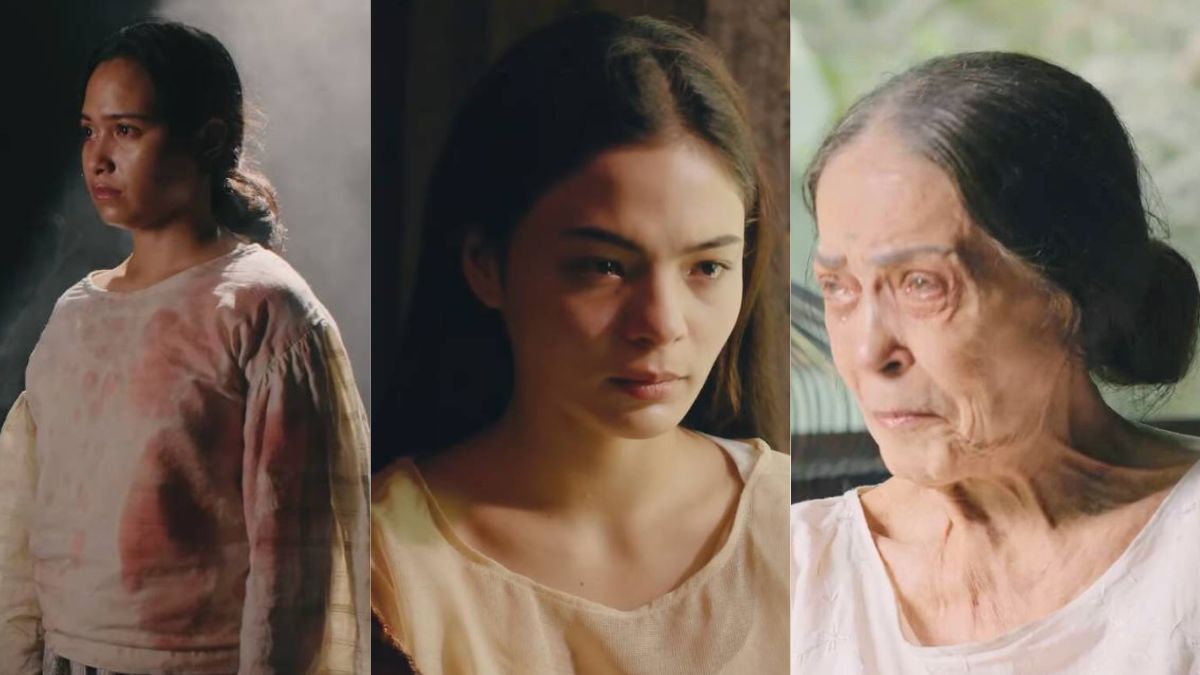

You may be pleasantly surprised when you sit down for Lakambini, a new historical movie that opens in cinemas today, November 5, 2025.
Instead of being a straightforward retelling of the life of Gregoria de Jesus, Lakambini is an ambitious project that uses the past to launch a powerful critique of the present.
Much has been told about the abrupt ending to the film's initial production in 2015, when it was shockingly rejected from the Metro Manila Film Festival (MMFF).
After a decade, directors Jeffrey Jeturian and Arjanmar Rebeta, and producer Ellen Ongkeko-Marfil, took what should have been a production disaster—banked footage from that rejection—and turned that struggle into the movie's main strength.
Read: Lakambini film finally set for release after decade-long delay
A UNIQUE CINEMATIC EXPERIENCE
The result is a jaw-dropping metacinema documentary. You get the classic, beautifully shot fictional scenes, that cuts to sudden talking heads, raw commentary on Filipino filmmaking, politics, and womanhood.
The shift is jarring at first, and it’s a lot to take in. But once the realization hits about what they’re doing, it absolutely clicks and becomes masterful.
The structure is the point.
The movie successfully connects Gregoria de Jesus’s fight for the revolution to the present-day struggle to tell her story.
Consider the irony: one of the reasons for Lakambini’s 2015 MMFF rejection was the script’s lack of battle scenes.
The film uses this incident to show that the system keeps trying to silence her memory and female-centric narratives by demanding male-coded action. It’s a potent critique of an environment that tries to suppress feminine figures.
Read: Felicia Atienza says Emman's death gave her "the deepest pain"
LAKAMBINI AND A STELLAR CAST
Despite the unusual structure, Lakambini still feels solid thanks to the brilliance of its cast.
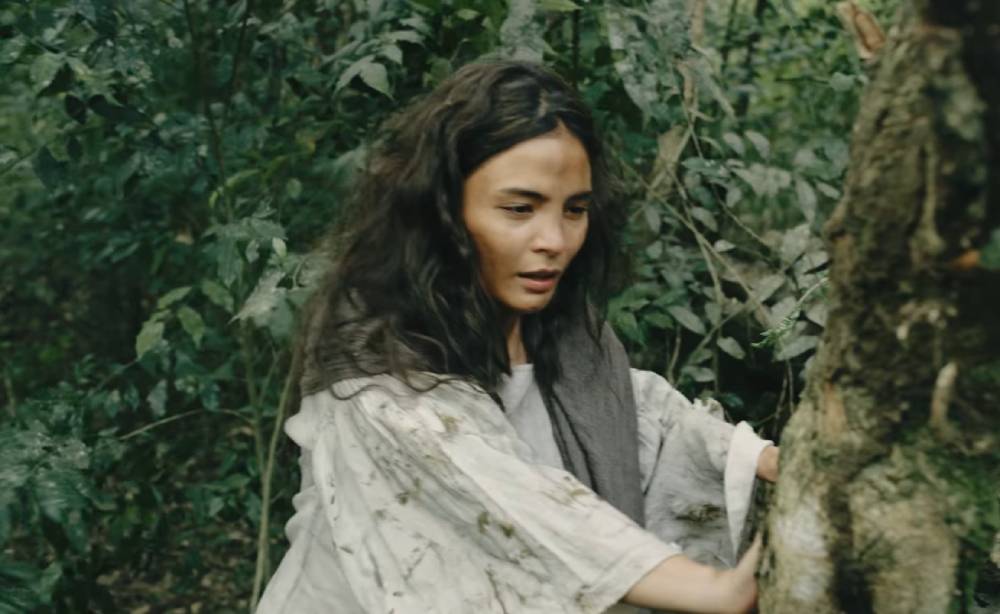
Lovi Poe is incredible as Gregoria de Jesus. You can see the sheer effort she poured into the part.
This wasn't a star playing dress-up. She was hiking and getting dirty. There’s a cinematic sequence where she rides a horse.
Lovi is so committed to the project, she still supports it even if she wasn’t able to come back for the reshoots.
Rocco Nacino, meanwhile, is equally strong as Andres Bonifacio.
His on-screen chemistry with Lovi is tender yet compelling, giving the film a powerful, human center to cling to amidst the political commentary.
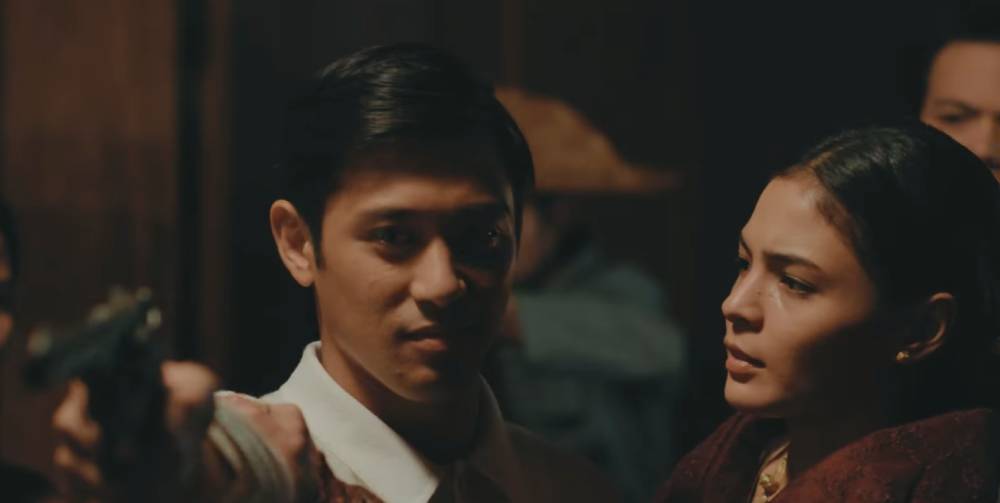
Paulo Avelino also makes his mark as Julio Nakpil, managing to be impactful even with limited scenes.
Even in brief moments, he has a quiet, magnetic presence that makes you pay attention.

Two more actresses portray the Lakambini.
There’s Gina Pareño, who plays the female hero during her senior age. Her performance is heartbreaking, and she reminds everyone why she is one of the best actors of her generation.
There’s also Elora Españo, who alternates for Lovi in some scenes. While Elora perfectly mirrors Lovi's acting prowess and intensity, the quick alternation between them unfortunately can lead to a brief disruption of the viewing experience.
Read: Anjo Yllana, nilinaw ang pagkakautang umano kay Willie Revillame
FROM REJECTION TO REDIRECTION
In the end, accolades must go to the filmmakers who refused to give up, and instead found a brilliant answer to a unique creative problem.
They didn't just finish the movie. Instead, they weaponized its own production struggle to reinforce its central message about suppressed history.
More than a historical film, Lakambini is a necessary, singular piece of cinema that demands to be seen.