
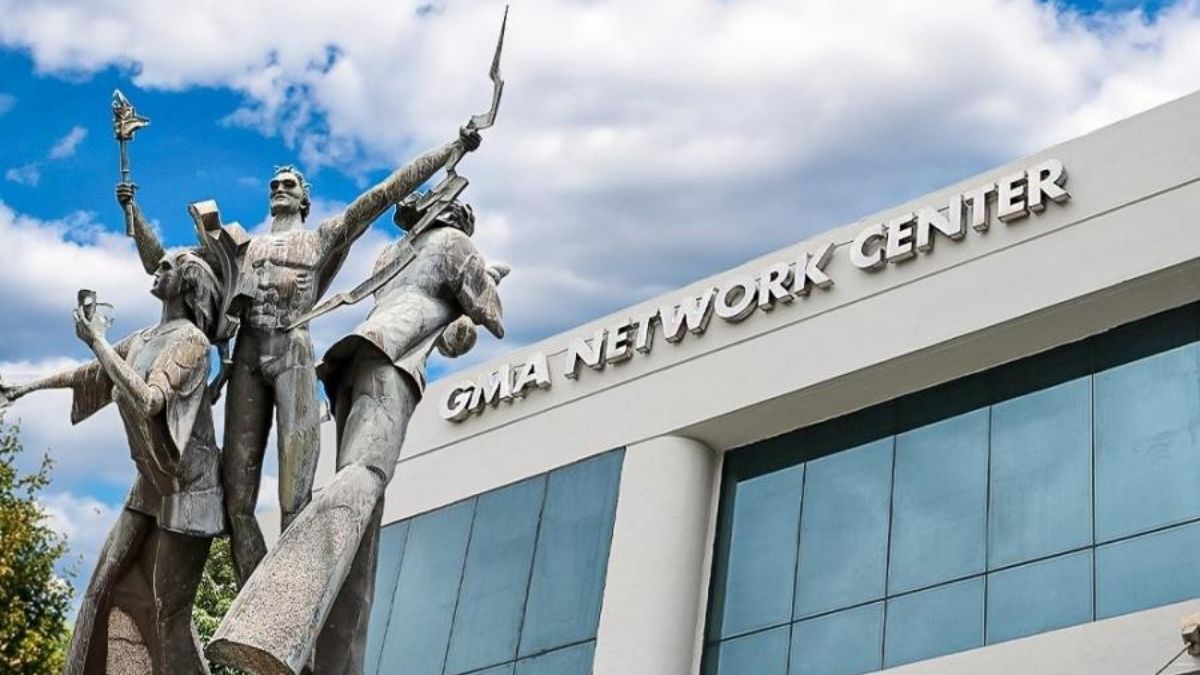

The landmark labor cases filed by talents against broadcast giant GMA Network, Inc. have reached a decisive ruling after an 11-year legal battle.
The Supreme Court has ruled in favor of 94 members of the Talents Association of GMA (TAG), declaring them “regular employees” and not “independent contractors” engaged under fixed-term “Talent Agreements.”
The High Court also ordered the reinstatement of 50 respondents who were found to have been unlawfully dismissed in 2014.
Unsurprisingly, the decision prompted emotional reactions from many involved in the case.
At the forefront is Christian Cabaluna, president of TAG, who gave Philippine Entertainment Portal (PEP), on January 26, 2026, an exclusive interview.
He said via Facebook Messenger: “Mataas ang moral ngayon dahil sa loob ng mahigit na tatlong taon sa Supreme Court ay lumabas na rin ang desisyon.
“Upon hearing the result, may mga naiyak at may mga tumalon sa tuwa. Siguro dahil bumuhos na rin ang emosyon na matagal naming kinimkim.”
But the battle, he admitted, is not over.
Asked what happens next, Cabaluna replied: “Wala pa. Fifteen days ang deadline para mag-file ng Motion for Reconsideration [MR] ang network.
"We are waiting for the finality of the decision.
"Kung hindi sila nag-file, uutusan ng SC [Supreme Court] ang labor arbiter na ipatupad na ang utos.
"Kung mag-file ng MR, another round of waiting for the SC’s decision."
Related Stories:
- GMA Network talents cry foul over alleged labor malpractice; stands by regularization complaint vs GMA
- GMA Network terminates 11 TAG members for joining protest against contractualization
- GMA talents win labor complaint against GMA; declared as regular employees by NLRC
ABOUT THE RESPONDENTS
According to the resolution uploaded on the Supreme Court’s website, a total of 142 individuals initially filed complaints against GMA-7 seeking regularization before a labor arbiter.
Eventually, a number of these individuals chose to submit their resignations.
In whole, the complainants included executive producers, associate producers, and segment producers; head writers and other writing staff, graphic artists, and transcribers; cameramen and video researchers; data research staff, action center coordinators, production assistants, and production coordinators from GMA News and Public Affairs.
All complainants had signed “commonly worded contracts… subject to renewal for periods ranging from one month, three months, six months, or one to five years.”
The resolution also revealed that in 2015 their talent fees ranged from PHP13,000 to PHP84,000.
In January 2026, the TAG team held a virtual reunion. By then, many of its members had moved from a career in media.
PEP caught up with some of them for comment.
Mike Manalaysay, former associate producer, now runs his own media company, Arkipelago News, and also manages a production company.
Jeffrey Osoc, former writer-producer, is presently the HR Manager of the PAGEONE Group, handling all its five business units.
Jensine Fatima Bolinao, former program researcher, is now a public relations practitioner.
"At least 20” continue to work at GMA.
One of the complainants, Imbestigador cameraman Mang James Arce, died in 2023.
Cabaluna, who also once served as associate producer on Imbestigador, now works with a non-government organization focusing on agriculture, environmental advocacy, and communication campaigns.
Of their reunion, he said: “Yep, nag-Zoom na kami. Iba na ang mga itsura, iba na ang work, iba na ang pananaw sa buhay.
“May mga nagbago sa TAG members, pero nanatili ang paninindigan na tama ang aming ipinaglalaban.
“Hindi lahat ay nasa media pa. May mga napunta sa NGO, may mga nagtayo ng production houses, may mga freelancers, writers, office workers, government, at iba pa.”
GMA LABOR CASES IN A NUTSHELL
The 11-year battle that passed through the National Labor Relations Commission (NLRC), Court of Appeals (CA), and the Supreme Court (SC) was summed up in the 33-page SC resolution.
There were two cases:
General Register (G.R.) No. 254711
- Issue: Whether the TAG members were regular employees rather than independent contractors
- Respondents: 94 TAG members
- Outcome: SC recognized their status as regular employees, entitling them to benefits typically accorded under the Labor Code.
General Register (G.R.) No. 250673
- Issue: Illegal dismissal claims
- Respondents: 50 TAG members dismissed in 2014
- Details of Dismissal: 35 were not renewed while the regularization case was pending; 15 were dismissed for “mass unauthorized absences” that were said to cause production delays
- Outcome: SC ordered appropriate remedies, including:
- Full backwages, inclusive of allowances and other benefits, from the time compensation was withheld until actual reinstatement (or computed until final resolution)
- If reinstatement is not feasible, separation pay equivalent to one month’s salary for each year of service
- Legal interest at six (6) per cent per annum on monetary awards from finality until full satisfaction.
Actual monetary awards will be computed and finalized with a labor arbiter.
GMA LABOR CASES IN DETAIL
Regular Employees vs Independent Contractors
The "four-fold test" was used to define the employer-employee relationship between GMA and TAG respondents.
In his interview with PEP, Cabaluna simplified it thus:
1. Sino ang nag-hire?
2. Sino ang nagpapasahod?
3. Sino ang may control sa trabaho?
4. Sino ang may power of dismissal?
He underscored: "Lahat ng iyan, GMA ang sagot."
The resolution detailed the decisions of NLRC, CA, and SC, as well as the arguments of the GMA network.
MAJOR POINTS IN NLRC'S DECISION
The National Labor Relations Commission (NLRC) ruled in favor of the respondents, finding that they underwent examinations and interviews as part of GMA’s recruitment process, the same process undergone by regular employees.
Its findings also included the following: Respondents were compensated for their services, with payslips submitted as proof of payment.
Respondents’ job descriptions contained detailed instructions on how they were to perform their duties.
Respondents received notices when the company believed they violated rules and guidelines.
Respondents, in carrying out their tasks, made use of GMA’s cash advances, equipment, and facilities.
Moreover, GMA retained exclusive authority to terminate respondents' "Talent Agreements" at any time prior to their expiration.
Finally, the contracts’ General Terms explicitly granted GMA-7 full creative, editorial, administrative, financial, and legal control over its programs, requiring talents to defer to the network’s judgment on all production matters.
GMA’s Arguments
GMA-7 countered that the four-fold test did not apply in this case.
First, the network argued: Respondents did not submit formal applications for employment and were engaged specifically for their “unique skills and expertise.”
Recruitment tests were simply part of GMA-7’s due diligence.
Identification cards merely provided access to the network’s premises.
Respondents did not have daily time records.
And their use of network facilities, equipment, and vehicles was intended only to assist them in achieving the desired results.
Second, the network argued: It could terminate a Talent Agreement only in cases of breach.
It maintained that it did not have the authority to dismiss talents or impose sanctions arbitrarily.
Third, the network argued: Talents did not receive fixed salaries; they were compensated at rates substantially higher than those of GMA-7’s regular employees.
GMA-7 cited the case of Sonza vs. ABS-CBN Broadcasting Corp., in which the court ruled that the talent, Jay Sonza, was an independent contractor.
The ruling said that “an exclusivity clause in a contract does not automatically indicate control, since such clauses are a widely accepted practice in the entertainment industry to protect a network’s investment.”
GMA-7 also noted that exclusivity is typically accompanied by higher fees as reward.
Fourth, the network argued: Talents acted independently and without interference from GMA. The network’s role was limited to evaluating the quality of their work to ensure compliance with its standards.
Supreme Court Ruling
The Supreme Court noted that independent contractors possess "unique skills and talents" which set them apart from ordinary employees.
But it also noted that GMA-7 itself affirmed that the positions held by respondents "are indispensable for a show's production."
About Jay Sonza: "He was declared an independent contractor given his peculiar skills as a program host and broadcaster, as well as his celebrity status, which became the driving force for ABS-CBN's engagement of his services."
The Supreme Court highlighted that a key factor in determining the existence of an employer-employee relationship is whether the employer exercises control over how work is performed.
It noted that true independent contractors must operate free from such a control, citing Mel Tiangco's case versus ABS-CBN as reference: "Tiangco was a news anchor who was tasked to read or present news.
"The Court decreed Tiangco was an independent contractor after finding that ABS-CBN did not impose the manner of delivery and how she presented the news remained her own.
"The Court also focused on Tiangco's admission that ABS-CBN did not exercise control over her role as a co-host in the program Mel & Jay."
That was not the case for the respondents.
As the Supreme Court resolution noted, GMA-7 exercised significant authority over their work, including scheduling, production requirements, and operational oversight.
The High Court also noted that the contracts restricted respondents’ autonomy, requiring them to follow GMA-7 rules and operational direction.
As to flexible work hours and working from outside the network, the contracts nevertheless required repondents to "attend every production of the PROGRAM, including rehearsals, recordings, tapings, pre- and post-production sessions and meetings, according to such schedules as may be set by GMA."
Add to this: "TALENT's services may also be required for other production, merchandising or promotional purposes and for other special projects of GMA outside of the PROGRAMs with no additional compensation, subject to TALENT's availability."
In response to GMA-7’s claim that higher talent fees and the lack of day-to-day supervision indicated independent-contractor status, the Supreme Court ruled that these factors alone do not nullify an employment relationship when elements of control and dependency exist.
Citing the Sonza case, the Court clarified that an exclusivity clause in a contract does not, by itself, constitute a form of control.
"Essentially, the monthly talent fee received by Sonza in 1994 amounted to at least PHP 300,000.00, whereas respondents' salaries ranged from PHP 13,000.00 to PHP 84,000.00 in 2015.
"The staggering difference in the level of compensation does not place herein
respondents on equal footing with Sonza."
Ultimately, the Supreme Court concluded: “Plain as day, there exists an employer-employee relationship between GMA and respondents.”
ILLEGAL DISMISSAL
The contracts of the 35 respondents were supposed to have expired.
And GMA had the "exclusive and irrevocable option to renew the agreement" by issuing a written notice before its expiration.
But respondents received no written notice of renewal.
"Instead, GMA relied on emails and text messages to relay the network's offer to renew their Talent Agreements.
"Notably, the termination of the Talent Agreement also necessitates the service of a written notice, which GMA observed the process when it sent formal notices to Cabaluna, et al.
"Thence, GMA's failure to give written notices of renewal to the 35 respondents is inexcusable.
"There being no written notice, the 35 respondents cannot be faulted for believing that no offer to renew was coming. Elsewise stated, the 35 respondents had nothing to decline."
On the unauthorized mass absence of 15 respondents, including Cabaluna, GMA asserted that they "were premeditated, tainted with bad faith, and constituted a breach of GMA Memorandum LAVP-2010-182 or the Guidelines on Breach of Talent Agreement."
The respondents countered that they began experiencing changes in how they were treated at work after they filed their complaint with the labor arbiter:
"GMA reduced the number of programs that they could take on, resulting in significant diminution in their compensation.
"So, too, GMA changed the mode of payment of their wages from bank crediting to issuance of checks."
The 15 respondents, still according to the resolution, "temporarily stopped working to make a statement" and hold a protest rally.
Their recorded "absences" ranged from seven to seventeen days.

The company later communicated with them via text messaging telling them to return to work.
Upon their lawyer’s advice, respondents asked that the return-to-work order be issued in writing.
GMA-7 deemed this a “violation of the Talent Agreement”; consequently, the network issued Notices to Explain/Breach of Return-to-Work Orders, requiring respondents to submit their explanations.
These actions, according to the Supreme Court resolution, ultimately led to the respondents’ termination.
In the High Court's ruling, the terminations were seen as "too harsh a penalty" for a first offense, and should have been dealt with a "mere written reminder."
The resolution stated: "Nothing in the records suggests that they committed previous offenses of the same nature."
TIMELINE
2014
April 14: GMA-7 required its talents to issue invoices for talent fees, in adherence to the Bureau of Internal Revenue’s policy on independent contractors.
May: GMA-7 talents filed their labor complaint with the NLRC.
TAG was formed.
Between May to October: Mediation took place.
October: Following mediation, GMA was expected to present contracts that would regularize TAG members and grant them full-employee benefits.
Instead, the network proposed a Project Employment Contract (PEC).
In article published on PEP in November 2014, TAG president Christian Cabaluna said that the PEC would have PAG-IBIG, SSS, and PhilHealth—“Lahat iyon, ibabawas sa amin [kahati ng network].”
And the 13th-month pay would be released monthly under the guise of a tax exemption.
TAG members whose contracts were nearing expiration and who refused to sign the PEC were not renewed.
One notable example was Chloe Garcera-Ben, former head of the now-defunct Sumbungan ng Bayan (SNB), who had worked with GMA for 12 years.

November: Cabaluna told PEP in the same November 20214 article that the complainants were labeled “tax evaders” by an unnamed finance officer during a general assembly.
He alleged that they were also required to submit official receipts, in addition to their annual individual tax returns, and to pay a three-percent quarterly tax as “service providers,” similar to that imposed on GMA-7’s external suppliers.
2015
June 5: TAG members held a protest against GMA-7's contractualization practice.
June 22: Labor Arbiter Julio Gayaman declared the complainants regular employees.
The case was elevated to the National Labor Relations Commission proper, which affirmed Gayaman’s decision.
GMA filed an appeal.
July: Eleven TAG members were terminated: six were from Reporter’s Notebook; five were from Imbestigador, including Cabaluna (9 years) and Manalaysay (12 years and 6 months).
Between November to December: NLRC’s Special 4th Division junked GMA's appeal.
2016
January 5: GMA elevated the case to the Court of Appeals.
2019
February 20: CA dismissed GMA-7’s petition and upheld the NLRC decision.
GMA-7 filed a Motion for Reconsideration (MR) with the CA.
November 25: CA junked the MR.
2020
January 20: GMA elevated the case to the SC.
2025
July 16: The date of the resolution issued by SC's third division
November: The ruling was signed.
2026
January 24: The resolution was made public.
The labor case went on for more than a decade.
Cabaluna muses: "Kung tutuusin, long overdue ang desisyon dahil lahat ng ebidensiya ay pabor sa TAG. Hindi kami nasorpresa sa desisyon."
Manalaysay, in a separate chat with PEP via Facebook Messenger, wrote: "We are so happy, vindicated, and relieved with the Supreme Court’s decision.
"For more than 11 years, we endured and resisted many challenges, but we stood our ground as we believed in what we were fighting for."
Adding: "This is our contribution to protecting job security and promoting fair working conditions for all journalists and media workers—now and in the future."
Cabaluna's message to media workers is this: working hard is tantamount to being treated fairly.
In his words: "Alamin ninyo ang halaga ng trabaho ninyo at ang karapatan ninyo bilang manggagawa.
"Mahalin ang craft, pero huwag hayaang abusuhin ang dedikasyon ninyo. May mga panahong matatakot kayo magsalita dahil baka mawalan ng trabaho o pagkakataon.
"Totoo iyon. Pero tandaan, ang dignidad at seguridad sa trabaho ay hindi dapat isinusuko.
"Minsan mahaba at mahirap ang laban, pero may saysay ang paninindigan. Kung may aral ang pinagdaanan namin, ito iyon: kapag pinili mong tumayo para sa tama, hindi ka talo, dahil matagal man dumating ang hustisya, sa huli, ang mga manggagawa pa rin ang magwawagi."
TAG feels that the Supreme Court decision is a significant precedent for Philippine media and the creative sectors.
The observers who agree have brought up the fact that the issue is not unique to GMA and that similar talent-hiring practices are common across the industry.
PEP reached out to GMA-7 through its corporate communications office for a statement. Two messages were sent via Viber just before this report was written and published. We were informed that the network has no further comment on the matter at this time.