



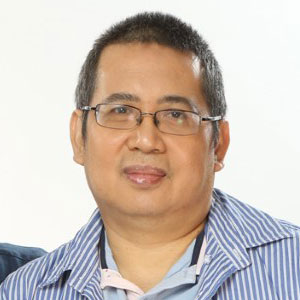
Siyamnapu’t isa (91) na ang mga deklaradong National Artists o Pambansang Alagad ng Sining ng Pilipinas.
Labinsiyam (19) ay mula sa larangan ng Visual Arts, at isa lang ang babae rito — si Imelda Cajipe-Endaya ng Paete, Laguna.
Labingwalo (18) sa larangan ng Literature, at isa (1) sa Historical Literature.
Kung isasailalim ang Historical Literature sa payong ng Panitikan ay bale labinsiyam din iyon.
Labinlima (15) ang National Artists sa Music.
Labing-isa (11) sa Film and Brodcast Arts.
Sampu (10) sa Theater.
Tigpito (7) sa Dance at Architecture.
Tatlo (3) sa Design.
Noong 1972 unang iginawad ang Orden of National Artists of the Philippines.
Isa lamang ang kinilala noong taong iyon, ang pintor na si Fernando Amorsolo.
Tig-iilan ang ginawaran ng nasabing Orden sa bawat administrasyon ng Presidente ng bansa?
Labingwalo (18) sa ilalim ni Ferdinand E. Marcos.
Siyam (9) kay Corazon Aquino.
Siyam (9) din kay Fidel V. Ramos.
Lima (5) kay Joseph Estrada.
Labinsiyam (19) kay Gloria Macapagal-Arroyo.
Anim (6) kay Benigno Aquino III.
Labinlima (15) kay Rodrigo Duterte.
At sampu (10) kay Bongbong Marcos.
THE ROSTER
Narito ang talaan ng National Artists sa mga taon na idineklara sila…
1972: Fernando Amorsolo
1973: Francisca Reyes Aquino, Carlos Francisco, Amado V. Hernandez, Antonio Molina, Juan Nakpil, Guillermo Tolentino, Jose Garcia Villa
1976: Napoleon Abueva, Lamberto Avellana, Leonor Orosa-Goquingco, Nick Joaquin, Jovita Fuentes, Victorio Edades, Pablo S. Antonio
1981: Vicente Manansala
1982: Carlos P. Romulo, Gerardo de Leon
1987: Honorata “Atang” dela Rama
1988: Antonio R. Buenaventura, Lucrecia Reyes Urtula
1989: Lucrecia R. Kasilag
1990: Francisco Arcellana, Cesar Legaspi, Leandro Locsin
1991: Hernando R. Ocampo, Lucio San Pedro
1997: Lino Brocka, Levi Celerio, Felipe de Leon, NVM Gonzales, Wilfrido Ma. Guerrero, Arturo Luz, Jose Maceda, Carlos Quirino, Rolando Tinio
1999: Daisy H. Avellana, Ernani J. Cuenco, J. Elizalde Navarro, Edith Tiempo, Andrea O. Veneracion
2001: Ang Kiukok, F. Sionil Jose, Ishmael Bernal, Severino Montano
2003: Virgilio S. Almario, Salvador F. Bernal, Jose T. Joya, Alejandro R. Roces, Eddie S. Romero
2006: Benedicto “Bencab” Cabrera, Abdulmari Asia Imao, Bienvenido Lumbera, Ramon Obusan, Ronald Allan “FPJ” K. Poe, Ildefonso P. Santos, Ramon Valera
2009: Federico Alcuaz, Manuel Conde, Lazaro Francisco
2014: Cirilo Bautista, Francisco Coching, Francisco Feliciano, Alice Reyes, Ramon P. Santos, Jose Maria Zaragoza
2018: Larry Alcala, Amelia Lapeña-Bonifacio, Ryan Cayabyab, Francisco Mañosa, Resil Mojares, Ramon Muzones, Kidlat Tahimik
2022: Agnes D. Locsin, Salvacion Lim-Higgins, Marilou Diaz-Abaya, Ricardo Lee, Nora Villamayor, Gemino H. Abad, Fides Asensio, Antonio Mabesa
2026: Gabriel “Gabby” Formoso, Rafael “Nonoy” Catalino Froilan, Maria Beatriz “Patis” Fabella Pamintuan Tesoro, Armando “Bing” Lao, Gregorio C. Brillantes, Nicanor G. Tiongson, Alfredo S. Buenaventura, Teodoro L. Hilado, Imelda Cajipe-Endaya, Nunelucio M. Alvarado
Read: Armando “Bing” Lao, 9 others named new National Artists
TEN NEW NATIONAL ARTISTS
Ten (10) new National Artists were named by President Ferdinand R. Marcos Jr. through Proclamation No. 1414 dated September 1, 2026, upon the joint recommendation of the National Commission for Culture and the Arts (NCCA) and the Cultural Center of the Philippines (CCP).
The newly declared National Artists are Gabriel “Gabby” Formoso for architecture; Rafael “Nonoy” Catalino Froilan for dance; Maria Beatriz “Patis” Fabella Pamintuan Tesoro for design and allied arts; Armando “Bing” Lao for film and broadcast arts; Gregorio C. Brillantes and Nicanor G. Tiongson for literature; Alfredo S. Buenaventura for music; Teodoro L. Hilado for theater; and Imelda Cajipe-Endaya and Nunelucio M. Alvarado for visual arts. Formoso, Lao, Brillantes and Hilado are recognized posthumously.
GABBY FORMOSO
Gabriel “Gabby” Formoso (1915-1996) is recognized as a leading figure in postwar Philippine architecture and tropical modernism.
His climate-responsive designs combined modernist simplicity with deep overhangs, recessed windows, and natural ventilation.
His major works include the Bangko Sentral ng Pilipinas Main Complex, Asian Institute of Management, Manila Peninsula Hotel, Philippine National Bank Financial Center, Bank of America-Lepanto Building and Pacific Star Building.
Through the firm now known as GF and Partners Architects, Formoso also helped professionalize architectural practice and mentored succeeding generations of Filipino architects.

NONOY FROILAN
Rafael “Nonoy” Catalino Froilan is a dancer, choreographer, teacher, and actor who helped establish dance as a viable profession for Filipino men, thereby influencing and shaping new generations of dancers and choreographers.
As principal male dancer of Ballet Philippines for about two decades, he performed more than a hundred leading roles in classical, modern, and contemporary works.
He distinguished himself in productions by National Artist for Dance Alice Reyes, including Amada, Itim Asu, Ang Sultan, Carmen, Rama Hari and Carmina Burana.
Froilan also served as a longtime faculty member of the Philippine High School for the Arts, training and mentoring younger generations of dancers.

PATIS TESORO
Maria Beatriz “Patis” Fabella Pamintuan Tesoro has devoted more than half a century to preserving and reimagining Filipiniana.
Tesoro elevated the terno, Maria Clara gown and barong Tagalog through her use of piña, jusi, abaca, cotton and traditional embroidery.
Working closely with weavers, embroiderers, farmers, and other craftspeople, she promoted indigenous materials, sustainable practices, and the continued transmission of traditional knowledge.
Her work brought Philippine textiles and craftsmanship to local and international audiences while supporting and providing livelihoods for artisan communities.

ARMANDO “BING” LAO
Armando “Bing” Lao (1948-2024), was a screenwriter, director, creative consultant and mentor who contributed significantly to the development of contemporary Philippine cinema.
His notable works include Takaw Tukso, Itanong Mo sa Buwan, Pila Balde, Tuhog, La Vida Rosa, Minsan Pa, Kubrador, Serbis, and Kinatay.
He also directed Biyaheng Lupa and Dukit.
Lao developed the influential “Found Story” approach to filmmaking, which emphasized research, immersion, actual locations and social environment.
Through his workshops and mentorship, he influenced a generation of independent Filipino filmmakers.

GREGORIO BRILLANTES
Gregorio C. Brillantes (1932-2025) was one of the country’s foremost writers in English.
Born in Camiling, Tarlac, he explored faith, memory, mortality, war, and middle-class Filipino life with philosophical depth and formal precision in his works.
Among his most celebrated stories are “The Distance to Andromeda” and “Faith, Love, Time and Dr. Lazaro.”
Brillantes also had a long career as a journalist and editor.
His works have been included in major anthologies, translated into several languages and studied by generations of readers and scholars.

Read: Nora Aunor finally gets elusive National Artist for Film recognition
NICANOR TIONGSON
Nicanor G. Tiongson is a playwright, scholar, critic, editor, teacher and cultural administrator known for his extensive work in Philippine theater and cultural studies.
He championed traditional dramatic forms such as the komedya, sinakulo and sarsuwela and demonstrated their continuing artistic and historical importance.
His plays include Pilipinas Circa 1907, Realizing Rama, Labaw Donggon, Ang Banog ng Sanlibutan, and Mabining Mandirigma.
Tiongson also conceptualized and led the production of the CCP Encyclopedia of Philippine Art, a comprehensive reference on the country’s artistic traditions, practices and practitioners.

ALFREDO BUENAVENTURA
Alfredo S. Buenaventura is a composer, conductor, educator and cultural advocate who created more than a thousand musical works.
His compositions encompass operas, operettas, symphonies, concertos, ballets, masses and pieces for choirs, bands and rondallas.
He combined Western classical forms with Philippine legends, folk melodies, and indigenous musical materials.
His opera Maria Makiling received the Republic Cultural Heritage Award in 1964, while his Kayumanggi Symphony received the same distinction in 1972.
As an educator, Buenaventura taught in numerous universities and conservatories and helped train generations of Filipino musicians.

TEODORO HILADO
Teodoro L. Hilado (1938-2015) is regarded as the “Father of Theater Lighting in the Philippines.”
He elevated lighting design into an essential part of theatrical storytelling.
Hilado worked with many of the country’s professional dance and theater companies.
As technical director of the Folk Arts Theater and director of the CCP Theater Operations Department, he introduced systems and professional standards that influenced the development of technical theater in the country.
He also trained generations of lighting designers and theater technicians.
In 1997, he became the first recipient of the Gawad CCP for Excellence in Lighting Design and Technical Theater.

IMELDA CAJIPE-ENDAYA
Imelda Cajipe-Endaya is a feminist artist, printmaker, painter, installation artist, curator, writer, and cultural organizer whose works brought women’s experiences and social concerns to the forefront of Philippine visual art.
Through prints, paintings, assemblages, and installations, she has examined history, colonialism, national identity, faith, political struggle, and the condition of Filipino women.
Her notable works include Mga Ninuno, May Bukas Pa, Inay, Sa Lupang Golgota, and Pasyong Bayan.
Cajipe-Endaya helped establish KASIBULAN, or Kababaihan sa Sining at Bagong Sibol na Kamalayan, a pioneering organization of Filipino feminist artists.
She is the first woman to be declared National Artist for Visual Arts.

NUNELUCIO ALVARADO
Nunelucio M. Alvarado is a social realist artist whose work is rooted in the communities and sugarlands of Negros.
His recurring images of sakadas and sugarcane depict exploitation, hardship, resistance, survival, and hope.
Apart from painting, he produced posters, cartoons, and comics that made art and its social messages more accessible to ordinary people.
Alvarado co-founded the Black Artists in Asia and became an important mentor and community organizer in Negros.
He received the CCP Thirteen Artists Award in 1992 and won the grand prize at the Philippine Art Awards in 1997 and 1999.

Read: Kim Chiu's sister Lakam charged in PHP44.4M qualified theft case
THE ORDER OF NATIONAL ARTIST
The Order of National Artist (ONA), or Orden ng Pambansang Alagad ng Sining, is the highest national recognition conferred on Filipinos who have made significant contributions to the development of Philippine arts and culture.
It was established through Proclamation No. 1001, signed on April 27, 1972, to give appropriate recognition and prestige to Filipinos who distinguished themselves and made outstanding contributions to Philippine arts and letters.
Executive Order No. 236, or the Honors Code of the Philippines, elevated the National Artist Award to the status of a cultural order in 2003.
The Order is jointly administered by the NCCA and the CCP, and is conferred by the President of the Philippines upon the recommendation of both institutions.
The selection of National Artists undergoes a rigorous process.
Nominations submitted by qualified organizations and institutions are reviewed for completeness, after which a research group verifies and expands the information on each nominee.
The candidates then pass through three levels of deliberation: evaluation by a Council of Experts; further review by a Jury of Experts; and final deliberation by the NCCA Board of Commissioners, CCP Board of Trustees, and living National Artists.
Voting is conducted by secret ballot, and nominees who receive more than half of the votes at the final level are endorsed to the Office of the President for confirmation, proclamation, and conferral.
CRITERIA
Ang criteria sa pagpili ng ONA:
- Living artists who are Filipino citizens at the time of nomination and at the awarding, as well as those who died after the establishment of the award in 1972 but were Filipino citizens at the time of their death.
- Artists who through the content and form of their works have contributed in building a Filipino sense of nationhood.
- Artists who have pioneered in a mode of creative expression or style, thus, earning distinction and making an impact on succeeding generations of artists.
- Artists who have created substantial and significant body of works and/or consistently displayed excellence in the practice of their artform, thus, enriching artistic expression or style; and artists who enjoy broad acceptance through: prestigious national and/or international recognition such as the Gawad CP para sa Sining, CCP Thirteen Artists Award and NCCA Haraya Awards(Alab and Dangal), critical acclaim and/or reviews of their works, and respect and esteem from peers.
HONORS AND PRIVILEGES
Various honors and privileges are entitled to those conferred with the ONA:
The rank and title of National Artist, as proclaimed by the President of the Philippines.
The National Artist gold-plated medallion minted by the Bangko Sentral ng Pilipinas (BSP) and citation.
A lifetime emolument and materials and physical benefits comparable in value to those received by the highest officers of the land.
Para sa POSTHUMOUS AWARDEES — one-time minimum cash award of PHP200,000, net of taxes, payable to the legal heirs.
Para sa LIVING AWARDEES…
- Minimum cash award of PHP200,000, net of taxes.
- Minimum lifetime personal monthly stipend of PHP50,000.
- Medical and hospitalization benefits not exceeding P750,000 per year.
- Coverage by a life insurance policy by the Government Service Insurance System (GSIS) and/or private insurance companies from the date of conferment of the award, in the event that the National artist is insurable, the premiums of which shall be paid by the National or by donation from any governmental or private entities.
- A state funeral, the expenses of which shall be borne by the Government, upon the death of the National Artist. 6 A place of honor in state functions, national commemoration ceremonies, and all other cultural presentations.
CALL FOR NOMINATIONS
Ginanap ang press conference para sa Call for Nominations sa bagong batch ng National Artists noong Nobyembre 23, 2023 sa Leandro V. Locsin Auditorium ng NCCA Building sa Gen. Luna St., Intramuros, Manila.
Ang walong kategorya:
Dance — choreography, direction, performance. Music — composition, direction, performance.
Theater — direction, performance, production design, light and sound design, playwriting.
Visual Arts — painting, sculpture, printmaking, photography, installation art, mixed media works, illustration, graphic arts, performance art, imaging.
Literature — poetry, fiction, essay, literary/art criticism.
Film and Broadcast Arts — direction, writing, production design, cinematography, editing, animation, performance, new media.
Architecture and Allied Arts — architecture, interior design, landscape architecture, urban design.
Design — industrial design, fashion design. Ang deadline for nomination ay Hunyo 30, 2024.
Anim na buwan ang inilaan para sa research, Hulyo-Disyembre 2024.
Limang buwan naman ang inilaan para sa Deliberation, Enero-Mayo 2025.
Ang itinakdang awarding at conferment ay “by June 30, 2025.”
Read: REVIEW: The Notebook: The Musical turns familiar romance into theatrical triumph