
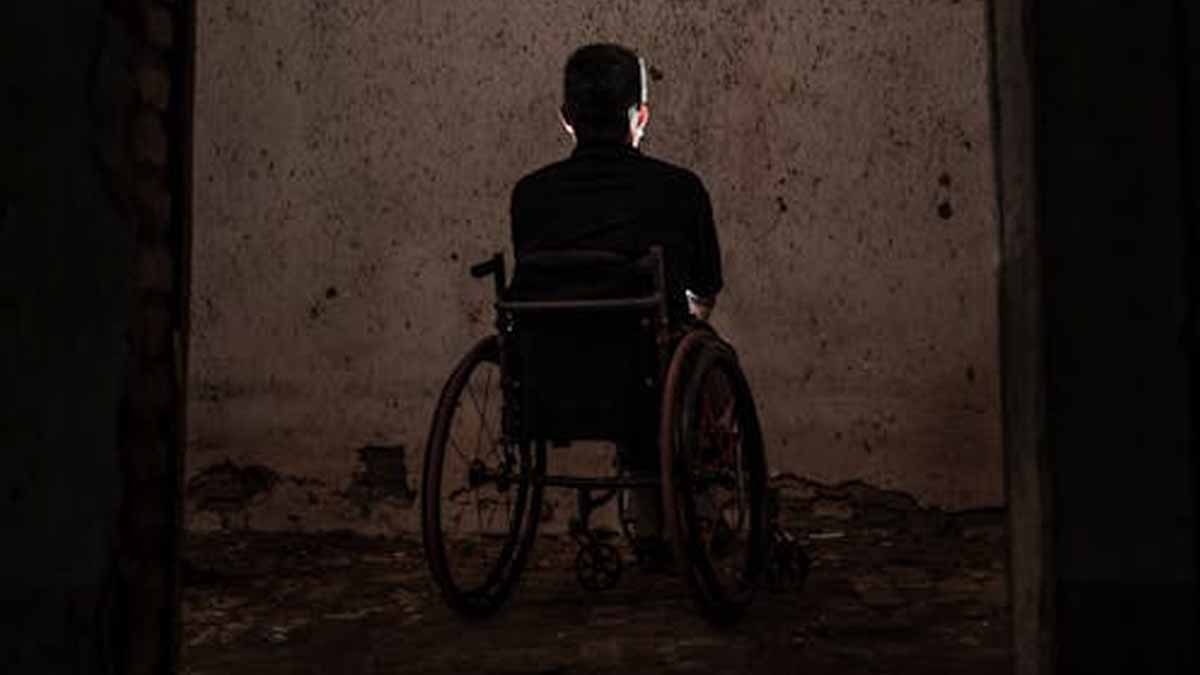

Dahil sa pag-trending ng “Emily Blind Prank” sa TikTok, nanawagan ang National Council on Disability Affairs (NCDA), isang attached agency ng Department of Social Welfare and Development (DSWD).
Hinihikayat ng content na ito ang netizens, kabilang ang mga bata, na magkunwaring bulag para magkaroon ng tsansang manalo ng cash prize.
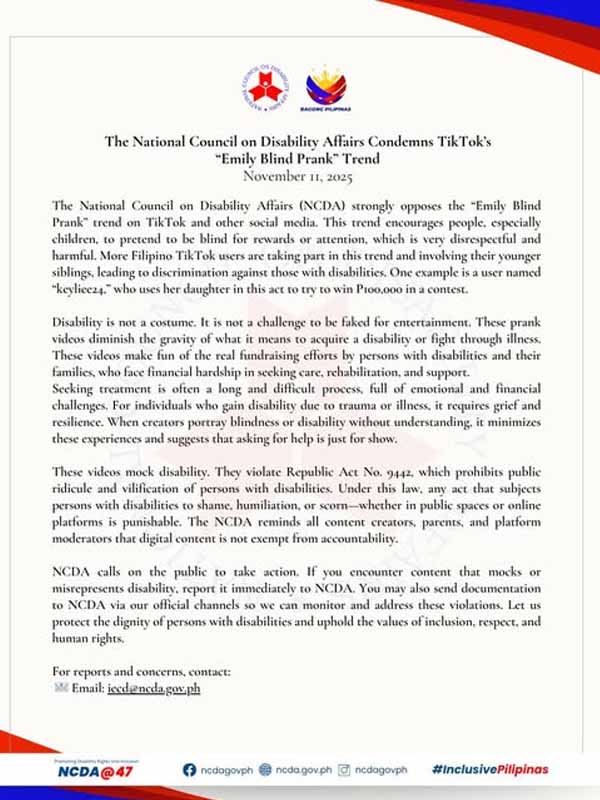
Ayon sa statement na inilabas ng NCDA (published as is) nitong November 6, 2025: "This trend encourages people, especially children, to pretend to be blind for rewards or attention, which is very disrespectful and harmful.
"More Filipino TikTok users are taking part in this trend and involving their younger siblings, leading to discrimination against those with disabilities.
"One example is a user named 'keyliee24,' who uses her daughter in this act to try to win P100,000 in a contest."
Read: Government workers to get PHP5K cash gift, bonus this November
Maigting na paalala rin ng DSWD sa social-media users—influencers, creators at maging sa publiko: Huwag gamitin ang “disabilities” bilang form of entertainment content o kaya’y gawing trending sa social media.
Isang porma ito ng panunudyo at kawalan ng respeto sa Persons With Disabilities (PWDs).
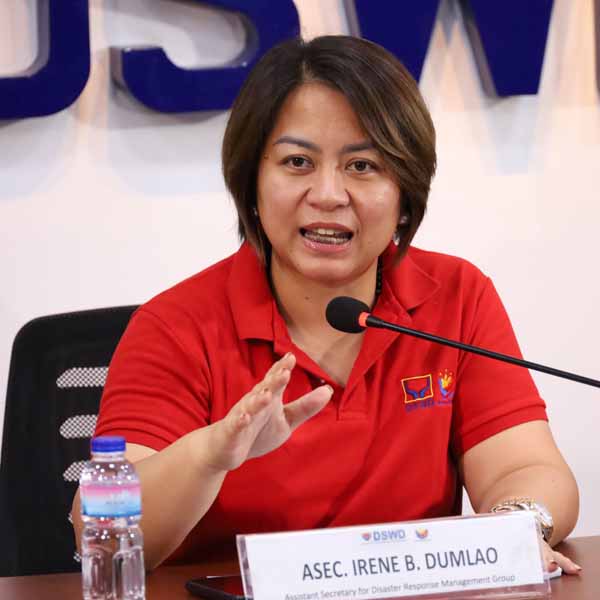
On same day, naglabas din ng statement si DSWD Assistant Secretary and Spokesperson Irene Dumlao: “The DSWD appeals to all social media users and influencers to exercise compassion and sensitivity in producing online content.
“Imitating persons with disabilities is already a form of mockery that reinforces disrespect and discrimination towards the concerned vulnerable group.”
Read: Catholic group to Filipinos: Join second Trillion Peso March
DISABILITIES NOT A COSTUME OR A CHALLENGE TO BE FAKED FOR ENTERTAINMENT
Nakasaad din sa statement ng NCDA na naa-undermine ng prank ang lahat ng campaigns at efforts para matulungan ang mga PWDs.
“Disability is not a costume. It is not a challenge to be faked for entertainment.
“These prank videos diminish the gravity of what it means to acquire a disability or fight through illness.
“These videos make fun of the real fundraising efforts by persons with disabilities and their families, who face financial hardship in seeking care, rehabilitation, and support.”
Isinalarawan din ang hirap na pinagdaraanan ng PWDs: “Seeking treatment is often a long and difficult process, full of emotional and financial challenges.
“For individuals who gain disability due to trauma or illness, it requires grief and resilience.”
Kaya pakiusap ng ahensiya sa content creators: “When creators portray blindness or disability without understanding, it minimizes these experiences and suggests that asking for help is just for show.”
Read: Artist auctions obra maestra to help flood victims in Pampanga
DSWD, NCDA WARN THAT PWDS ARE PROTECTED BY LAW
Binigyang-diin naman ni Dumlao na sa ilalim ng whole-of-society approach, lahat ng sektor ay dapat sama-samang kumilos para suportahan at palaganapin ang empowerment ng PWDs.
“DSWD and other government agencies are here to strengthen the programs for persons with disabilities to ensure that they are not left behind in development and can partake in nation-building.”
Sang-ayon sa Republic Act No. 9442, ipinagbabawal ang “public ridicule and vilification of persons with disabilities.”
Babala ng NCDA: “Under this law, any act that subjects persons with disabilities to shame, humiliation, or scorn—whether in public spaces or online platforms is punishable.”
Ang mga content na ganito ay subject to criminal liability.
Inatasan ni Dumlao ang publiko na isumbong sa NCDA ang makikitang anumang form of content or incident na nanggagaya ng persons with disabilities.
Paalala pa ng opisyal: “We urge the public to become responsible social media users.
“Let us use the platform and your influence to promote inclusion, raise awareness, foster respect, and help persons with disabilities to overcome the barriers that hinder their full participation in society.”
Read: Experts to Filipinos: Prioritize mental health, fight stigma