
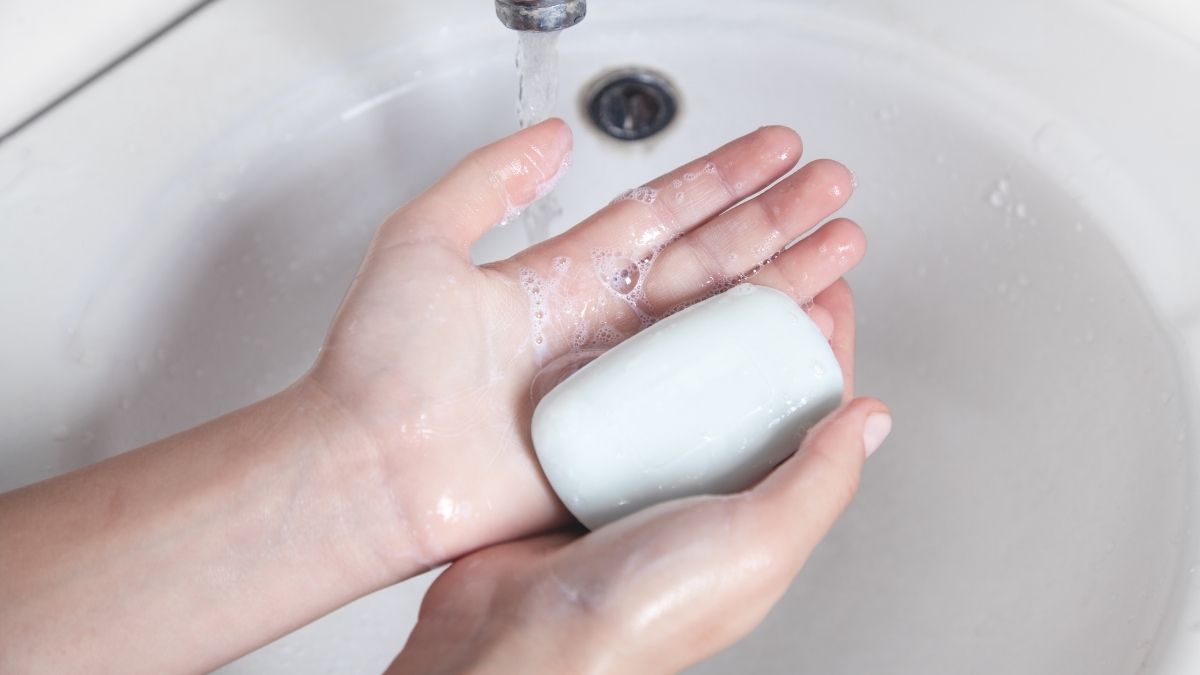


Sharing a bar of soap with the rest of the household seems harmless enough. After all, the entire purpose of soap is to get rid of dirt and germs.
But, if several people use the same bar, can the germs from one person's skin end up on someone else's?
This question comes up as Safeguard launches its DermProtect line at Enderun Tent on September 15, 2026.
Hosted by Dogshow Divas Macoy Dubs and Baus Rufo, the launch brings together skinthusiast moms Lottie Bie and Valeen Montenegro, and board-certified dermatologists Dr. Irene Gaile Robredo-Vitas and Dr. Rjay Agbon.
It also marks a notable public appearance for Queen of All Media Kris Aquino, is accompanied by her son Bimby, in what becomes her first product endorsement launch since returning to the public eye.

Read: PEP FINDS: Your Ultimate Anti-Heat Survival Kit
Can bacteria survive on a wet bar of soap?
While Kris's comeback naturally draws attention, another question at the event gets into the more ordinary mysteries of daily life: Can you actually catch someone else's germs from sharing the same bar of soap?
According to Dr. Gaile, the answer is not as alarming as the question might suggest.
Yes.
“Bacteria can survive in any surface that's moist, wet,” Dr. Gaile explains.
That means a bar of soap sitting in a damp soap dish isn't necessarily free of microorganisms simply because it is a cleansing product.
In fact, research has found bacteria on used bar soaps, particularly when the bars remain wet.
One 1993 study published in acdamic journal Microbios examines 14 bars of soap in household settings and finds that heavily used, wet bars contain more bacteria than infrequently used, dry bars.
Another study, published in 1984 in the Journal of Environmental Pathology, Toxicology and Oncology, examines bar and liquid soaps from 26 public lavatories.
All 84 samples collected from bar soaps yield positive microbial cultures, compared with only three of 39 liquid-soap samples.
Dr. Gaile adds that germs from another person's skin can indeed get onto the soap. However, what happens once the soap is actually used is a different story.
“Soaps that contain surfactants, they are able to kill naman bacteria,” Dr. Gaile says.
“But siyempre, if it's just sitting there and you don't, you know, take care of it, you keep it, like just leave it whatever, and you share with another person, the germs can transfer from one person to the other.”
In other words, simply leaving a used bar of soap sitting around is different from actually working it into a lather and using it to wash.
“There can be build-up on top of it. And that can, you know, cause it to accumulate bacteria and stuff like that. But when you lather it and you use it, hindi naman.”
Read: Which products can still be used past their expiry dates?
can an entire family share one bar of soap?
According to Dr. Gaile, yes.
When asked whether an entire family can use the same bar of soap, she gives a straightforward answer.
“That's fine,” she says.
For Dr. Gaile, the concern about germ transfer is actually more relevant when it comes to other personal items.
“So like, for me, yung idea that you can transfer germs by using soap, parang hindi naman, no, it doesn't happen that way,” she explains.
“It's really more like if you share other things like yung mga towels, mga ganun.”
This may come as a surprise to people who instinctively consider a shared bar of soap unhygienic, considering how several people are literally rubbing it against their skin.
But, Dr. Gaile's explanation suggests that the cleansing process itself matters.
Once the soap is lathered and used properly, the concern isn't simply that whatever touched the bar will automatically end up on the next person's skin.
That doesn't mean, however, that every shared soap bar in every situation gets the same pass.
This is where the skin barrier becomes important.
Dr. Gaile emphasizes that intact skin provides an important layer of protection.
“An intact skin can protect you,” she says.
When there is a wound or another break in the skin, microorganisms have an easier opportunity to get through.
“For example, may scratch ka, o puwede, puwede pumasok yung germs sa skin. So, it’s very, very important, to keep your skin barrier intact.”
This is also why Dr. Gaile advises greater caution with shared personal items when the skin is compromised.
While sharing a bar of soap within a healthy household isn't something she considers a major concern, someone with a wound or compromised skin may want to be more careful about sharing personal bathroom items.
Read: PEP PICKS: Tested products for face, body, teeth
What about a shared bar of soap in a gym or hotel?
Household sharing is one thing, but a bar of soap sitting in a public bathroom, gym, hotel, or dorm is another.
When asked about using shared soap in these environments, Dr. Gaile becomes more cautious.
“It's better to keep pa rin your own, to use your own, 'cause you never know,” she says.
She personally prefers liquid soap in public settings.
“That's why I prefer liquid. Like sa gyms, if there's a public gym or whatever, they usually have the liquid, di ba? Kasi it's more hygienic.”
Safeguard's new DermProtect face and body wash line, for instance, comes in large liquid bottles for the price of PHP321 for 570g at major health and beauty retailers like Watsons Philippines.
For someone who prefers bar soap, Dr. Gaile doesn't say it has to be abandoned altogether.
Safeguard still offers bar soaps, after all, and Dr. Gaile acknowledges that some people simply prefer using one.
“If you're a bar person, kasi may mga bar persons like my husband. He prefers something that he can hold, alam mo, and then do that.”
Her practical advice is to keep bar soap personal or limit its sharing to the household.
“So you can use that, but maybe have your own or at least, you know, your family lang. Don't use a public soap siguro.”
For public places, she considers liquid soap the more advisable option.
Read: Ball pits, possible raw pamahayan ng disease-causing germs
HOW TO STORE BAR SOAPS PROPERLY
A more effective way to protect yourself when sharing a bar of soap is to store it properly.
For one, Dr. Gaile prefers using a soap dish or plate with holes.
“I like to use like a plate with, um, with holes in it so that the water doesn't get like accumulated at the bottom,” she says.
The idea is to give the water somewhere to go instead of allowing the bar to sit in a pool of moisture.
Dr. Gaile also has a personal habit after using the soap.
“When you use it and it lathers, for me, I like to rinse it lang so that it's just pure, without the lather,” she says.
It's a small step, but it keeps the bar cleaner between uses and prevents leftover lather from simply sitting on its surface.
Does using more soap lead to cleaner skin? "Not necessarily," says Dr. Gaile,especially for children, whose skin may be irritated by excessive or aggressive cleansing.
“When they're very young, you don't wanna use cleansers that are super harsh kasi you wanna preserve the barrier and to not make them prone to irritation.
“There’s a thinking kasi na parang the more you wash or the longer you wash, the cleaner the skin becomes.”
But Dr. Gaile says children don't need to be aggressively scrubbed unless they're genuinely dirty.
“Unless you're like really dirty, unless talagang naggulong yung child mo sa putik, you don't really have to be super-super over-cleansing the skin.
“Over-washing, over-scrubbing can strip the skin of its barrier, which can make your child more prone to irritation.”
Read: PEP.ph Masterclass: Nix Soriano gives tips for achieving K-Drama glam
What about sharing a loofah or bath towel?
This is where Dr. Gaile draws a clearer distinction. A bar of soap is not the same as a loofah or a bath towel.
“It's different,” she asserts.
“When you share a loofah and bath towel, the dirt, debris, the germs can get trapped there, di ba?”
Unlike a bar of soap, a loofah or towel can retain material from the person who uses it.
A loofah also presents another concern because of the way it interacts with the skin.
Dr. Gaile explains: “When you do the loofah pa, siyempre it abrades the skin. So, it can create like tiny wounds, di ba?”
Those tiny breaks in the skin can potentially give microorganisms another route in.
“So when the loofah contains like germs, et cetera, and then you do that, puwede mo ma-transfer whatever is in there into your skin."
For that reason, when asked whether family members should have separate loofahs, Dr. Gaile's answer is simple: “Better.”
She also stresses another step that people may overlook.
“And then you clean your loofah din,” she reminds.
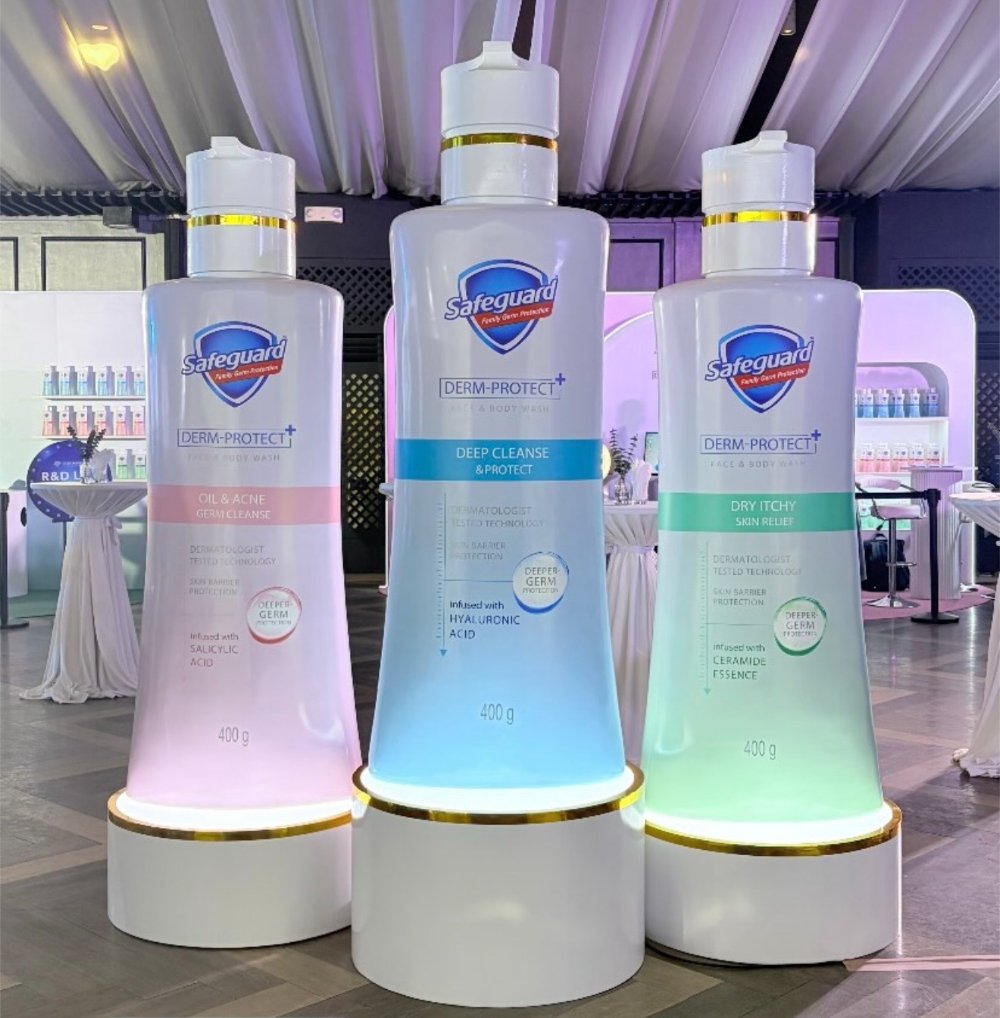
Safeguard’s DermProtect line also comes in several variants, each presented for a different skin concern.
According to the product descriptions, Deep Cleanse & Protect, the blue variant, contains sodium hyaluronate and is described as a cleanser that deeply cleanses while helping keep skin hydrated and refreshed.
Oil & Acne Germ Cleanse, the red variant, contains salicylic acid and is described as being for oily skin—helping address excess oil, dirt, and acne-causing impurities.
Meanwhile, Dry Itchy Skin Relief, the green variant, contains ceramides and cholesterol that are presented as solutions for dry and itchy skin.
Dr. Gaile concludes as a reminder: “When you use cleansers that are gentle on the skin with ingredients like ceramides, hyaluronic acid, it kind of preserves the barrier.
“So then, you are cleaning and removing the dirt and the oil, dirt, debris, while preserving your skin's own natural oils.”
Read: Tips: How to treat acne pigmentation; what products to use