
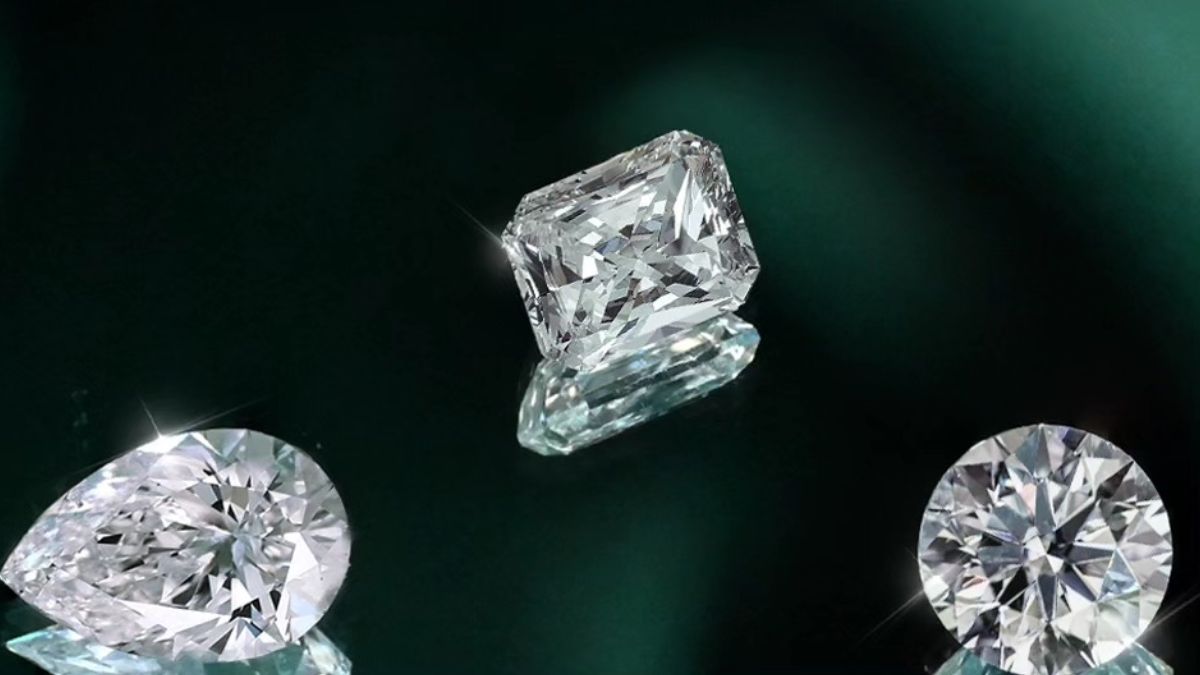

When buying diamonds, the four Cs are key considerations.
While these are easily searchable online, hearing expert insights offers a deeper perspective.
At a recent Tessera event announcing its partnership with the International Gemological Institute (IGI), two gemologists hosted an enlightening "Diamond 101" session.
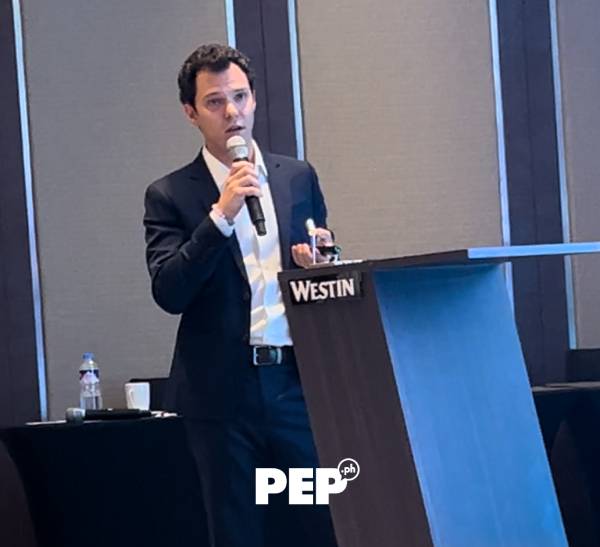
Stephen Andarakis, the laboratory director of IGI, listed them in order of "the most influential towards a diamond's value."
Read: Remember when Assunta de Rossi wore necklace with 400 diamonds on her wedding day?
DIAMOND’S CARAT
Andarakis began, "So beginning with carat weight... simply the measurement of weight of a diamond in carats."
The larger the carat, the larger the size.
He continued, "And when we're talking in the trade, one carat is broken into a unit called points.
"So when we're talking about a half-carat diamond, 0.5 carat, you'll hear many people in the trade call this stone a 50 pointer or a half-carat. The same goes for a 25 pointer, 0.25 carats. This would be a quarter carat-sized diamond.
"But different shapes of the same carat weight may appear of a different size... a round, brilliant, one carat stone... when you have fancy shapes, sometimes of the same weight, they may actually appear a bit smaller."
In most jewelry stores, prices typically increase significantly for diamonds over 1 carat.
Read: Judy Ann Santos wears jewelry worth PHP94 million at ABS-CBN Ball 2018
DIAMOND’S COLOR
We often hear diamond enthusiasts say they’re drawn to “maputi at mabrilyong bato,” and they’re referring to the second C.
Andarakis pointed out, "So the most colorless diamonds, when we're speaking about white diamonds, are going to be diamonds of the highest value.
"Even though white diamonds, many people consider them colorless, many stones actually have a small degree of yellow tint.
"And this is due to the content of nitrogen in the stones.
"Nitrogen is actually the most common chemical element you find in diamonds, besides the pure carbon that we're most familiar with.
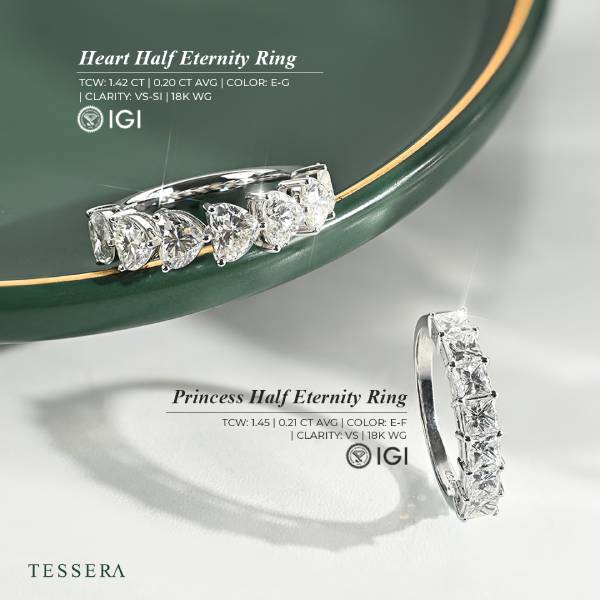
"White diamonds are graded on a scale of D, D going down to Z. So there are 23 color grades with very minute differences in the yellow tint.
"So as you can see on the top level, D being the most colorless. There's no yellow in the stone at all.
"And then even going down to E, F, G, you have very little yellow tint. And this is going all the way down to Z."
When diamonds are graded in the laboratory, they are set "against the white background, face down.”
Andakis explained, "So the diamond is actually graded upside down…and we're analyzing the degree of yellow tint that a stone might have, and at the same time, the fluorescence of the stone is evaluated.”
Flourescence, according to DiamondsPro.com, "refers to the glow a diamond emits under ultra-violet (UV) light, often seen as a blue hue."
If a diamond has strong fluorescence, it may appear hazy or milky in direct sunlight.
This is why some buyers shine a strong light on the diamond to check how clear it is.
Note that fluorescence can reduce the quality of diamonds with high color grades.
DIAMOND’S CLARITY
Andakis said, "Diamonds which are free of internal characteristics are, of course, the most valuable. But many of diamonds have slight imperfections or natural characteristics.
"There are 11 clarity grades based on how visible these imperfections to these characteristics of the stomes might be—going from flawless, which has no characteristics, to Imperfect.
“And Imperfect is the only Clarity range which you can observe with the human eye without any aided magnification.”
The internal characteristics are called inclusions, which the IGI's website classified as "elements trapped in the stone, such as crystals or structural defects."
Other clarity grades based on the visibility of inclusions are:
- VVS- Very Very Slightly Include
- VS- Very Slightly Included
- SI- Slightly Included
DIAMOND’S CUT
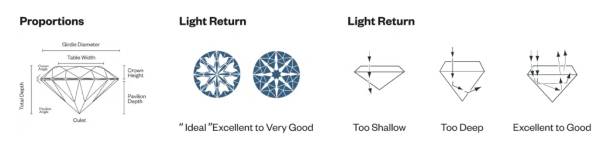
The cut grade, "a determination of how well the rough crystal was finished and polished by man,” is the fourth C.
It shows the "diamond’s craftsmanship and quality of light behavior,” according to IGI’s website, which also included an illustration and an explanation.
"When a ray of light touches the surface, part of it is reflected back. This is called external refraction.
"The rest of the ray penetrates the stone and moves through it. This is known as refraction.
"The part of the ray reflected back to the surface exits, broken into spectral colors in a prism-like effect. This is known as dispersion.
"All of these elements contribute to the appearance of a diamond."
Bob Van Es, country Manager of International Gemological Institute (IGI) Thailand & Hong Kong, said the 4th C is "the most underrated or underappreciated of the 4 Cs.”
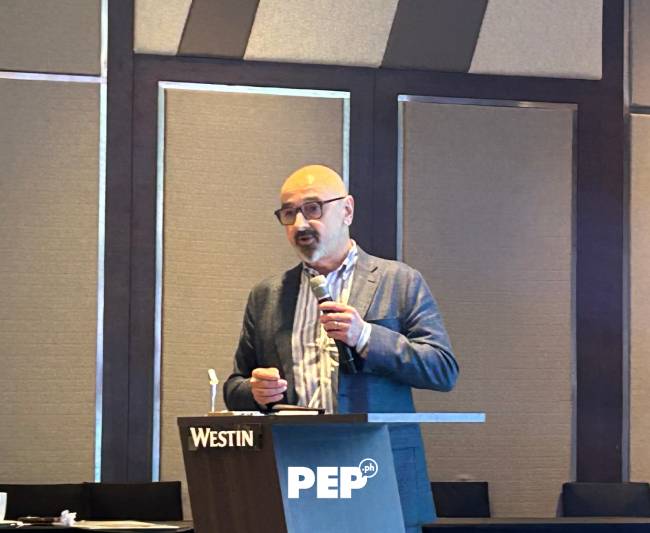
He elaborated, "Cut really is the only thing that you can see with the naked eye. When you see Stephen [Andakis] gave the example with the two different stones, a very well-made stone, you can see straight away, it looks great, it looks great in the window, it looks great when you put it on your finger. Whereas, you know, the difference between a, you know, a VS1 or a SI1 clarity, you can't see on your finger.
"Or the same, you know, a D color or a G color or maybe an H and a J, you can't really see with the naked eye.
"So I usually, when I advise friends, you know, friends that ask me the same question, I usually, you know, if it were up to me, I would go for an excellent cut stone and maybe sacrifice a little bit on one or two of the other C's, that's what I would do."
The IMPORTANT 5th C: Certification
The extra crucial step to do is make sure that the diamond is authentic.
In the Philippines, most jewelry stores would claim they have their in-house gemologist and issue certificates.
But notice that the diamonds marked with IGI and GIA (Gemological Institute of America) are more expensive?
The extra amount is actually for your own peace of mind as a buyer.
Because those diamonds are checked in laboratories by certified gemologists.
And the authentication cannot be simply done by screening it with an app.
IGI, for instance, has been in the business since 1975.
Bob Van Es assured, "We're completely unbiased and I think that you know when you're dealing with high-value merchandise, I think it really is important there's a third party there... you really do need somebody like IGI to say 'yes we've seen that, we've checked it, it is authentic, it is natural, it is well treated and we seal that.'”
And there’s a way as well to check whether the certificate is authentic or not.
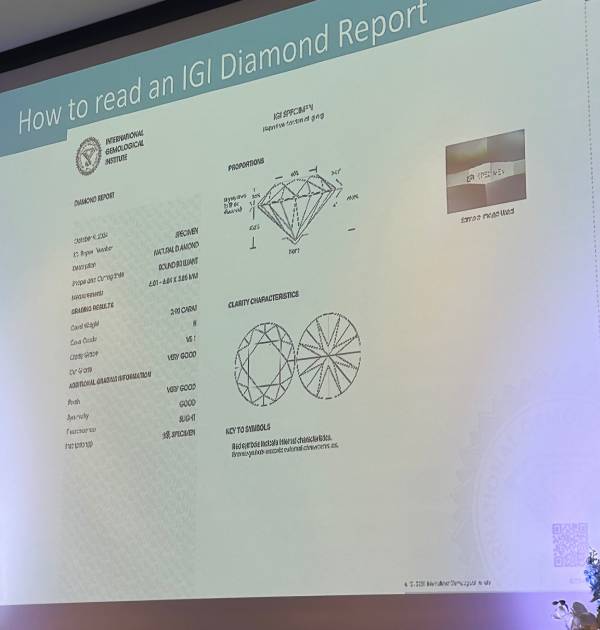
He told PEP.ph (Philippine Entertainment Portal), "All our certificates have this QR code...You scan that and it will go to IGI.org, you can verify that what you’re buying actually corresponds to what’s online.”
With the abundance of diamonds in the market, buyers must ensure their purchase is natural and not lab-grown.
IGI follows a stringent process before allowing its logo to be branded on any piece of jewelry.
Bob Van Es said, "If a complete stranger walks into our lab, he/she would have to provide credentials, company registration, and so on, we would check that background to make sure that they have all the rights to certification and registrations.”
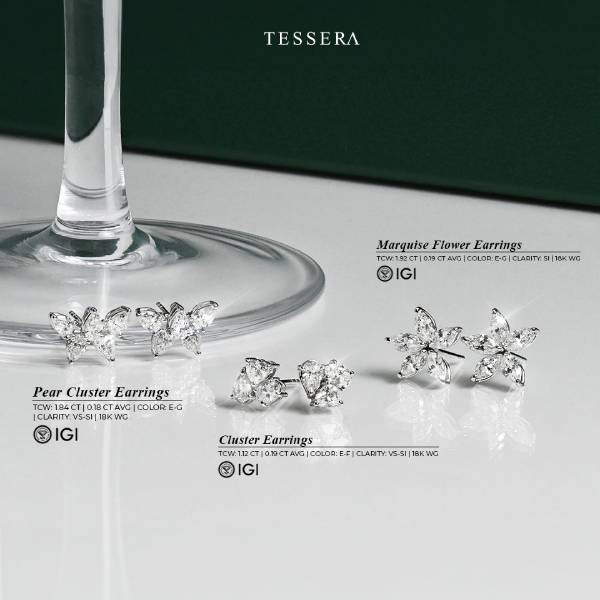
Tessera is the first jewelry brand in the country to collaborate with IGI for a co-branded certification.
At the event, the importance of these Jewelry Certificates was underscored.
- They guarantee authenticity and quality.
- They use IGI’s global grading standards.
- They increase the value of the jewelry or diamond.
Papat Fider, founder of Tessera, said, “We believe in building trust with our customers. Partnering with IGI allows us to offer an unparalleled level of assurance. Our customers can be confident that they are investing in genuine, ethically sourced, naturally mined diamonds of exceptional quality.”

TESSERA X IGI Branded Certicate
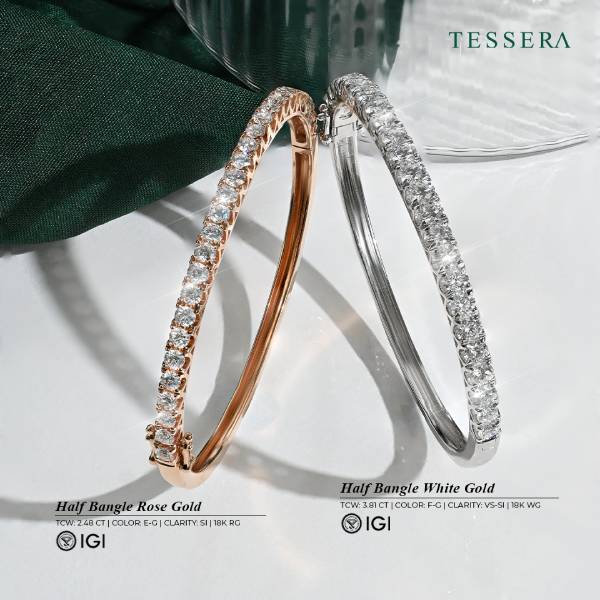
Each Tessera piece comes with an IGI certificate, ensuring authenticity and providing detailed information about the diamond's cut, color, clarity, and carat weight.
Even the gold surrounding each diamond is certified.
The gem certification process involves three steps.
First, specialized equipment analyzes the diamond to evaluate its color, clarity, and other features.
Next, gemologists grade the piece according to strict standards, generating a detailed report.
Finally, IGI reviews, signs, and seals the report, offering a guarantee of authenticity.
The jewelry company has showrooms in Rockwell Drive, Makati, The Arton Strip, Katipunan, and Ayala Abreeza, Davao, or check its official website at www.tessera.ph and official Instagram page @tesserajewelry.