


The Philippines continues to be one of the world’s largest Catholic nations, with over 80 percent of its population practicing the faith.
From grand fiestas to family celebrations and church processions to quiet barrio chapels, Catholicism is deeply woven into Filipino life.
Yet despite centuries of devotion and sacrifice, only two saints born in the Philippines have been officially canonized by the Catholic Church.
THE ONLY TWO FILIPINO-BORN SAINTS
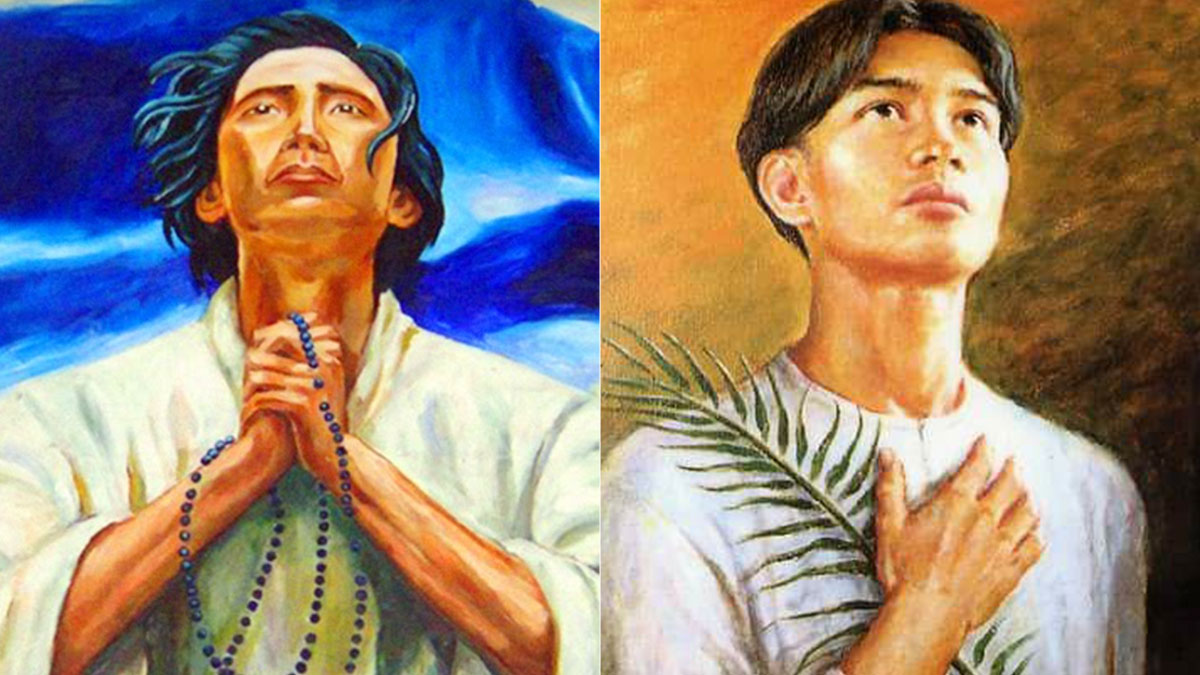
San Lorenzo Ruiz of Manila and San Pedro Calungsod are honored as martyrs, having given their lives in odium fidei—a Latin term meaning “hatred of the faith.”
Their stories demonstrate that holiness is forged in ordinary people through faithful service, courage, and unwavering devotion, even amid persecution.
THE STORY OF SAN LORENZO RUIZ
San Lorenzo Ruiz was born on November 28, 1594, in Binondo, Manila, to a Chinese father and a Filipina mother.
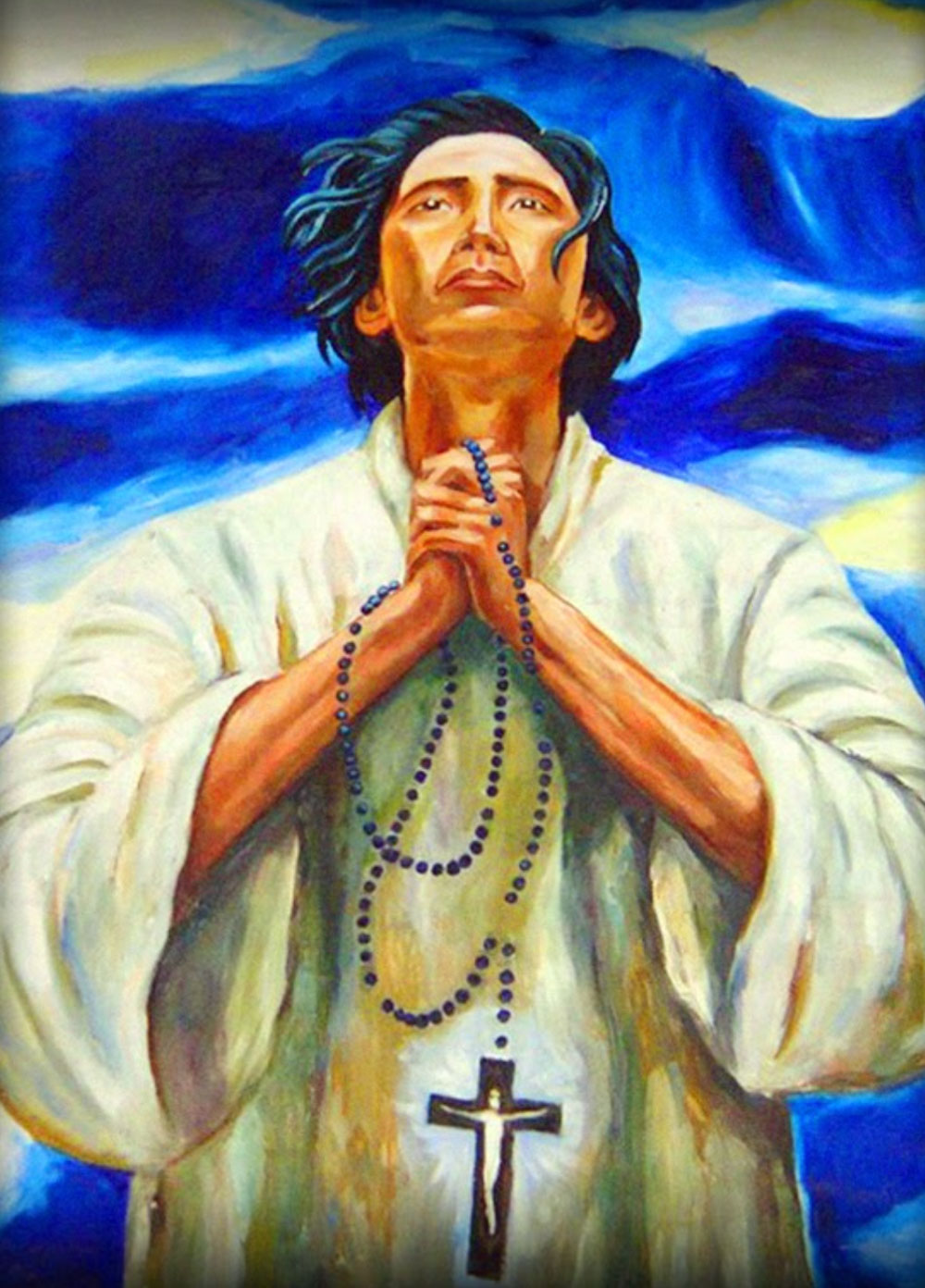
Raised in a deeply Catholic home, he was educated by the Dominicans, served as an altar boy, and worked as a calligrapher and parish scribe.
He married a Filipina woman named Rosario, had three children, and lived a quiet life as a devoted family man and lay Catholic.
Lorenzo’s ordinary life changed when he was falsely accused of killing a Spaniard and fled Manila with Dominican missionaries to Japan, where Christianity was severely persecuted.
There, he was arrested, imprisoned, and tortured for refusing to renounce his faith.
In Nagasaki in 1637, he was executed through ana-tsurushi, also known as the “gallows and pit,” a brutal method in which the victim was hung upside down over a pit, partially buried, with the forehead slashed to allow blood to drain slowly—prolonging suffering and causing a slow, painful death.
Lorenzo endured this torture while steadfastly professing his faith, remaining unwavering until the very end. His martyrdom revealed a profound holiness grounded in faith and courage.
San Lorenzo Ruiz was beatified by Pope John Paul II on February 18, 1981, during a historic Mass at Luneta Park in Manila—the first beatification ever held outside the Vatican.
He was later canonized on October 18, 1987, in Rome by the same pope, together with 15 other martyrs of Japan. His canonization was supported by a miracle attributed to his intercession: the healing of two-year-old Cecilia Alegria Policarpio of Iloilo from brain atrophy in 1983.
San Lorenzo Ruiz is commemorated on September 28 (or September 29 in some calendars) and is recognized as the patron saint of the Philippines, Overseas Filipino Workers, youth, and altar servers.
THE LIFE OF SAN PEDRO CALUNGSOD
San Pedro Calungsod, also known as Pedro Calonsor, was born on July 21, 1654, in the Visayas region of the Philippines.
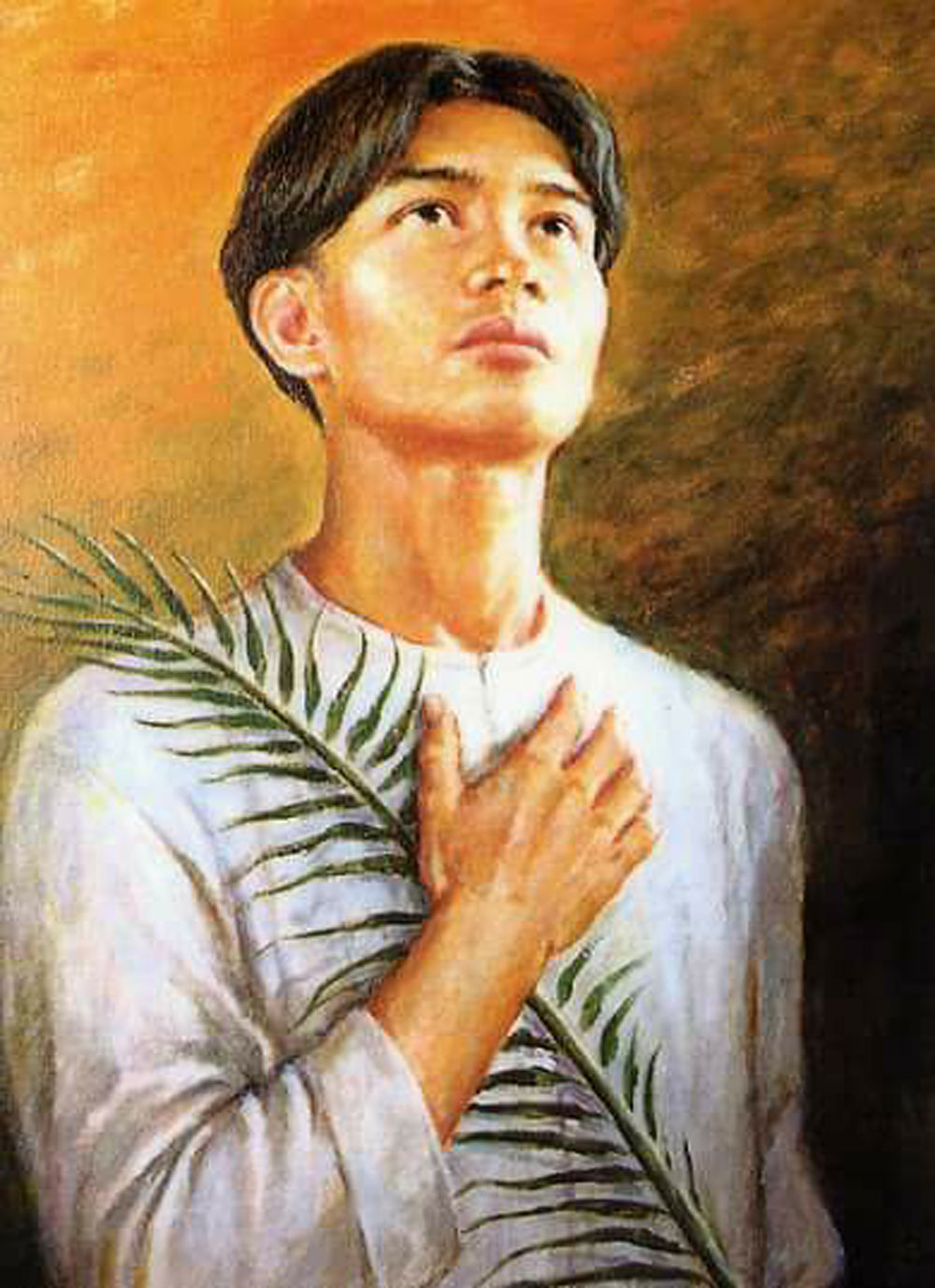
While few details of his early life are known, historical research identifies Ginatilan in Cebu, Hinunangan and Hinudayan in Southern Leyte, and the Molo district of Iloilo City as possible places of his origin.
According to the Asian Catholic Initiative of the Archdiocese of Chicago (aci.archchicago.org), all these locations were within the Diocese of Cebu at the time of his life and martyrdom.
Raised in the Catholic faith, he received formation from Jesuit missionaries and showed early promise as a catechist, serving as an altar boy and sacristan.
At about fourteen years old, Pedro was chosen to accompany Jesuit missionaries—among them Blessed Diego Luis de San Vitores—to the Marianas Islands. There, he assisted in missionary work among the Chamorro people by teaching the catechism, serving at Mass, baptizing converts, and supporting daily mission life despite growing resistance to Christianity.
On April 2, 1672, in Tumon, Guam, Pedro Calungsod and Father Diego Luis de San Vitores were attacked by Mata’pang, the maga’lahi (village chief) of the ancient Chamorro community of Tomhom on the island of Guahan, along with another man named Hirao, both of whom opposed their missionary work.
Pedro chose not to flee and stayed to protect the priest; he was speared in the chest and struck repeatedly with a machete, while Father San Vitores was also killed. Their bodies were tied to rocks and thrown into the sea. Pedro was about seventeen years old at the time of his martyrdom.
His cause for beatification gained momentum in the late 20th century, culminating in his beatification by Pope John Paul II on March 5, 2000, at St. Peter’s Square in Rome.
A recognized miracle—the 2003 revival of a clinically dead woman in Leyte after prayers seeking Pedro’s intercession—cleared the way for his canonization.
He was proclaimed a saint on October 21, 2012, by Pope Benedict XVI at St. Peter’s Basilica on World Mission Sunday, becoming the second Filipino saint.
His feast day is celebrated on April 2, and he is especially honored as the patron of Filipino youth, catechists, and altar servers, with a second-class relic—the cutlass used in his martyrdom—venerated in the Philippines.
How the Catholic Church Declares a Saint
The Church’s official declaration of sainthood is known as canonization, a careful, multi-stage process meant to affirm the authenticity and universal relevance of a person’s holiness.
Ordinarily, at least five years must pass after a person’s death before a cause may be opened, although the pope may dispense with this waiting period. The process unfolds in four main stages:
- Servant of God – A diocesan investigation begins, examining the person’s life, virtues, or martyrdom.
- Venerable – The Vatican confirms that the individual lived a life of heroic virtue or died as a true martyr.
- Blessed (Beatus) – Beatification is granted; martyrs do not need a miracle at this stage.
- Saint – One additional verified miracle is required before canonization, allowing for universal veneration in the Church.
This painstaking process explains why recognition often takes decades—or centuries.
THE BLESSED
The Philippines officially recognizes one primary Blessed who is inseparably linked to Philippine missionary history and to San Pedro Calungsod: Blessed Diego Luis de San Vitores (Spanish-born Jesuit priest, 1627–1672).
He remains beatified but not yet canonized as of 2026.
No additional Filipino-born individuals have been beatified (and then canonized) beyond San Lorenzo Ruiz and San Pedro Calungsod.
FILIPINO VENERABLES
The title Venerable is given by the Church to a person who lived a life of heroic virtue. While it does not yet permit public veneration, it allows the cause to move forward toward possible beatification.
As of 2026, the Philippines has several Venerables known for prayer, service, and leadership in the Church:
- Venerable Ignacia del Espíritu Santo (1663–1748) – Also known as Mother Ignacia, she is the Founder of the Religious of the Virgin Mary (RVM) and a pioneer of Filipino women’s religious life, noted for humility, obedience, and prayer.
- Venerable Teofilo Bastida Camomot (1914–1988) – Cebuano bishop known for radical simplicity, love for the poor, deep Eucharistic devotion, and reported mystical gifts.
- Venerable Alfredo María Aranda Obviar (1889–1978) – First Bishop of Lucena and founder of the Missionary Catechists of Saint Thérèse, dedicated to catechesis and formation of the poor.
- Venerable María Beatriz del Rosario Arroyo (1884–1957) – Founder of the Dominican Sisters of the Most Holy Rosary of the Philippines (Dominican Sisters of Molo), focused on education and charity.
- Venerable Francisca del Espíritu Santo de Fuentes (1647–1711) – Founder of the Dominican Sisters of St. Catherine of Siena, one of the earliest Filipino women’s religious communities.
- Venerable Isabel Larrañaga Ramírez (1836–1899) – Manila-born foundress of the Sisters of Charity of the Sacred Heart of Jesus, whose ministry later flourished in Cuba.
Filipino Servants of God
Servant of God is the first formal title given in the Catholic Church’s process toward sainthood.
It means the Vatican has given a nihil obstat (“nothing stands in the way”), allowing an official investigation into a person’s life, virtues, writings, and reputation for holiness.
At this stage, public veneration is not yet permitted.
As of early 2026, the Philippines has a growing number of Servants of God, including priests, laypeople, religious founders, children, and modern-day martyrs.
Their lives reflect Filipino holiness through service to the poor, faith formation, pastoral leadership, and courageous witness amid suffering.
- Niña Josefa Ruiz-Abad – A 13-year-old girl from Ilagan, Isabela, who died of cancer on September 16, 2002, remembered for her joyful faith and deep devotion to the Eucharist
- Laureana “Ka Luring” Franco – Lay catechist and Legion of Mary leader
- Darwin Ramos – Street child noted for heroic charity and faith
- Fr. Rhoel Gallardo, C.M.F. – Missionary priest martyred in Basilan
- Fr. Marcelito “Tito” Paez – Priest killed after defending farmers’ rights
- Pedro Pelaez – 19th-century Filipino priest and early reformist
- Alberto Pinagawa – Lay church worker and missionary
- Junrey Barbante, Janine Arenas, Evangeline Aromin, Riza Daniel – Lay mission workers recognized as modern martyrs
Read more: