



Lovely Abella has a way of ensuring her leftover breast milk does not go to waste.
The 38-year-old mompreneur held a five-day live-selling event at the Hong Kong Jewellery Fair from February 29 to March 4, 2024.

Read: Lovely Abella recovering from postpartum infection
This meant leaving behind her five-month-old son Liam with husband Benj Manalo at home in the Philippines.

As a breastfeeding mom, Lovely thought of collecting her breast milk even while on her work trip.
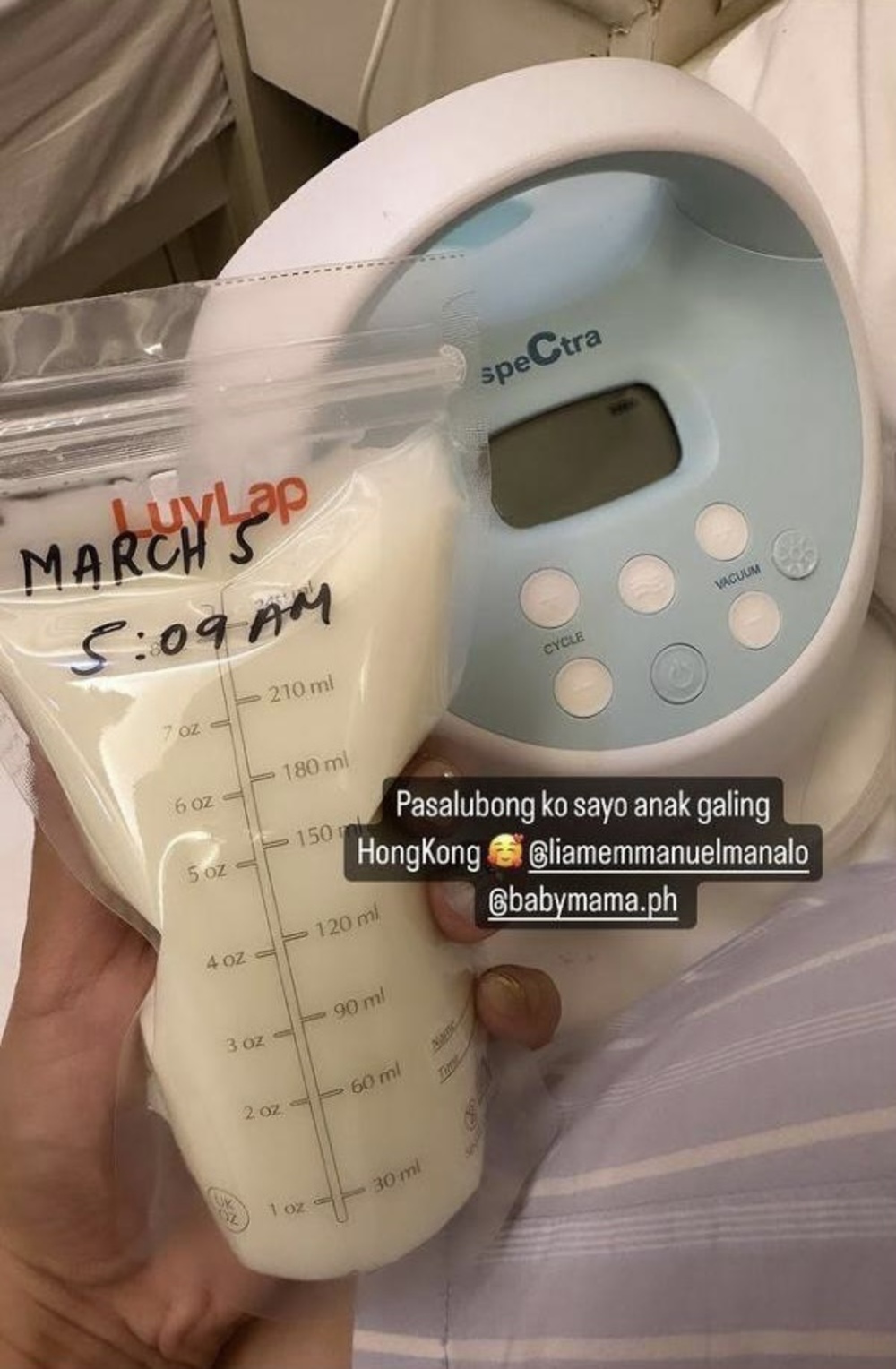
Equipped with her own breast pump and storage bags, she can conveniently collect her fresh breast milk anytime.
She also brought an insulated bag, which served as the storage for her breast milk stash, then filled it with ice cubes.
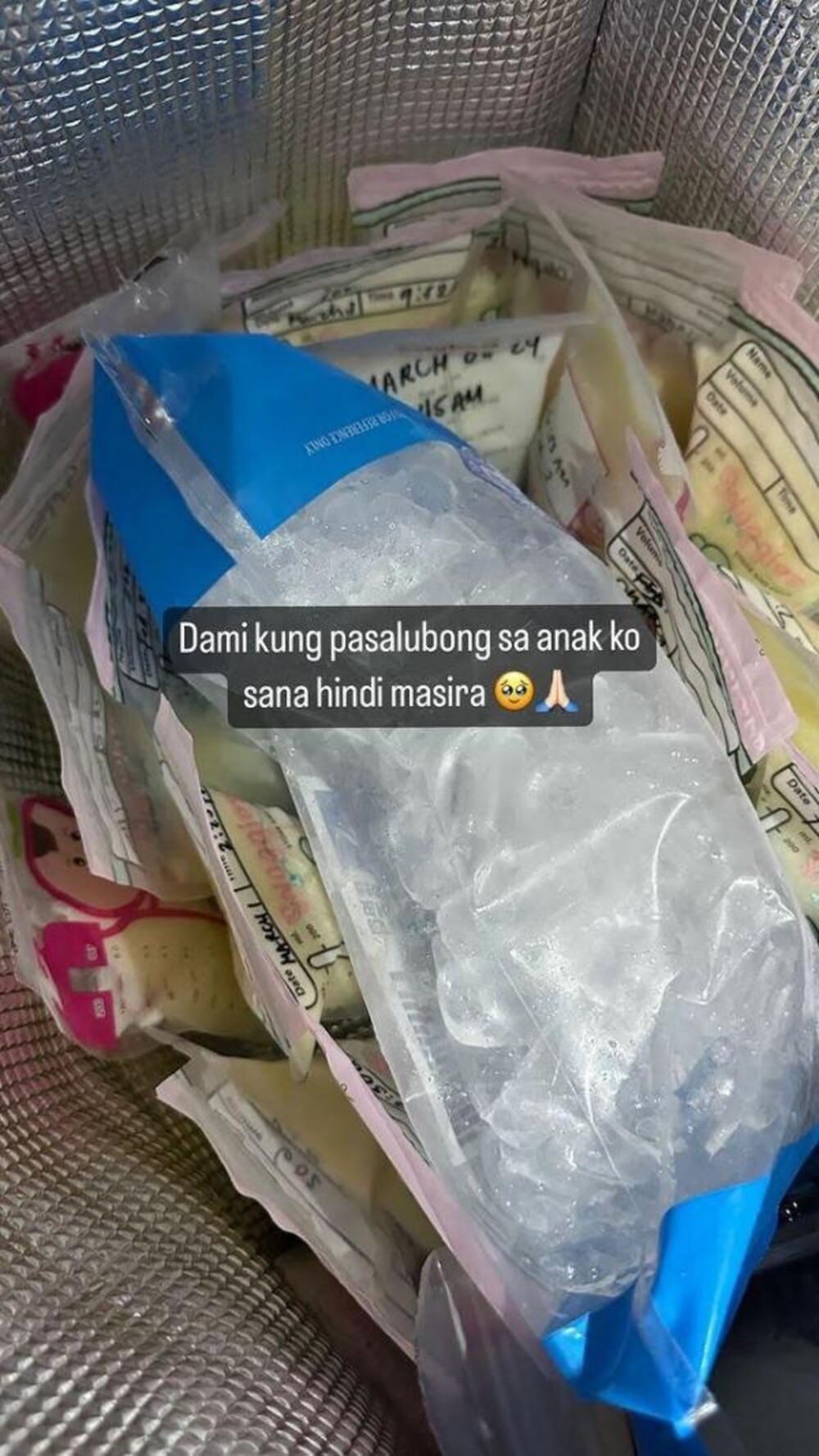
"Dami kung pasalubong sa anak ko. Sana hindi masira," she posted via an Instagram Story.
Read: Lovely Abella gives birth to baby boy; posts unfiltered photo on IG
Lovely followed the guidelines set by US Centers for Disease Control and Prevention, which recommend storing freshly pumped milk for up to four hours at room temperature.
But she overlooked one thing: She did not bring enough breast milk storage bags.
Hence, she found herself with leftover breast milk.
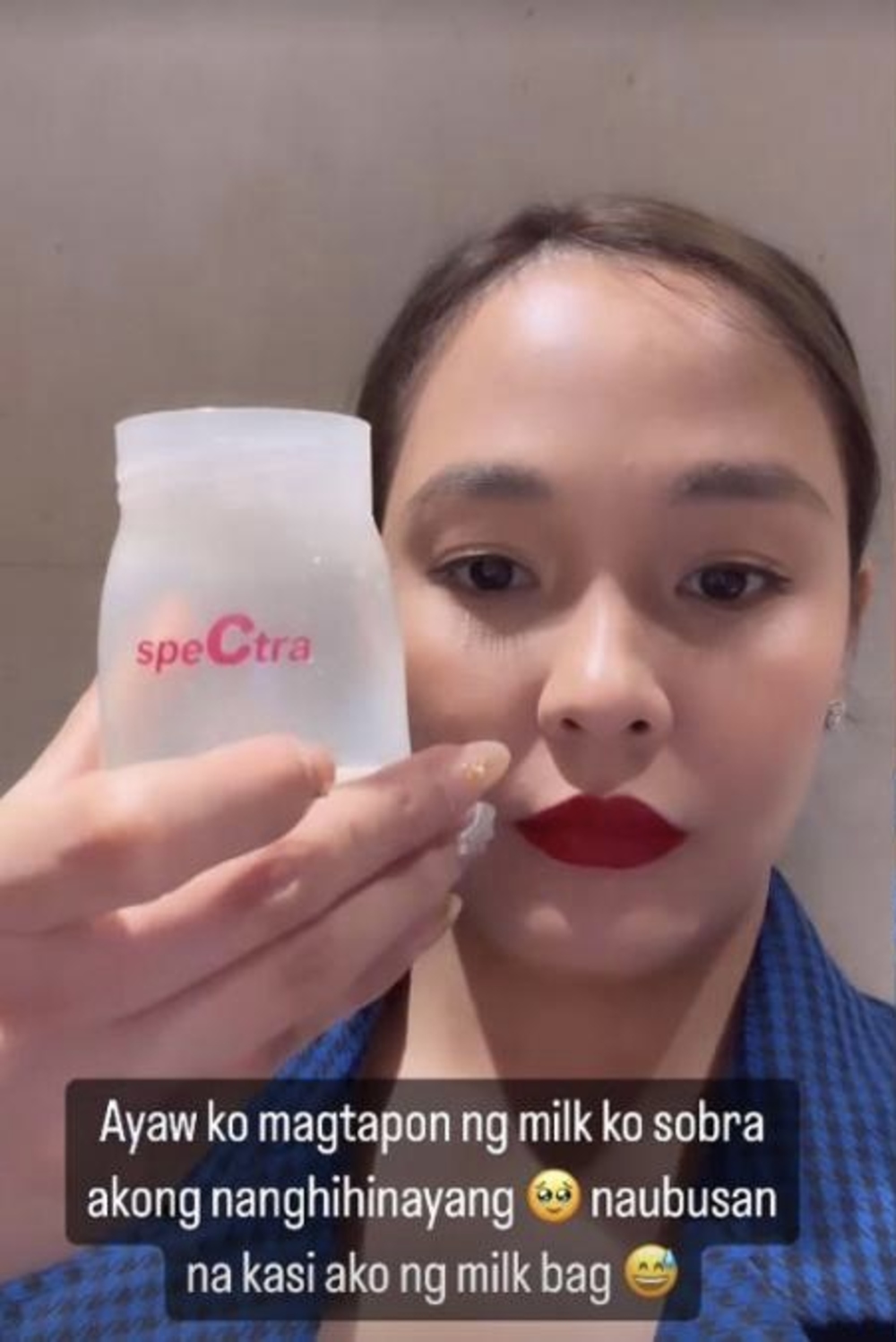
In a determined effort to avoid putting it to waste, she made the unconventional decision to consume her own breast milk directly from a bottle: "Ayaw ko magtapon ng milk ko."
She explained, "Sobra akong nanghihinayang [face holding back tears emoji]. Naubusan na kasi ako ng milk bag [grinning face with sweat emoji]."
Read: Lovely Abella contracts infection after giving birth; undergoes surgery

Ob-gyn Mary Jane Minkin, M.D., clinical professor at the Yale School of Medicine mentioned that consuming one's own breast milk is perfectly safe.
On the flip side, various studies also show potential hazards in adult consumption of raw human breast milk.
For one, authors of a Journal of the Royal Society of Medicine paper led by Dr. Sarah Steele—a professor of the Global Health and Policy Unit at Queen Mary University of London—say that a lack of pasteurization and testing of breast milk indicates a bacterial risk.
The research team also concluded that breast milk exposes adult consumers to a host of infectious diseases, including cytomegalovirus, hepatitis B and C, HIV-1/2, HTLV-I&II and syphilis.
READ MORE: