
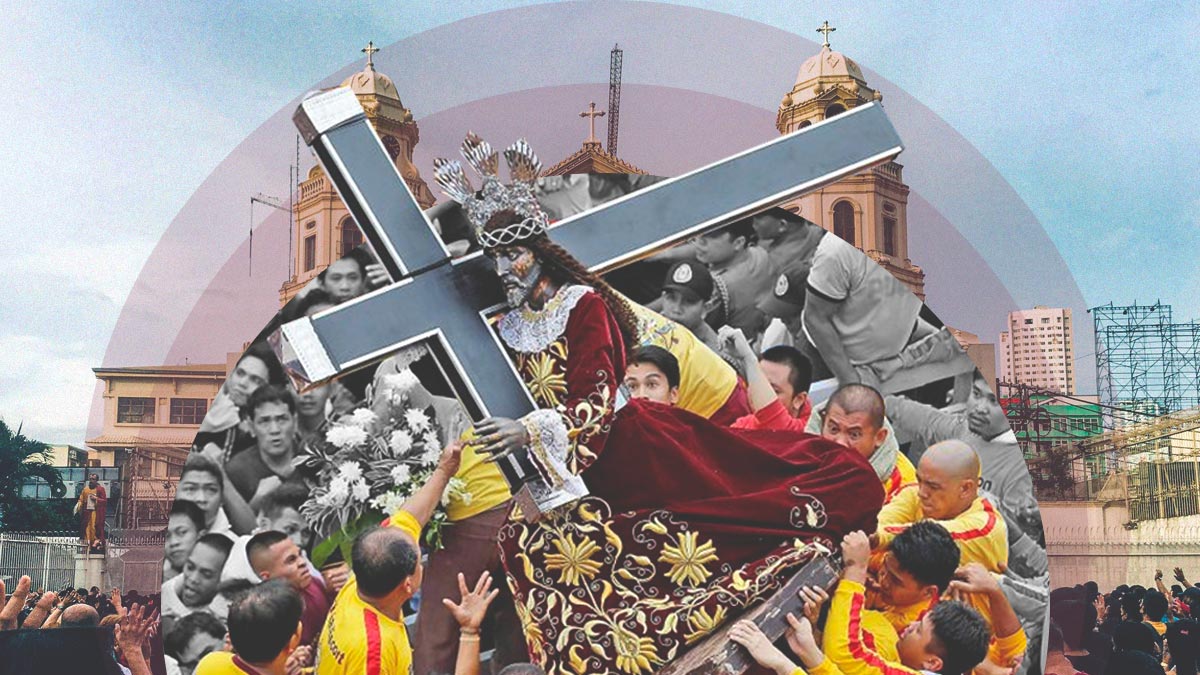

The Black Nazarene Traslacion is an annual religious event that holds deep significance for Filipino Catholics.
After a hiatus owing to the COVID-19 pandemic, the grand procession resumes this year, promising a return to tradition and a communal expression of piety.
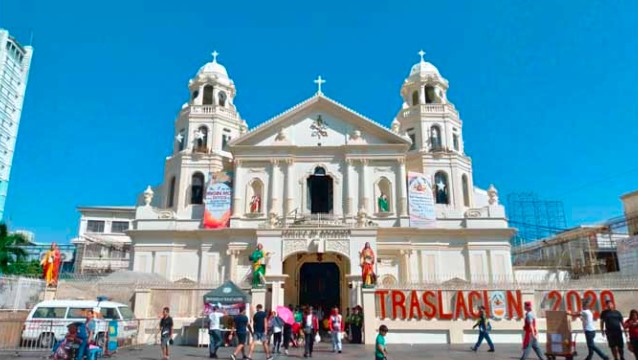
Traslacion Route
The procession is a re-enactment of the “solemn transfer” from Intramuros to Quiapo Church of the Black Nazarene's replica image that was brought to the Philippines in 1606.
The Quiapo church announced that the 2024 Traslacion on January 9 will follow the same route as the procession in 2020.
It will depart from the Quirino Grandstand, and pass through several streets before reaching the Quiapo Church:
- Quirino Grandstand
- Right to left side of Katigbak Drive (left side)
- Right to Padre Burgos Street through Finance Road
- Straight to Ayala Bridge
- Left to Palanca Street
- Right to Quezon Boulevard
- Right to Arlegui Street
- Right to Fraternal Street
- Right to Vergara Street
- Left to Duque de Alba Street
- Left to Castillejos Street
- Left to Farnecio Street
- Right to Arlegui Street
- Left to Nepomuceno Street
- Left to Conception Aguila Street
- Right to Carcer Street
- Right to Hidalgo through Plaza del Carmen
- Left to Bilibid Viejo through Gonzalo Puyat
- Left to JP de Guzman Street
- Right to Hidalgo Street
- Left to Quezon Boulevard
- Right to Palanca St. through under Quezon Bridge
- Right to Villalobos through Plaza Miranda
- Quiapo Church
Other Events Related to Traslacion 2024
Pahalik
The pahalik tradition in which devotees are allowed touch and kiss the Black Nazarene will start on January 6, 2024 at the Quirino Grandstand and end on January 8, 2024.
After that, an evening vigil will take place along with a program scheduled for 6:30 p.m.
Blessing of Replica
The church will host the annual blessing of the Black Nazarene's replica and standard on January 3 and January 4 at 1:30 p.m.
Novena
Church officials have announced via Facebook that a series of novena prayers will take place at the church daily at 12:15 p.m.. The novenas started on December 31, 2023, and will end on January 8, 2024.
Misa Mayor
At 12 a.m., January 9, 2004, the grand mass inaugurating the feast day will be presided over by the Archbishop of Manila, His Eminence Jose Cardinal Advincula Jr., at the Quirino Grandstand.
Safety Measures and Preparations
With the procession attracting millions of devotees, safety is a top priority, hence, the Philippine National Police will be deploying personnel in the areas covered by the procession.
Participants are advised to follow safety guidelines, and cooperate with authorities for a peaceful Traslacion.
Medical and emergency response teams will also be on standby.
The procession can last anywhere from 16 to 22 hours, depending on the pace and crowd size.
While families are welcome, the large crowds and intensity of the event may not be suitable for young children. Therefore, it’s best to leave the children behind if you’re set on doing your annual panata.
There is no strict dress code when participating in the Traslacion, but modest and comfortable attire is recommended.
Devotees often walk barefoot as a sign of penance.
Historical Background of the Black Nazarene
The Black Nazarene, a life-sized wooden sculpture of Jesus Christ carrying the cross, is believed to have miraculous powers. Its history dates back to the 17th century when it was brought to Manila from Mexico.
The image has survived fires and earthquakes, further cementing its revered status among the faithful.
An anonymous Mexican sculptor carved the original statue. It was partially destroyed in 1945, but later restored.
The Significance of the Traslacion
The annual procession of the Black Nazarene from the Quirino Grandstand to the Quiapo Church symbolizes the transfer of the statue to its current home. As mentione earlier, it is a reenactment of Christ's journey to Calvary.
Devotees participate in the hopes of receiving blessings, healings, and answered prayers.
The procession draws millions of participants each year, showcasing the depth of religious devotion in the Philippines.
The event is marked by scenes of fervor as devotees seek to touch the Nazareno or the carriage bearing it.
The Traslacion is popular cornerstone of Philippine religious culture and a deeply rooted tradition that embodies the Filipino's faith and spirit of devotion.