

SPOILER ALERT: This article references key plot elements in the movie.
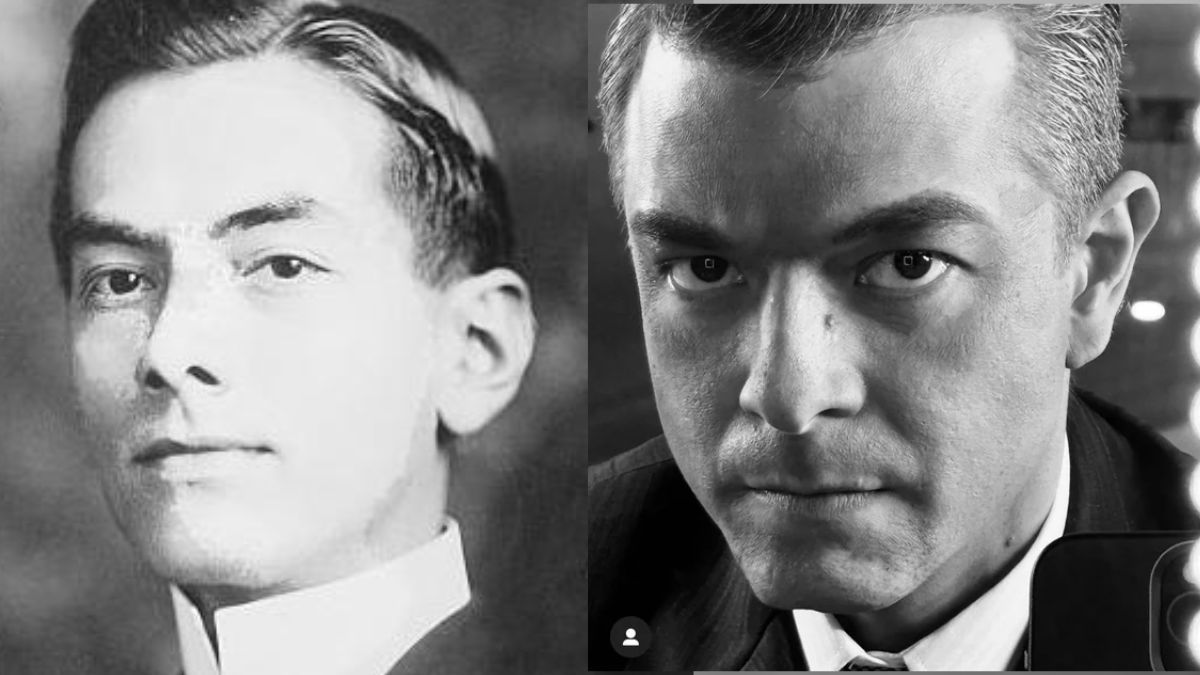
In the movie Quezon, the former President is portrayed as a ruthless political figure who would stop at nothing to gain power.
For Manuel L. Quezon, his family, friends, and the people around him are mere chess pieces that he could use to advance his agenda without concern for their individual welfare.
The Jerrold Tarog flick, now showing in theaters nationwide, is entertaining while truly being an artistic endeavor.
Critics have noted that its unflinching yet nuanced portrayal of history solidifies its place as one of the finest Filipino historical dramas ever made.
Despite the praise, concerns have been raised about the TBA Studios film.
Relatives of the political figure have noted how the movie may be destroying Quezon’s legacy.
First, it was his grandson, Ricky Avanceña, who lashed out at the director and lead actor Jericho Rosales during a screening.
Later, other relatives, including actors John Arcilla and Pinky Amador, have made public statements stating their discontent.
Arcilla said the movie felt “bothersome.” He also lamented that Quezon’s relatives were not consulted while the movie was in production.
Amador, meanwhile, called out the movie’s alleged sensationalism and called for balance and fairness.
“We never asked to be consulted nor asked for him to be portrayed a hero. But to at least mention even some of the good and sacrifices he and his family gave for the country isn’t a lot when you think of all his accomplishments,” said the veteran actress.
Read:
Pinky Amador criticizes Quezon film’s message
John Arcilla, nagbigay ng opinyon sa issue ng Quezon movie
Manuel Quezon descendant confronts Jerrold Tarog, Jericho Rosales
So the question remains: how accurate is the movie’s portrayal of the late Philippine leader? And are the events in the movie faithful to the historical record of the American colonial period?
Here are a few key characters and events from the movie, along with how they compare to history.
Much of the historical information presented in this article is drawn from the Quezon Study Guide—a comprehensive companion to the film written by historian Alvin Campomanes.
The guide was released by Active Vista and promoted by the film’s director himself.
Active Vista, a social transformation institution led by noted historian Xiao Chua, spearheaded the project.
JOVEN HERNANDO AND ALERTA
In Quezon, we get introduced to Joven Hernando, a journalist who follows Quezon’s career from the war to the Malacañang Palace.
Arron Villaflor and Cris Villanueva both play Hernando in the film.
Many of the movie’s key moments feature the tense interactions between Quezon and Hernando. Both argue about Quezon’s political ambition and the moves he makes to achieve them.
Alerta, on the other hand, is the newspaper company that Hernando owns.
When Hernando publishes a critical article against Quezon on Alerta, the former President shuts the whole newspaper down.
Both Hernando and Alerta are entirely fictional, and do not exist in history.
There are records, however, of the former President exerting his influence on several newspapers at the time, like the Philippines Herald.
PEDRO JANOLINO
Pedro Janolino is a real character in history, but his portrayal in the movie is not entirely accurate.
In the movie, Janolino, played by Ketchup Eusebio, tells Hernando that it is Emilio Aguinaldo that ordered him to kill General Antonio Luna.
Hernando then publishes the testimony on Alerta, thereby tanking Aguinaldo's presidential run against Quezon.
Later, it is revealed that Janolino is a sergeant-at-arms at the Quezon-led Senate, so his testimony may have been faked just to destroy Aguinaldo.
Janolino is a real person, and it is true that he killed General Luna.
But he had already died two years before Quezon ran for President in 1935.
In reality, it is Pantaleon Garcia, another general in the revolution, who disclosed that Aguinaldo ordered Luna’s murder.
García also served as sergeant-at-arms in the Senate during Quezon’s administration.
ANA RICARDO AND QUEZON’S WOMEN
The film implies that Quezon is a womanizer.
He apparently had a wife named Ana Ricardo, whom he allegedly married during the revolution.
Quezon supposedly abandoned Ricardo in pursuit of his higher ambitions.
He then married Aurora Aragon, a beauty who hails from Baler, in 1918.
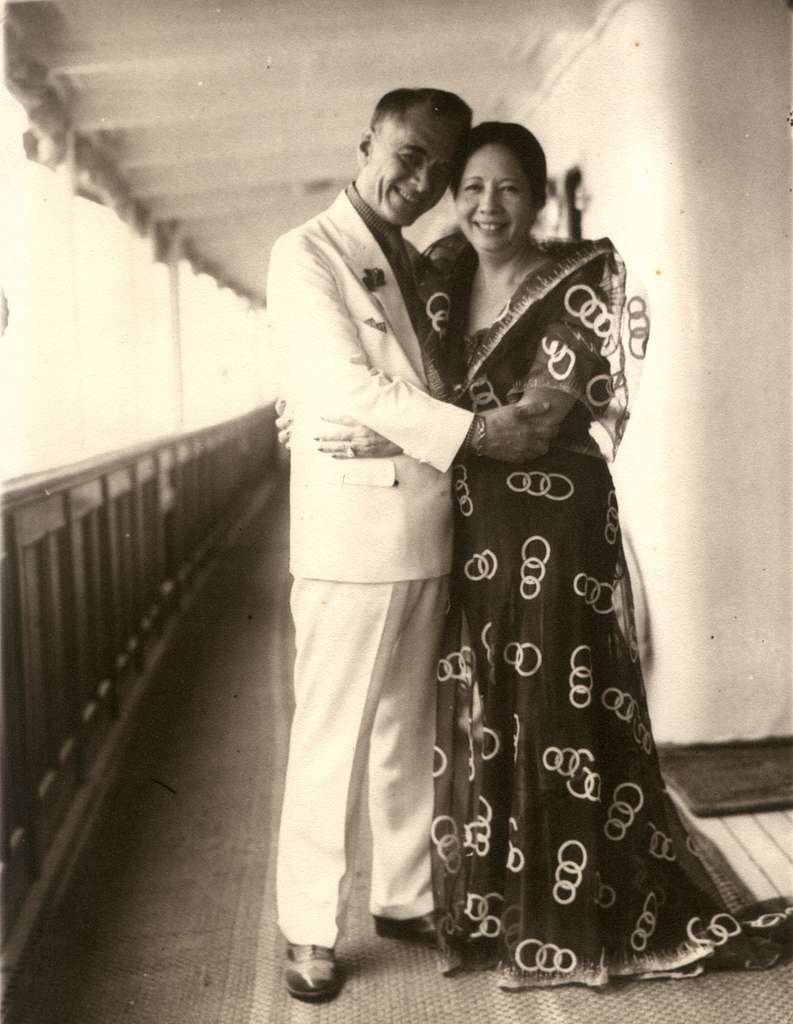
While married to Aurora, Quezon allegedly flirted with other women, sometimes even while in the presence of his wife.
The movie also shows how Ricardo, played by Sue Prado, supposedly continued to try to connect with Quezon.
Is Ana Ricardo a real person?
Although no official records about Ricardo exist, rumors about her have persisted for decades in Bagac, Bataan, where she was believed to have lived.
According to local oral history, Quezon met her while in Bataan, married her soon after, and they later had a son.
Quezon eventually left Ricardo when he was called to serve in Manila.
Then Ricardo supposedly remarried.
There are no records of Ricardo and Quezon’s further interactions after Quezon left Bataan, so the scene in the movie where Ricardo almost had an interaction with her ex-husband is just fictional.
As to being a womanizer, meanwhile, historians agree that Quezon, in fact, was a known playboy.
In an article in 2021, national artist F. Sionil José listed some of his dalliances. They include Hollywood stars Greer Garson and Marlene Dietrich, and a Filipino actress named Amparo Karagdag.
QUEZON VS WOOD
Another one of Quezon’s opponents in the movie is Leonard Wood, the American governor-general tasked by the United States to inspect the country to see if it is ready for independence.
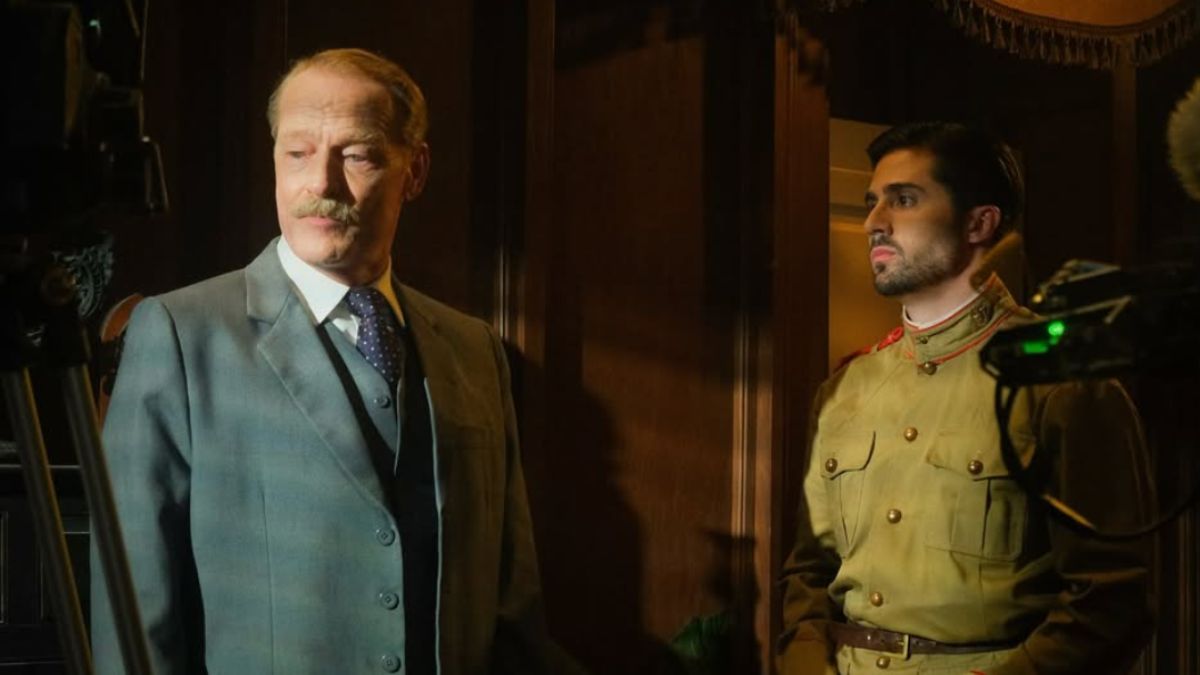
Because Wood stands in the way of Philippine independence, Quezon tries to sabotage him and make him leave the country.
After he fails to make Wood resign, Quezon makes a last-ditch effort to talk to the foreign dignitary over alcohol.
During this scene, Wood shows a folder that supposedly includes many of Quezon’s dirty secrets that may end his political career.
One of these supposed secrets is a rape case.
In his defense, Quezon tells Wood that he was acquitted by the courts after he told them that he did not need to rape anyone because he was already handsome.
Did this truly happen?
Wood is a real historical figure, and it was documented that he was opposed to Quezon and his pursuit of Philippine independence.
But would he have kept a folder with Quezon’s secrets? This could just be a product of the director’s creative license.
As for the rape case, the movie fails to clarify that it may have been a fabricated lawsuit, allegedly filed by Quezon’s political opponents while he was serving as a fiscal in Tayabas, Quezon.
Historical accounts note that Quezon himself claimed he had the case dismissed after telling the judge that he had no need to commit rape because he was good-looking.
QUEZON VS AGUINALDO
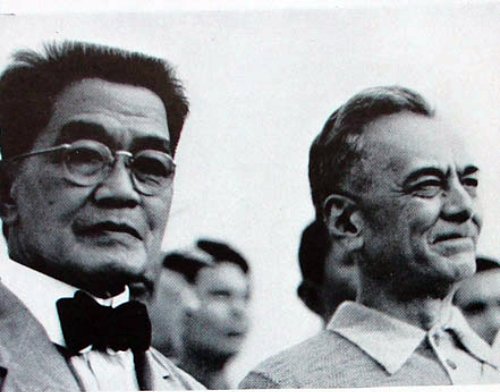
The movie depicts Quezon’s animosity toward Aguinaldo, who ran against him in the 1935 presidential election.
Nonetheless, as the country’s first President, Quezon granted Aguinaldo a lifetime pension and allowed him to live peacefully on a farmland owned by the government.
But when Aguinaldo started opposing Quezon, first by expressing support for Wood, and second by running against him in the Presidential elections, Quezon canceled his pension and evicted him from the farm.
Did these events really occur?
Yes, Aguinaldo did express support for Wood in 1925.
In an article published in The New York Times on May 3, 1925, he was quoted as opposing Quezon’s calls for immediate independence.
“When the time comes the United States will grant you freedom, but that time has not yet arrived,” said Aguinaldo.
This statement soured the cordial relationship between Quezon and the former leader of the revolution.
Aguinaldo’s pension, however, was not canceled until three years into Quezon’s Presidential term.
In the movie, it was shown to have been canceled during the 1935 Presidential elections.
The issue about Aguinaldo’s farmland is much more complicated.
According to an article by historian Ambeth Ocampo, Aguinaldo occupied a large piece of farmland called the Paliparan estate in Dasmariñas, Cavite, from 1911 to 1927.
The former general cultivated the 1,200-hectare land, claiming that Quezon had allowed him to use the land for free.
Since 1911, however, the Bureau of Lands had been sending Aguinaldo several letters so that he could formalize the use of the land.
Aguinaldo ignored the letters, until the Bureau of Lands took further action in 1927 by announcing that the said hectares of land would be sold via an auction.
“Since he could not produce legal title to the land or a contract allowing him to settle on and cultivate it, the Bureau of Lands declared the Paliparan estate vacant.
"The government could have made this arrangement legal in recognition of Aguinaldo’s role in history, but as we know, he and Quezon did not get along, and later ran against each other in the Commonwealth presidential election of 1935,” said Ocampo, via the article published on May 15, 2015 in the Philippine Daily Inquirer.
QUEZON VS OSMEÑA
Another key rivalry in Quezon is the former statesman’s rocky relationship with Sergio Osmeña.
Throughout the movie, the two are depicted as frenemies—at times a supportive duo, and at other moments, silent rivals who attempt to undermine each other’s status.
One highlight in the film is when Quezon, then the senate president, directed then Senator Osmeña and House Speaker Manuel Roxas to go to the United States to secure the independence of the Philippines.
The OsRox mission netted the Hare-Hawes-Cutting Act of 1932, which dictated a 10-year transitionary period for the country’s independence.
The movie showed that Quezon did not like the Hare-Hawes-Cutting Act because he would not be getting the credit.
Because of this, he went on his own independence mission to the United States. It resulted into the Tydings-McDuffie Act of 1934, which was eventually ratified by the Philippine Senate.
So did Quezon really reject the Hare-Hawes-Cutting Act of 1932 because he won’t get the full credit for it?
Judge Guillermo B. Guevara believed so.
A close associate of Quezon, the late judge worked with the former President on the passage of the Jones Law in 1916.
Filipino banker Jaime Laya quoted Guevarra in his column for the Manila Bulletin, which was published on August 4, 2020.
“What Quezon would not and never permit was any prospect that Osmeña and Roxas would get any full credit for an Independence Law, as in the case of the Hare-Hawes-Cutting Act,” said Guevarra.
BIOPICS AND CREATIVE LICENSES
The ruckus surrounding Quezon ultimately highlights the tension between historical fact and dramatic creative license.
A biographical film is, by its very nature, a work of interpretation and art, and not an academic document.
Narrative filmmaking often demands the consolidation of characters, the adjustment of timelines, and the invention of specific scenes to convey an emotional truth or achieve narrative coherence, making some degree of factual deviation necessary.
This practice is widely accepted across global cinema, so it is perhaps unfair to accuse Quezon’s filmmakers of doing it just for the box office.
Even major Hollywood biopics, such as The Social Network or Lincoln, are known to have taken significant liberties, condensing years of real-life events into single, dramatic encounters to serve the story.
And yet, despite the necessity, creative license still cannot dismiss the genuine feelings of the descendants whose family legacy is being publicly interpreted and dramatized.
Quezon’s relatives are not the first, because their discontent echoes similar controversies seen in international productions.
For example, Princess Diana’s relatives strongly criticized the later seasons of the Netflix series The Crown, claiming that the show’s dramatic license misrepresented both their personal memories and historical reality.
Indeed, the tension between art and history is inescapable.
Whether or not Quezon is a perfectly accurate portrayal of the late President, the filmmakers’ central message remains clear: the film is meant to inspire thoughtful and lively discussions among Filipinos about their past and present.