
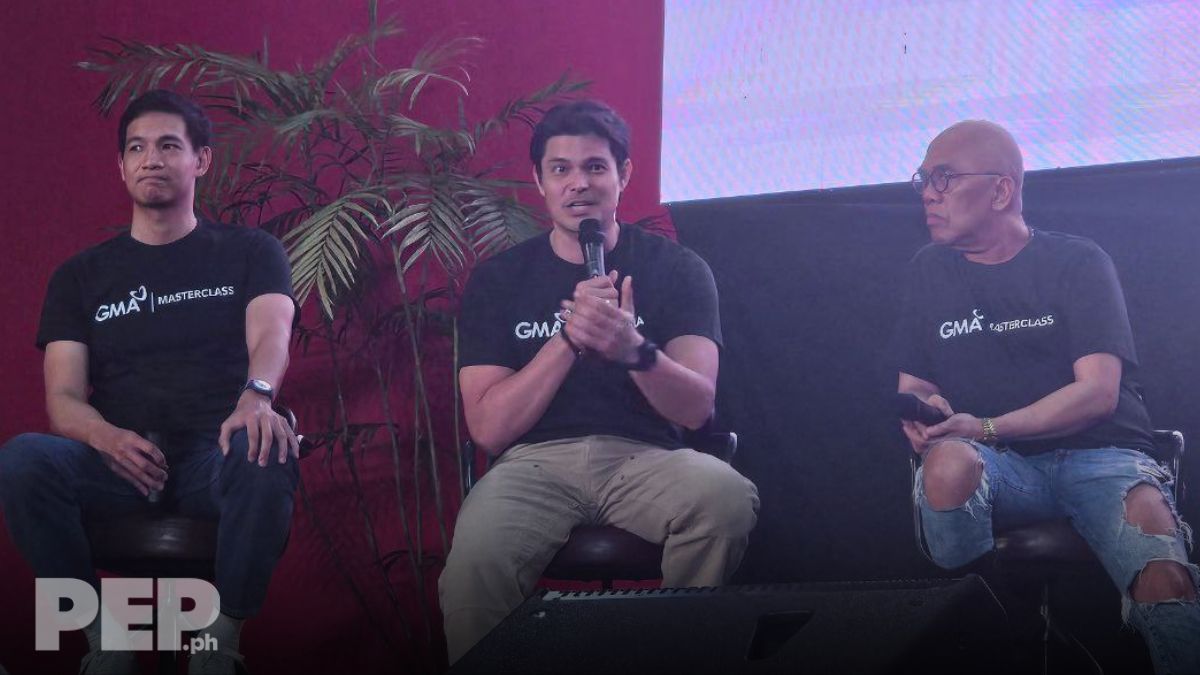

The recent Be Juan Tama Masterclass empowered college students to think deeper and make the right choices during today’s fast-paced digital age.
Held on October 9, 2025 at San Sebastian College-Recoletos Manila, the afternoon session was hosted by GMA Integrated News and featured top celebrity speakers Dingdong Dantes, Chris Tiu and Boy Abunda.
In the audience were students from San Sebastian College, De La Salle College of Saint Benilde, Arellano University, Emilio Aguinaldo College, and more.
PEP.ph (Philippine Entertainment Portal), as a media partner, was able to witness the event, and here’s what we learned from Dingdong, Chris and Tito Boy.
DISASTER PREPARENESS
Dingdong Dantes delivered a talk about disaster preparedness in the Philippines.
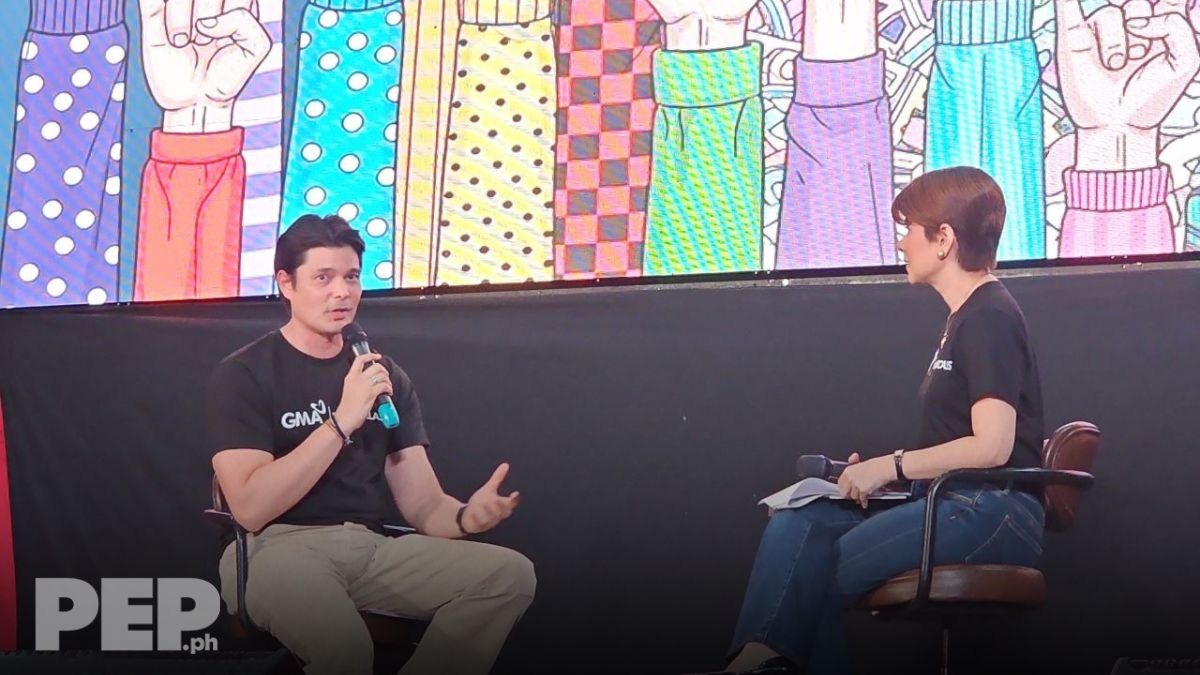
As the host of Amazing Earth, the Kapuso personality has the experience to engage the youth in discussions about environmental issues.
“Naniniwala talaga ako sa kakayanan at kapangyarihan ng kabataan. The young people aren’t victims of disasters, but they are also leaders, they are global influencers,” said Dingdong.
“I can just imagine lalo na kung ginamit nila ang kanilang kapangyarihan together with technology, e, grabe talaga ang magiging ambag nila sa kaligtasan ng lahat."
He mentioned how he witnessed a group of youth volunteers gather signatures for a petition about climate change. It happened in 2015.
The volunteers came up with the campaign and gathered signatures from various youth around the country.
“I was so proud to witness that. Ang nangyari dun ay na-deliver yung over three million signatures, and it was handed over to the world leaders in Paris at the time,” he said.
The signatures became part of the Philippines’ contribution to the Paris Agreement, which was signed by 174 countries in 2016.
The Paris Agreement is an international treaty adopted by world leaders in 2015 to strengthen global efforts to combat climate change.
Dingdong also believes that everyone can contribute to disaster preparedness.
“Hindi naman kailangan ng isang malaking gesture, hindi mo kailangang maging hero, hindi mo kailangang magsuot ng kapa, para masolusyonan iyan. Just in our simple ways, there are really a lot of things that we can do,” he explained.
Dingdong's 5 steps that can help the youth be prepared for disasters
- Learn about disaster preparedness. .
- Train on disaster prevention and other critical life-saving techniques.
- Prepare. Have ready-to-go supplies ready if you need to evacuate, and assess your surroundings to make sure it is ready for any disaster.
- Teach others about disaster preparedness.
- Monitor official sources so you can be quickly informed if there is an incoming disaster.
In the end, Dingdong underlined that being ready for disasters should be a habit: “The bottomline should be, we should start to build that culture of preparedness."
LIVING AN ACTIVE LIFESTYLE
Next on stage was Chris Tiu, who talked about improving the youth’s mental health by living an active lifestyle.
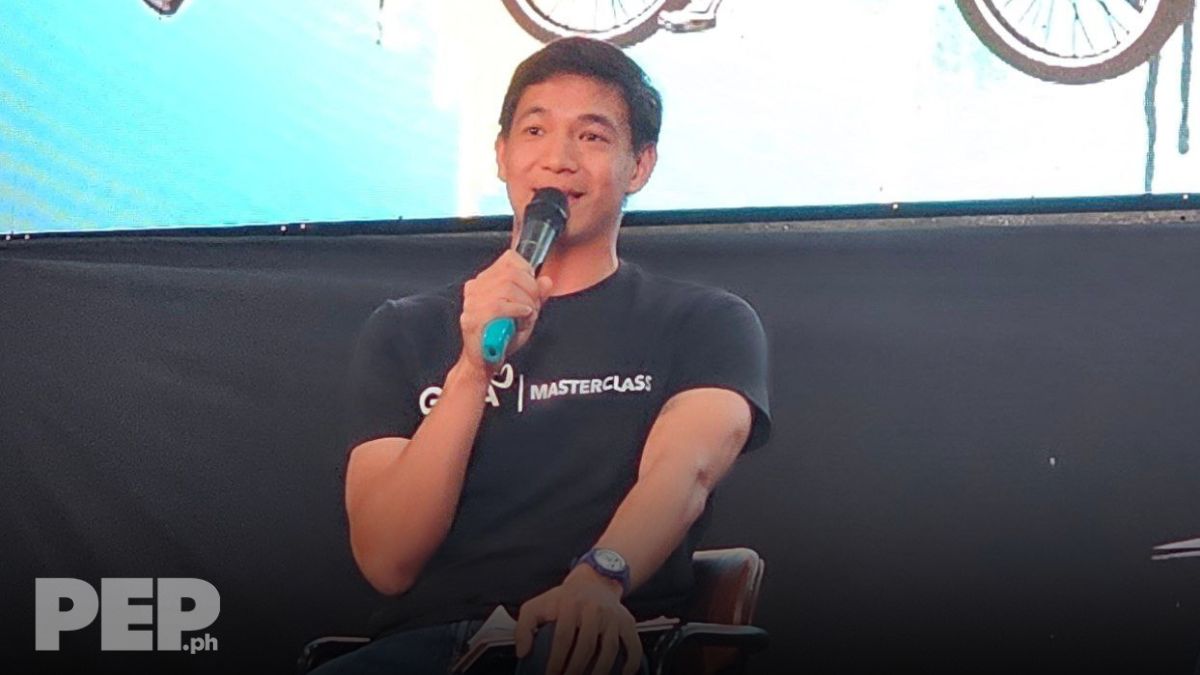
The former basketball star believes that exercise and sports can lift one’s mood.
To begin his talk, Chris poinpointed the reasons why he thinks the youth is showing signs of mental health distress.
He blamed distant parenting styles and the parents’ addiction to technology.
He mentioned that it is now common for teenagers to be unable to talk to their parents during mealtime because their mom and dad are absorbed in their phones.
“While we are on our phones, we lose the connection with our kids. And nagkakaroon ng what we call the digitally-distracted parenting,” said the iBilib host.
Chris added that students should reduce their screen time.
He thinks there are benefits to cellphones and social media, but there are also obvious detriments.
“Sometimes when not use properly, unfiltered, nakaka-cause din iyan ng stress,” he said.
The former PBA star also warned the youth about the prevalence of cyber-bullying.
Chris swears that replacing technology attachment with an active lifestyle will improve mental health.
“Every time I need to unplug, I leave my phone then go to the gym, workout lang ako. Or basketball, hindi ka naman nagse-cellphone habang nagba-basketball. After two hours of not being on your phone, you feel good after."
He also encouraged the students to exercise in the morning.
“Try niyo yun,” he told the young audience.
“Gising kayo nang mas maaga. Mag-exercise kayo, pataasin niyo ang heart niyo. Kasi scientifically, it shows that sport or being active will increase the production of certain hormones and improve your mood. Yung endorphins, happy hormones, serotonin, dopamine—lahat ito mood boosters.”
Read: Kim Atienza reveals last conversation with daughter Emman
ANATOMY OF TSISMIS
Last to talk to the youth was Boy Abunda.
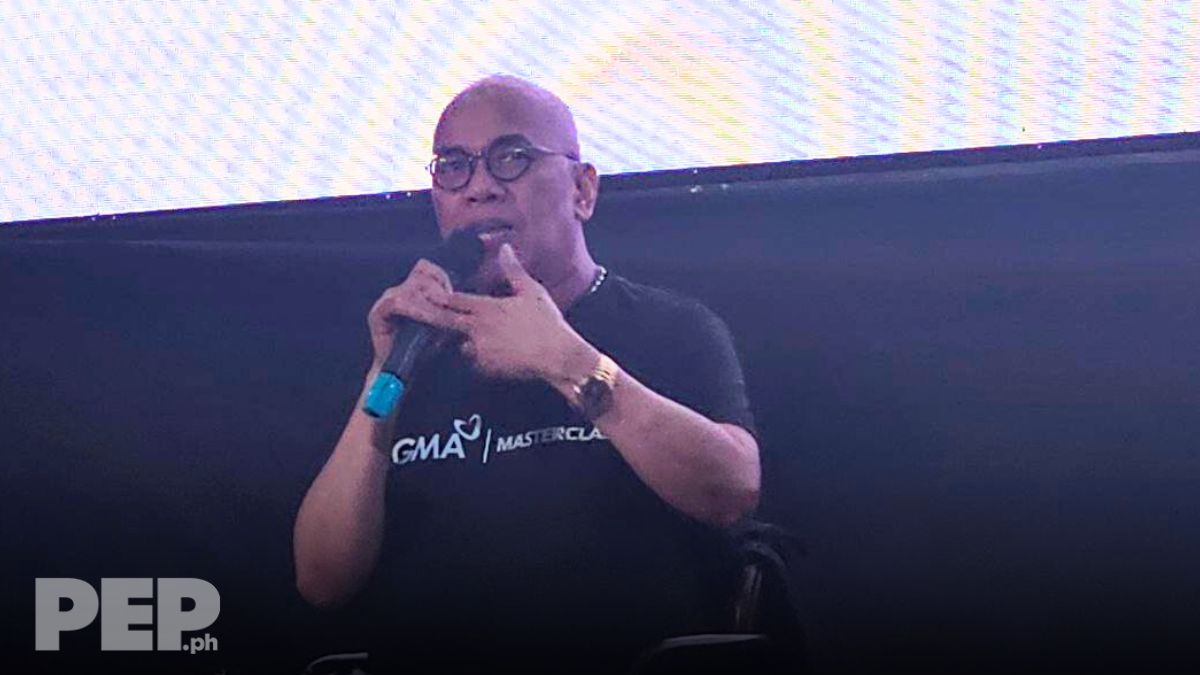
The showbiz talk show host held an insightful discussion on the anatomy of tsismis.
The Fast Talk host traced the origins of the Filipino gossip culture to the time when the country was under Spanish rule.
During this period, Filipino servants of Spanish and Filipino upper classes talked among themselves as a coping mechanism from the abuses that they receive.
This historical context made tsismis become embedded in the Filipino culture.
Despite gossip being cultural, Tito Boy maintained that it is not a good practice.
“Ang tsismis ay masama, ang tsismis destroys,” he said. “Kung may katotohanan man kahit kaunti, may dinagdag o binawasan.”
Aside from being lacking in truth, he further defined tsismis as something that is “delicious, delectable."
Tito Boy exclaimed, "Ang sarap pakinggan lalo na ang target market ay bukas tumanggap."
He also added that individuals who spread tsismis have the intention to destroy the subject’s reputation.
“Tsismis is moral corruption. May ninanakaw na imahe at reputasyon.”
He further connected the culture of tsismis to corruption issues in the government, because it is closely connected to propaganda or fake news.
He then encouraged the youth to say no to tsismis.
“Kultura man o tradisyon ang pinagmulan nito, we have to stop."
He also empowered the youth to always find the fact every time they hear gossip.
“The power to know the truth, and the power to examine stories, nasa atin,” he exclaimed.
Read: Meet Rob Jetten, youngest and openly-gay Dutch prime minister
8 LESSONS FROM BE THE JUAN TAMA MASTERCLASS
In summary, here are the nine lessons that we learned from the Be Juan Tama Masterclass.
The youth has the power to combat disasters and to promote disaster preparedness.
Young Filipinos can work together to battle climate change, corruption, and other causes of disastrous calamities.
The youth should remember the five steps to promote disaster preparedness: Learn about disaster preparedness, train on disaster prevention, prepare for disasters, teach others about disaster preparedness, and monitor official sources.
The mental distress felt by the Filipino youth may be traced to distant parenting styles and he criticized the parents’ addiction to technology.
The youth should reduce their screen time to improve their mental health.
An active lifestyle will help the youth improve their mood. Daily exercise can release happy hormones.
All tsismis is bad because it lacks truth and aims to destroy reputations.
The youth has the power to stop tsismis.