
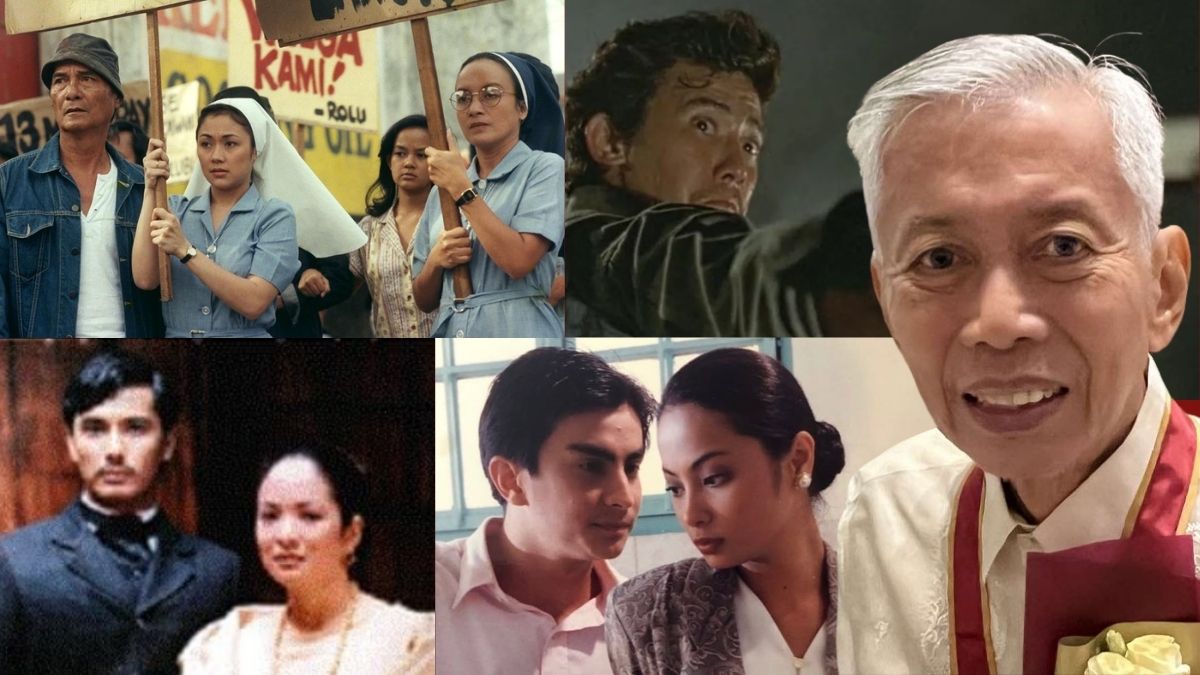

Journalist. Poet. Activist. Translator.
Jose Maria “Pete” Lacaba is all these to those familiar with his contributions to Philippine media and literature.
Another lesser-known facet of his brilliance is his work as a screenwriter for Philippine cinema.
Although his screenwriting portfolio may not be as extensive as some of his peers, Lacaba’s work includes critically acclaimed films that have, over time, earned admiration for their socio-political themes, which remain relevant today.
The recently concluded Sinag Maynila Independent Film Festival reminded viewers of this fact with the screening of Jaguar, the 1979 classic crime-drama film directed by Lino Brocka and written by Lacaba with Ricky Lee.
Read: Pete Lacaba, Ricky Lee reunite for special screening of Jaguar
Jaguar was showcased last year at the 16th Lumière Film Festival in Lyon, France, presented in its fully restored 4K version.
Viewers who missed the Sinag Maynila screening will have another opportunity today, Saturday, November 8, 2025, at Archivo 1984 Gallery in Karrivin Plaza, Chino Roces Avenue, Makati City.
The screening begins at 3:30 p.m. and will be accompanied by an exhibit featuring never-before-seen photos from the film, which will be unveiled to the public for the first time.
According to Lifestyle Asia, Jaguar lead stars Phillip Salvador and Amy Austria are also expected to attend the event.
The reemergence of Jaguar provides a good moment to revisit some of Lacaba’s most notable works on the big screen, many of which are now regarded as essential viewing — if and when they can be found — for both casual audiences and film enthusiasts.
JAGUAR
Released in 1979, Jaguar was inspired by the 1960 Brown Derby shooting in Los Angeles, a case documented by writer-journalist Nick Joaquin in his piece “The Boy Who Wanted to Become Society.”
National Artist for Film and Broadcast Arts Ricky Lee, who co-wrote the script with Lacaba, recalled how they tirelessly reworked the narrative and dialogue, guided only by director Lino Brocka’s “minimal” comments.
Phillip Salvador portrays the character of Poldo, a security guard who ends up serving as a bodyguard to his employer's son.
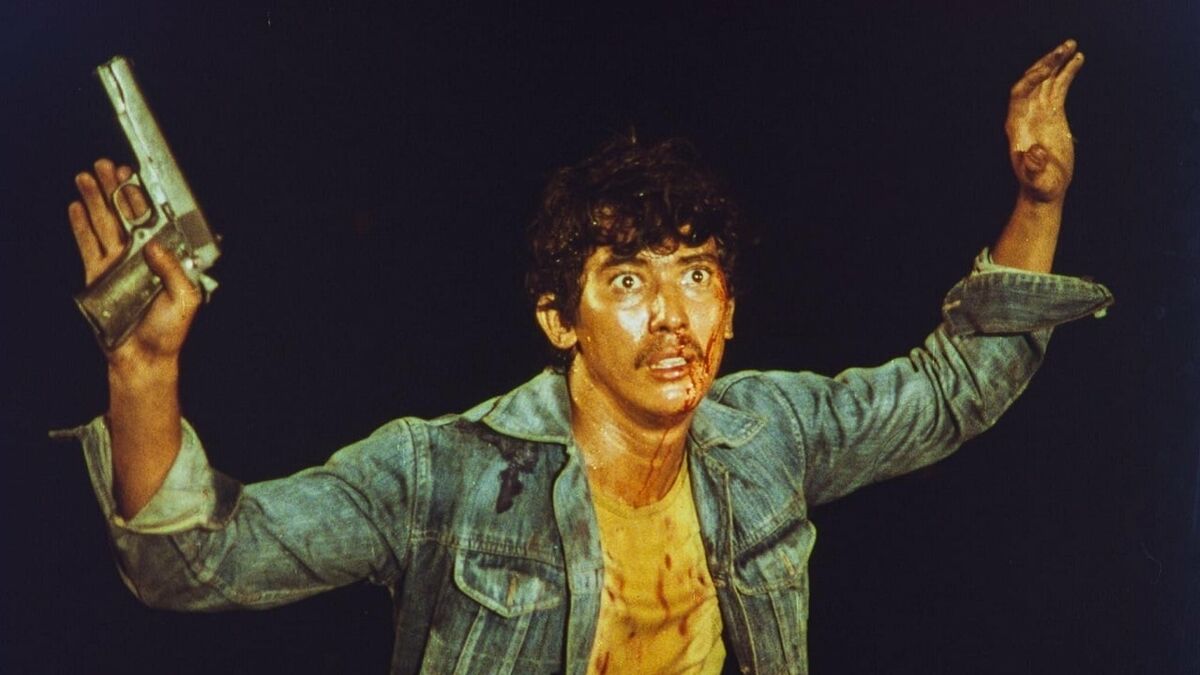
The word “jaguar” is a slang term and a play on words for "guwardiya."
Jaguar earned the Philippines its first nomination for Palme d’Or –the highest prize awarded to the director of the Best Feature Film of the Official Competition at the Cannes Film Festival– in 1980.
Locally, Jaguar clinched several awards, including Best Picture and Best Director from the FAMAS, and Best Direction and Best Picture from the Gawad Urian.
More importantly, the film has endured as a classic, with its themes of poverty, social inequality, and corruption remaining strikingly relevant today.
SISTER STELLA L.
This 1984 political drama demonstrated that a film’s quality cannot be measured solely by its box-office performance.
Starring Vilma Santos, Jay Ilagan, Gina Alajar, and Laurice Guillen, Sister Stella L. was co-written by Lacaba with director Mike de Leon and Jose Almojuela, featuring additional dialogue by Ellen Ongkeko.
Sister Stella L. tells the story of Sister Stella Legaspi, a nun who serves as a counselor for battered women and unwed mothers.
Her life takes a turn when she becomes involved in a labor strike, eventually standing alongside workers and confronting the injustices they face.
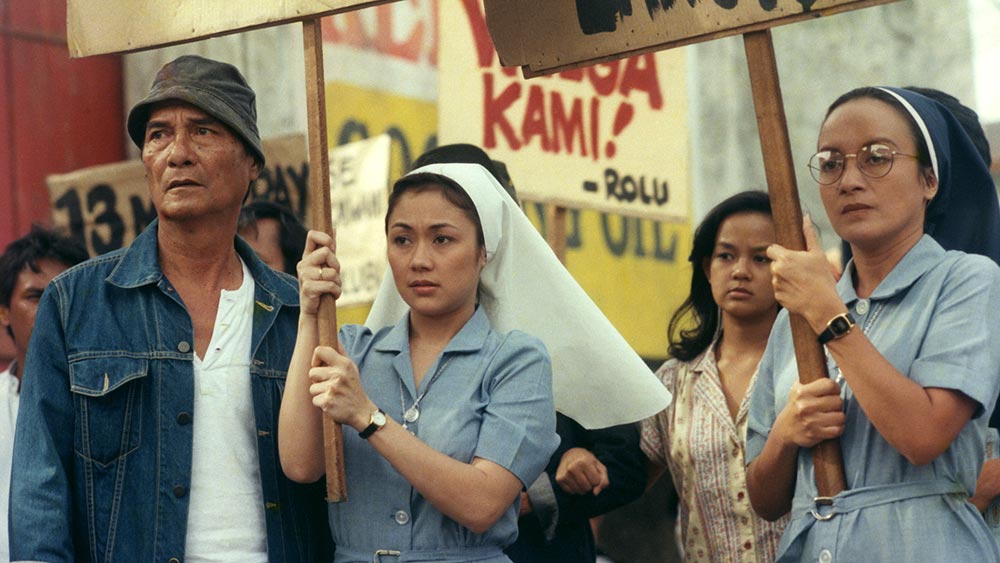
In a May 2011 interview on "Inside the Cinema" aired on Cinema One, Lacaba revealed to host Boy Abunda that Sister Stella L. was originally titled Sangandaan — a name that veteran producer Marichu Vera-Perez, who was assisting Lily Monteverde of Regal Films in producing the film, did not favor.
Read: Mike de Leon airs grievances against Mother Lily about restoration of Sister Stella L
Vera-Perez felt that, given the film’s serious narrative, a lighter and catchier title would be more suitable.
The name “Sister Stella” was inspired by Stella Maris College in Quezon City, where Lacaba and de Leon interviewed a nun as part of their research for the film.
However, Vera-Perez remained unconvinced by the title "Sister Stella," insisting on something “sexier” to better capture audience interest.
Lacaba suggested adding the letter “L,” a subtle nod to “libog” or lust, which ultimately gave the film its final title, Sister Stella L.
All the back-and-forth over the title, however, couldn’t save the film, which ultimately underperformed at the box office.
Despite its lackluster box-office performance, Sister Stella L. earned critical acclaim, with reviewers lauding its social commentary on religion, politics, and labor issues.
Sister Stella L. went on to win multiple awards from the Gawad Urian Awards, including Best Picture, Best Actor, Best Actress, Best Director, and Best Screenplay.
The film competed at the 41st Venice International Film Festival, where it vied for the prestigious Golden Lion. However, the award ultimately went to Krzysztof Zanussi’s A Year of the Quiet Sun.
Sister Stella L. can be seen in full and for free on the YouTube channel of Regal Entertainment, Inc.
BAYAN KO: KAPIT SA PATALIM
Lacaba would team up again with Lino Brocka for the 1985 drama film Bayan Ko: Kapit sa Patalim.
The movie tells the story of Turing (Phillip Salvador), a printing press worker who, saddled with a pregnant wife and mounting debts, signs a contract barring him from joining any labor union.
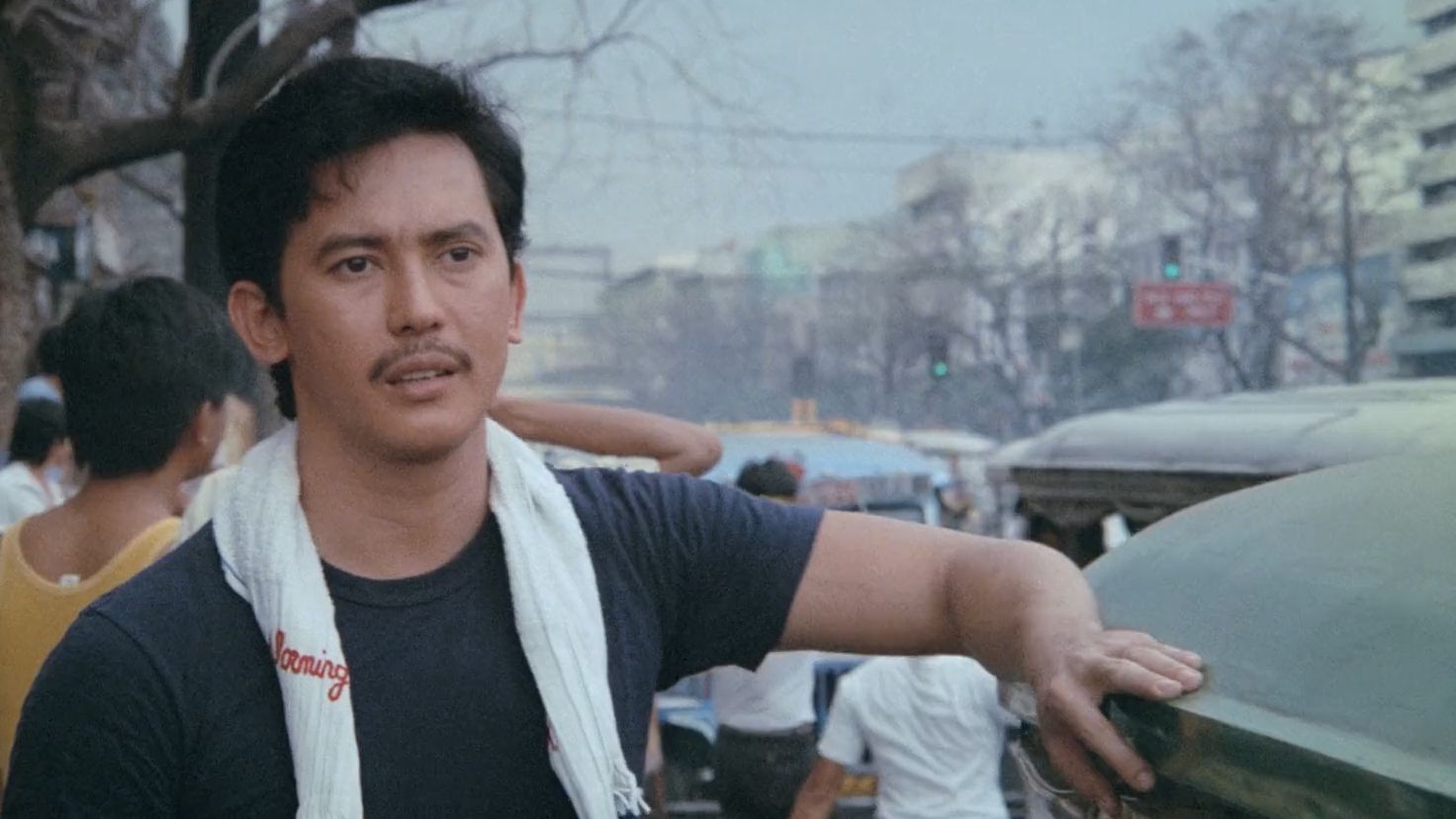
When a strike erupts at his workplace, he refuses to back his colleagues, leaving the couple isolated and without support.
Desperation eventually drives Turing to take part in a robbery.
Interestingly, Bayan Ko: Kapit sa Patalim did not make its debut in Philippine cinemas, but rather at the 1984 Cannes Film Festival in France.
It also served as the country's entry at the 58th Academy Awards for Best Foreign Language Film, though it fell short of being nominated.
The film faced challenges in securing a local release after censors objected to its inclusion of real-life footage from demonstrations.
On November 6, 1985, Bayan Ko: Kapit sa Patalim finally made its local cinema debut, but with an R rating from the Movies and Television Review and Classification Board (MTRCB).
Although the film struggled at the box office, it was hailed by critics for its social relevance, earning major honors at the Gawad Urian, including Best Film and Best Screenplay.
SEGURISTA
Today, Segurista is touted by critics as a masterpiece.
This recognition, however, did not come instantly, and it took time before the film earned its place among the gems of Philippine cinema.
Directed by Tikoy Aguiluz and released in 1996, Segurista — which Aguiluz co-wrote with Lacaba and Amado Lacuesta Jr. — follows Karen Fernandez, an insurance agent played by Michelle Aldana, who doubles as a guest relations officer at night to earn extra cash.

Segurista won multiple awards, among them the Gawad Urian for Best Screenplay for Lacaba and Lacuesta Jr., and even represented the Philippines at international festivals in Toronto and Singapore, with a bid for the 69th Academy Awards.
Yet to many viewers at the time, it was dismissed as merely another film riding the ST (sex trip) genre bandwagon.
In a way, the film, driven by Neo Films' marketing campaign, hopped on the ST wave to its advantage — initially earning an X rating from the MTRCB for its provocative scenes before being cleared for theatrical release, albeit with cuts to appease the ratings board.
But unlike many of its contemporaries, Segurista has substance and depth, carrying a message about society that resonates even more strongly today.
RIZAL SA DAPITAN
Before the 1998 box-office hit Jose Rizal, starring Cesar Montano, there was Rizal sa Dapitan, directed by Tikoy Aguiluz.
Lacaba wrote the screenplay for the film, which starred Albert Martinez as national hero Jose Rizal and Amanda Page as Josephine Bracken, the Irish woman who married Rizal an hour before his execution on December 30, 1896, in Bagumbayan (now Luneta) in Manila.
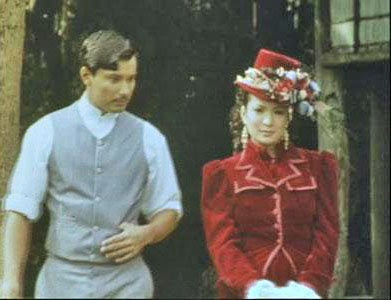
While Jose Rizal comprehensively covers the life of Rizal, Rizal sa Dapitan focuses on his time while in exile in the quiet town of Dapitan, Zamboanga del Norte.
The film underscores that Rizal’s exile in Dapitan was not merely a footnote to his storied life.
Historians note that, despite moments of loneliness, he found fulfillment there — building a water system, engaging in farming and teaching, and applying his knowledge of medicine to serve the local community.
It was a productive chapter in Rizal’s life, one seldom explored in popular media until the film brought it to the forefront.
Rizal sa Dapitan drew praise from critics for its “well-crafted” narrative, highlighting a quiet yet meaningful phase in Rizal’s life that both humanized the revered hero and showed his many talents.
Reactions to the film, though, were mixed, with some critics remarking that Rizal’s portrayal came across as “too perfect” and at times overly didactic.
Others noted that the narrative seemed to lack conflict and dramatic tension.
To be fair, this reflected Rizal’s perceived peaceful life in Dapitan — a stark contrast to his more familiar image as a revolutionary who challenged Spanish authority.
Lacaba tackled this issue in his Manila Times column on December 28, 1996.
"The problem, as I have discovered in my other incarnation as a screenwriter, is that it is devilishly difficult to be faithful to what actually happened when you’re writing drama," mused Lacaba.
"You have to bend reality a bit because your producers and your audience expect heightened action and raging passion where historical records show only uneventfulness and anticlimax."
Rizal sa Dapitan went on to win multiple awards, including Best Picture, Best Director, and Best Screenplay from the FAMAS, Best Cinematographer and Best Musical Score from the Metro Manila Film Festival, and Adapted Screenplay of the Year from the Star Awards for Movies, among many others.
The film also took home the Best Actor award for Albert Martinez and the Grand Jury Prize at the Brussels International Film Festival.
Rizal sa Dapitan is not on major streaming platforms, but full versions of the film in decent quality can be found on YouTube.
ESKAPO
To say that Eskapo hits close to home for Lacaba would be an understatement.
The film centers on the plight of political prisoners — a subject deeply personal to him, having been jailed and tortured during the Martial Law years under Ferdinand Marcos Sr.
Read: Jose "Pete" Lacaba recalls his Martial Law experiences on I Survived
Released in January 1995, the movie was directed by Chito Roño and written by Lacaba with Roy Iglesias.
Eskapo tells the true story of politician and grandson of former President Sergio Osmeña Sr., Sergio "Serge" Osmeña, and entrepreneur Eugenio "Geny" Lopez Jr., and their daring escape from a maximum-security prison cell in Fort Bonifacio on September 30, 1977.
Lopez and Osmeña were part of the many political prisoners held by the Marcos administration under Martial Law, which allowed Marcos to cling to the presidency and consolidate power.
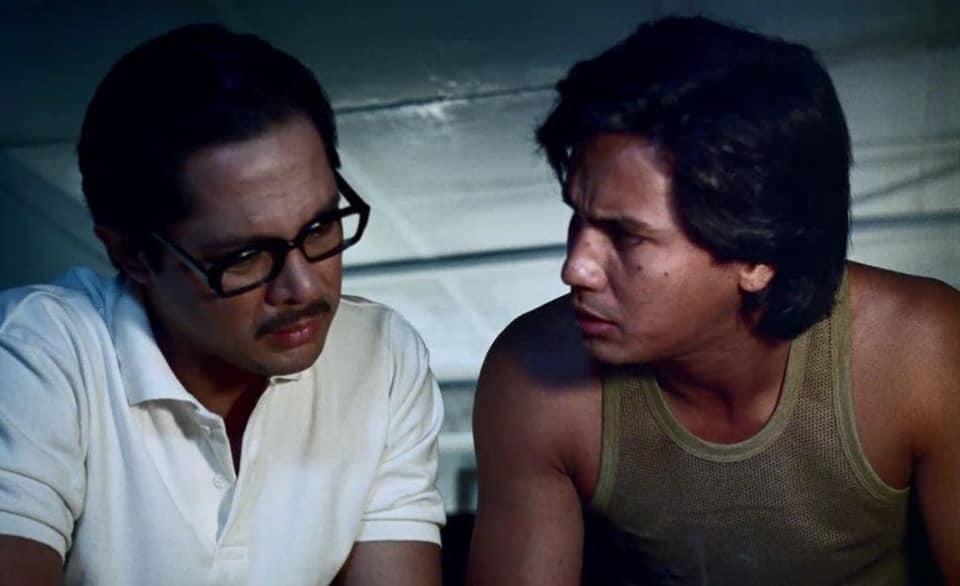
Once again struggling with the challenge of portraying real events on screen, and the pressure to heighten drama for emotional impact, Lacaba wrote about the artistic liberties taken in Eskapo’s climactic depiction of Osmeña and Lopez's escape.
"History was two escaped political prisoners hiding in the trunk of a car that succeeded in leaving a prison camp without incident, according to my informants, Geny Lopez and Serge Osmeña themselves," shared Lacaba in his Manila Times column published in December 1996.
He continued, "Cinema was guards learning of the escape at the exact moment when the car goes past the prison-camp gate, then firing at the wildly fleeing car."
Lacaba emphasized staying true to the original account of the escape as told by the subjects themselves, and voiced reservations about altering narratives purely for dramatic effect.
"In my own defense, I can only say that the explosions in Victor Corpus and the gunfire in Eskapo were not in my script drafts, but even if they were, I wouldn’t have been the first to mess with history for cinematic purposes."
Eskapo was digitally restored and remastered by ABS-CBN's Sagip Pelikula initiative, and is available for streaming on the iWantTFC platform.
Orapronobis (Fight for Us)
This politically charged 1989 movie by Lino Brocka failed to reach local theaters, which is a shame considering that it was one of the late director's notable films.
Lacaba wrote the film's story, with Phillip Salvador and Dina Bonnevie taking on the lead roles.
While Orapronobis was given screen time at the 1989 Cannes Film Festival in France, the movie never earned the green light to exhibit in the Philippines, as it was seen as overly critical of the government's human rights violations.
The film is set in 1985, in the remote town of Dolores. A cult called Orapronobis, led by Kumander Kontra, killed a foreign priest who had administered last rites to an alleged rebel, who was also executed by the group.
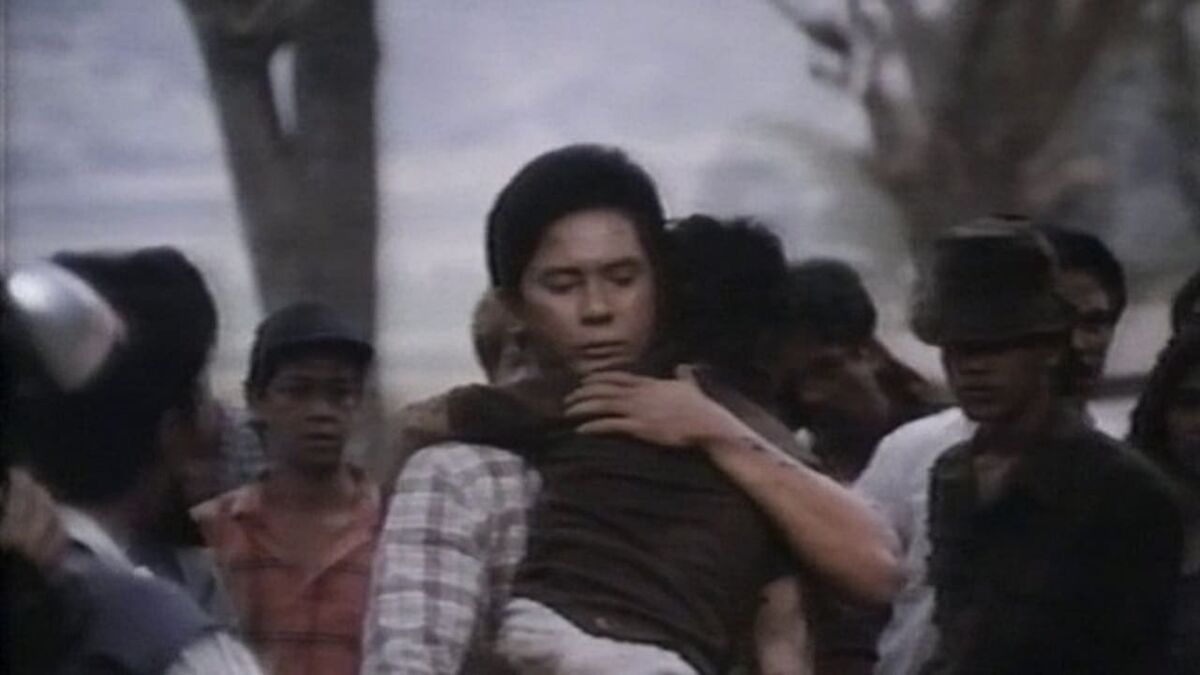
The timeline of Orapronobis spans the final year of the Marcos regime and the aftermath of the 1986 EDSA Revolution, showing that oppression and human rights violations persisted despite the change in government and remain a problem under any leadership.
Today, Orapronobis is occasionally screened at film festivals, with the 2019 showing at the Cultural Center of the Philippines honoring Lino Brocka coming to mind.
A full version is also available on YouTube via the Akap sa Bata Philippines channel, yet the film remains elusive even after 36 years.
Special mention also goes to Tatsulok (1998), the documentary Bagong Bayani (1995), also known as Flor Contemplacion’s Last Wish, and Boatman, for which Lacaba provided additional dialogue.