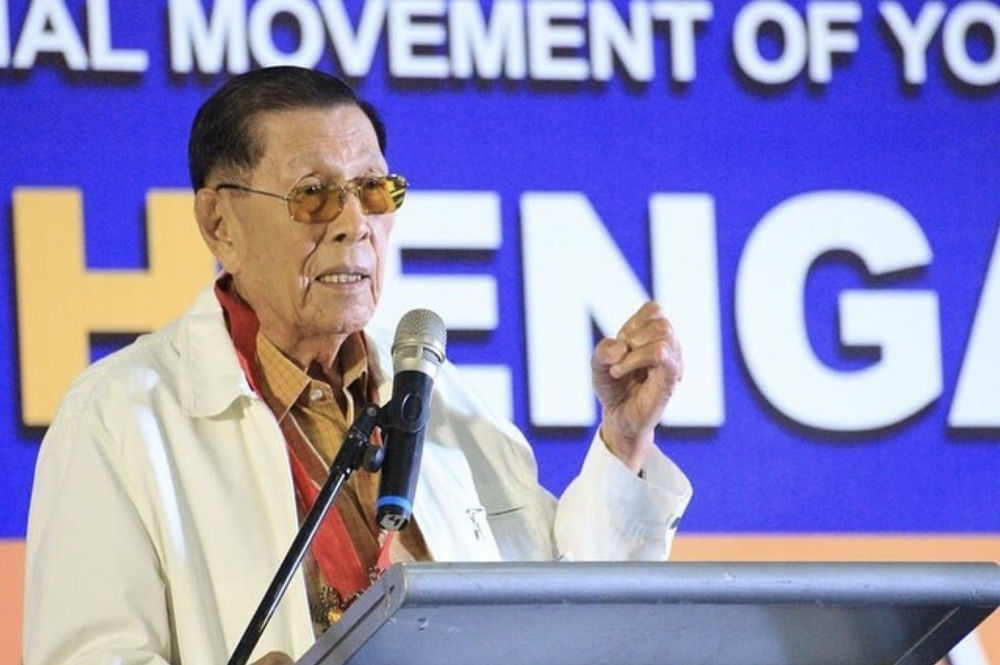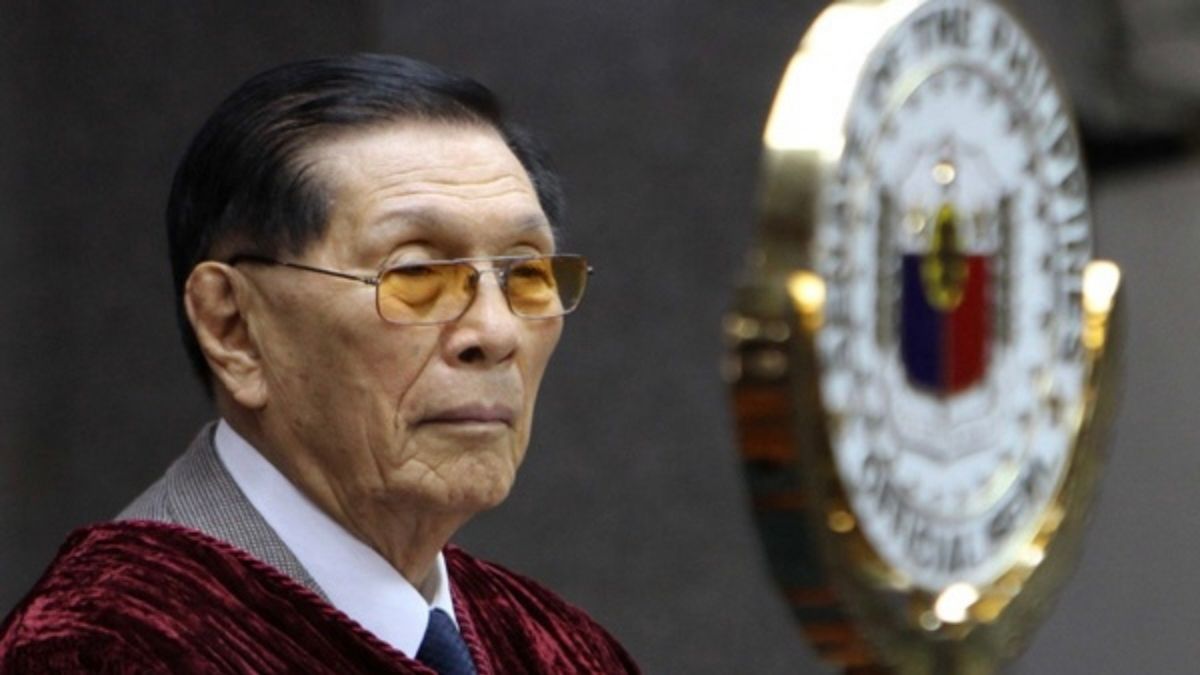


Immortality was the pop-culture word so often tied to Juan Ponce Enrile—dubbed “political survivor” for how he remained at the forefront of national affairs long after his contemporaries had vanished from the scene.
Name a decisive point in the nation’s political story post-WW2, and chances are he was there either drafting its laws, defending its leaders, or dismantling its foundations.
Even in the twilight of his life, he remained inside the machinery of state, returning to Malacañang as Chief Presidential Legal Counsel under President Ferdinand “Bongbong” Marcos Jr.
PEP.ph (Philippine Entertainment Portal) now turns its gaze to a life that has finally reached its end, closing the chapter on one of the most enduring careers in Philippine public service.
A River Boy with Big Lungs
Juan Valentin Furagganan Ponce Enrile Sr.’s (JPE) origins took root far from the marble halls of Manila.
Born on February 14, 1924, in Gonzaga, Cagayan, he was the son of Petra Furagganan, a fisherman’s daughter, and Alfonso Ponce Enrile, a Manila lawyer who would not recognize him until much later.
The disparity between their lives was the first harsh reality he learned to confront.
He grew up in a grit-held community where proprieties meant little, and survival hinged on getting up to work before the first crack of morning.
In a Philippine Daily Inquirer profile published in July 2012, JPE recalled the smell of river water and fish that shaped his earliest memories.
His mother would carry baskets of their catch on her head as she walked to town.
He spent his childhood beside that river, swimming against its steady pull and inheriting its doggedness by instinct.
“I was a diver,” he said. “You could throw me two kilometers from shore and I could swim back to land.”
He often joked that he had “big lungs.” If it wasn’t bravado, it was a boy’s way of explaining why he could stay underwater longer than most, and why he could withstand currents that frightened others.
Those lungs carried him through a childhood marked by hunger and the bedlam of poverty.
His classmates mocked him for being a “bastard,” a word he remembered long after he learned to ignore those who mocked his lineage.
To stay in school, he worked as a houseboy for his aunt.
He cleaned floors, chopped wood, fetched water, and cooked meals.
“That’s why I know how to do all those chores,” he told the Inquirer.
His recollections were never hallelujahs to hardship. They were matter-of-fact reminders of where he began.
When he turned 21, he finally met his half-sisters, singer and producer Armida Siguion-Reyna and artist Irma Potenciano.
Their meeting was confirmed by ABS-CBN and The Philippine Star.
It bridged the boy from the riverbanks with the Manila political heritage he had only heard about.
In hindsight, they were two halves of a story that had always been inching toward each other.
The War Years and the Long Way Home
By his teens, JPE already understood what it meant to have no defenses.
While studying at the Cagayan Valley Institute, he got involved in an altercation with senior students and was expelled.
He could not contest the decision. He later said that moment made him realize how difficult life was for those without means or advocates.
It was then that he decided to study law.
War arrived soon after.
When Japanese forces reached Cagayan, he joined the guerrilla resistance and was eventually captured.
He managed to escape during an air raid. It was his first encounter with mortality, though he never described it dramatically.
Survival, to him, was simply something one had to do.
When the war ended, he traveled to Manila to meet his father for the first time.
Inquirer described the encounter as brief and emotional.
His father embraced him and said, “I’m sorry, son.”
It was an apology that altered the direction of his life.
He finished high school at St. James Malabon. In an unexpected gesture, the very school that had expelled him earlier provided the clearance he needed to graduate.
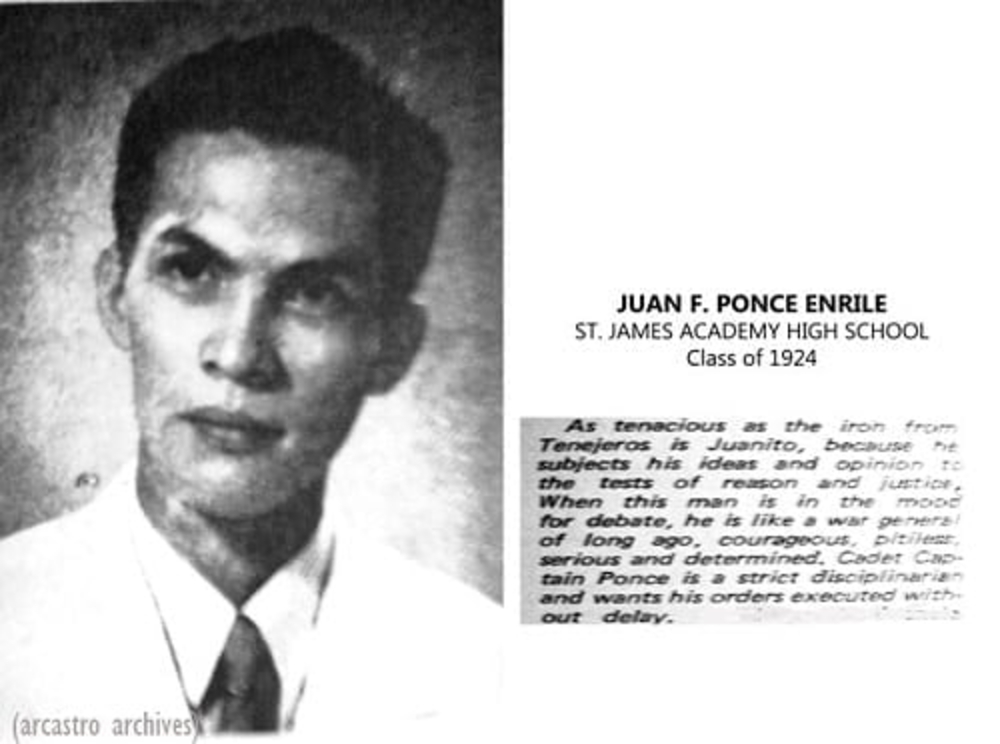
He earned an Associate of Arts degree, cum laude, from Ateneo de Manila University in 1949.
He then completed his Bachelor of Laws degree, also cum laude, at the University of the Philippines (Diliman).
At UP, he joined the Sigma Rho fraternity, which counted among its members future statesmen such as Franklin Drilon and members of the Angara family.
He placed 11th in the 1953 Bar Examinations with a score of 91.72 percent and achieved a perfect mark in Mercantile Law.
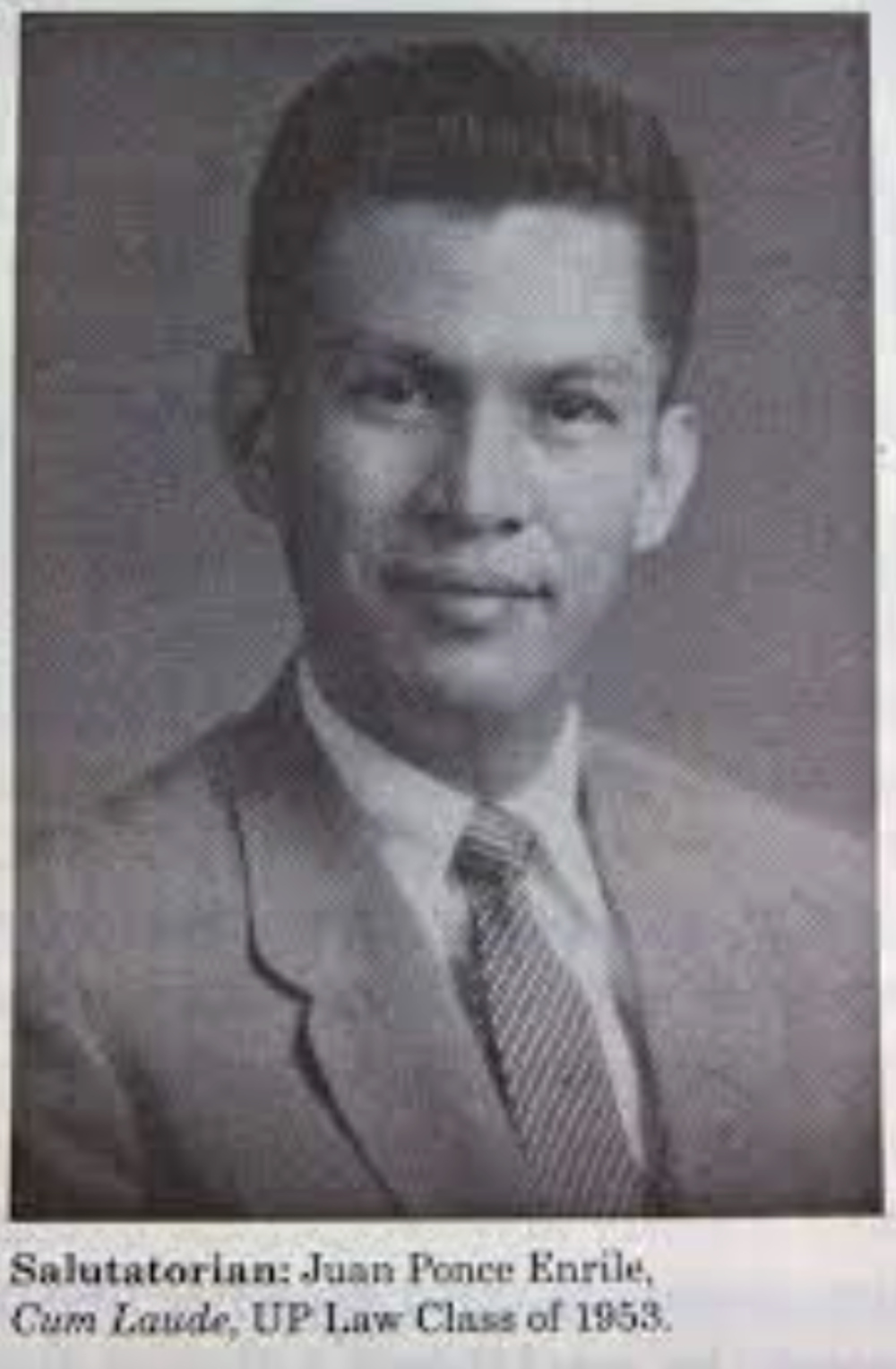
He also became a member of the Pi Gamma Mu and Phi Kappa Phi honor societies.
His academic path led him to Harvard Law School, where he earned a Master of Laws in International Tax Law.
When he returned to the Philippines, he taught at Far Eastern University and practiced at his father’s firm.
(Sources: Philippine Daily Inquirer, July 2012; ABS-CBN News archives; The Philippine Star; Ateneo de Manila University and University of the Philippines College of Law records; Harvard Law School alumni archives.)
Into the Corridors of Command
JPE entered government service at a time when the Philippines was rebuilding from war and recalibrating its institutions.
According to the Department of Finance archives and accounts summarized in various biographical references, he began as a legal and technical assistant in the early 1960s.
Under President Diosdado Macapagal, he rose to acting commissioner of Customs and, later, acting secretary of Finance.
These were roles that demanded discipline and mastery of economic law.
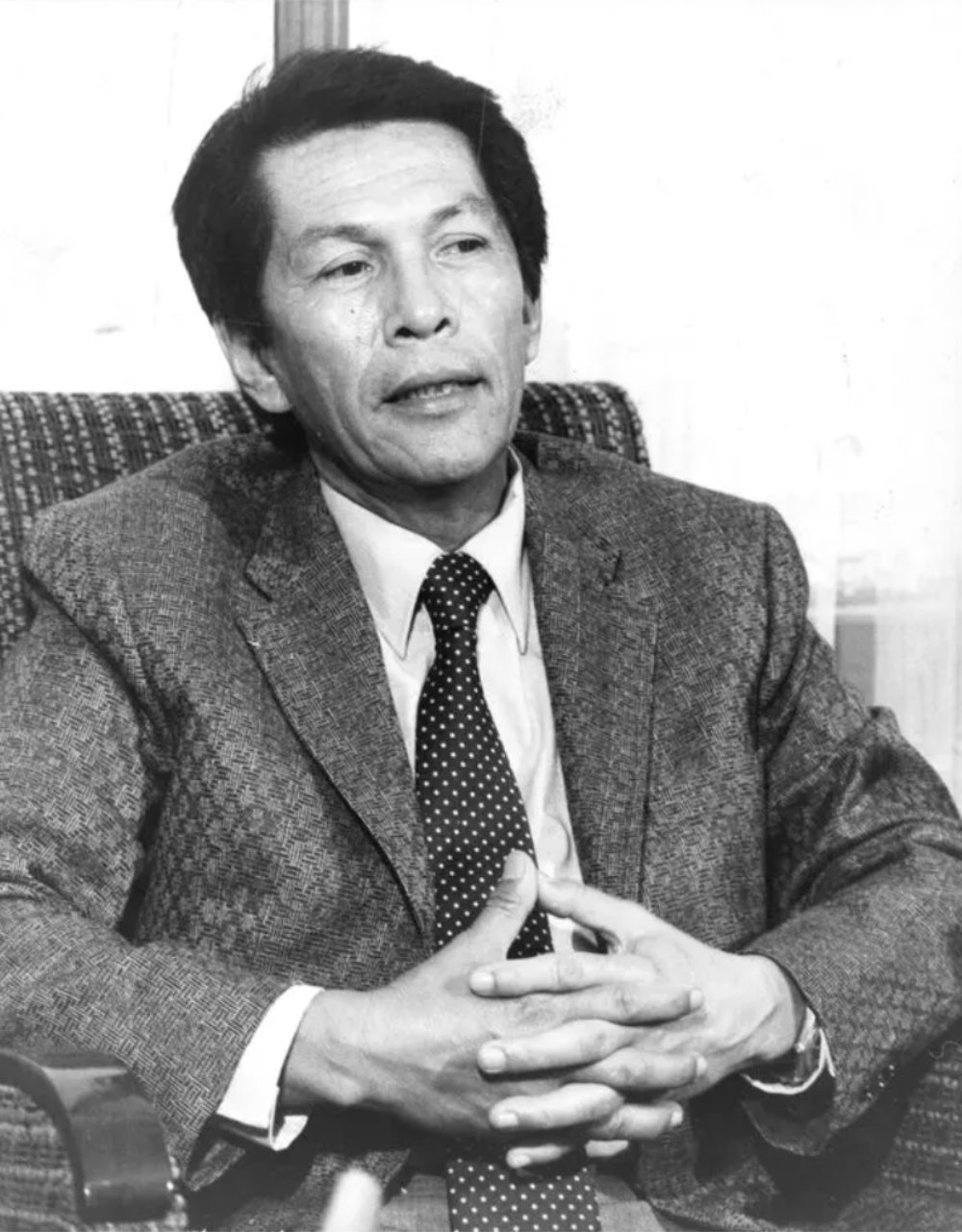
In 1964, JPE made a career decision that altered the trajectory of his life. He began handling the personal legal affairs of fellow Ilocano and then Senate President Ferdinand Emmanuel Edralin Marcos Sr.
This association is documented in multiple sources, including the Official Gazette and JPE’s 2012 memoir.
When Marcos won the presidency in 1965, JPE followed him into Malacañang.
His first major appointment was in 1966 as undersecretary of Justice, a position cited by the Department of Justice’s historical roster.
He eventually became Secretary of Justice, refining the legal strategies that would define the Marcos administration.
By 1970, Marcos appointed him Secretary of National Defense.
This placed him at the center of the government’s security apparatus during one of the most turbulent political climates in Philippine history.
He was then reappointed Defense Secretary by Marcos in 1972.
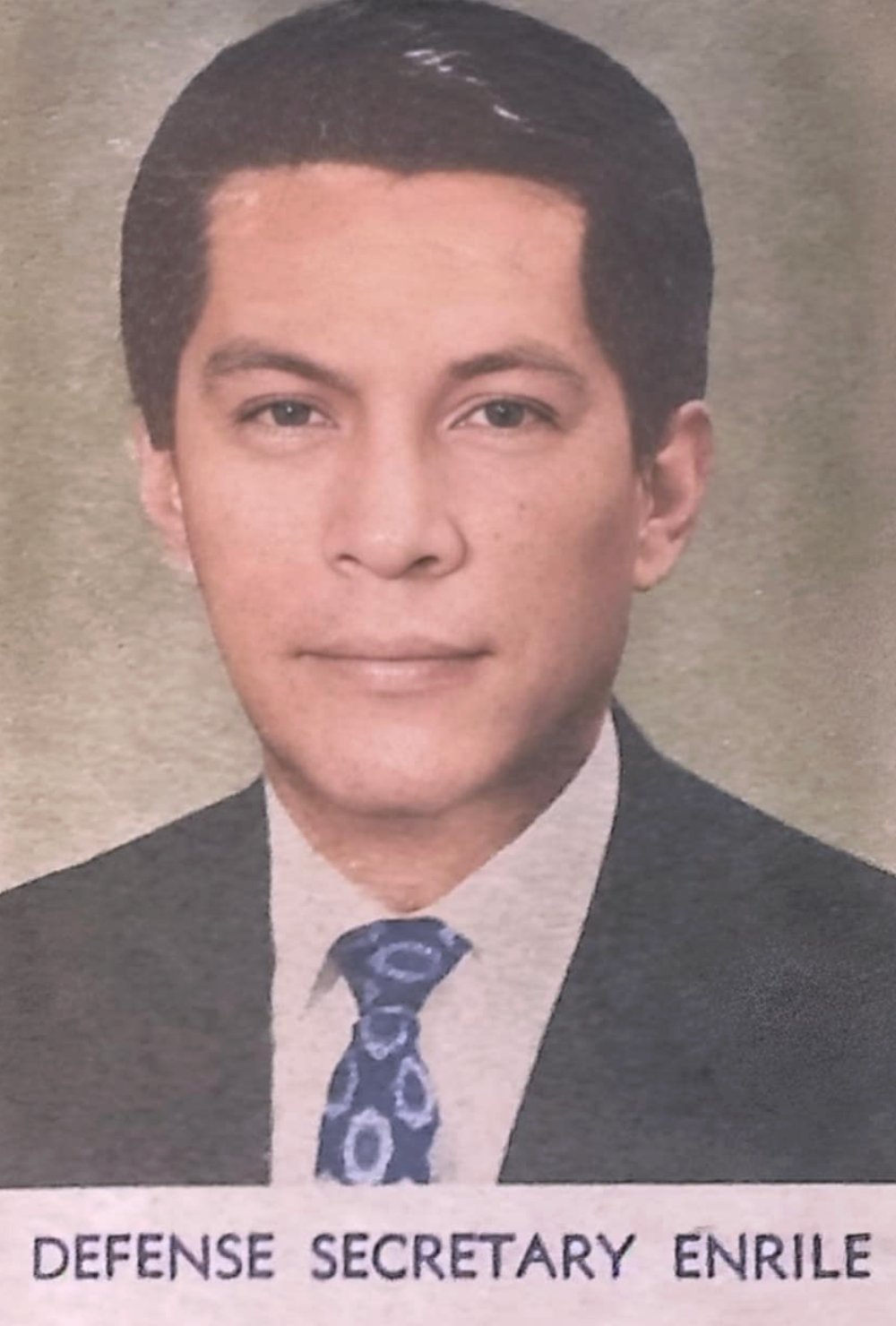
Numerous historical analyses, including published works by the Ateneo Martial Law Museum and accounts from the Philippine Commission on Human Rights, describe JPE’s role in drafting the legal frameworks that would later support the declaration of Martial Law in 1972.
His own retelling in interviews and in his memoir acknowledged his participation in the process, although he framed it through the lens of national security.
In 1986, Enrile was one of the pivotal figures in the “People Power” revolution that forced the Marcos family into exile in the United States.
(Sources: Official Gazette of the Republic of the Philippines; Department of Finance historical summaries; Department of Justice archives; Philippine Daily Inquirer reporting from 1986; ABS-CBN Publishing’s Juan Ponce Enrile: A Memoir, 2012; Ateneo Martial Law Museum publications; works by Alfred W. McCoy and Ricardo Manapat.)
Juan Ponce Enrile's Senate Presidency
The topic of JPE’s legislative career spanned multiple terms and multiple political eras, albeit similarly marked by the shifting temper of the Republic.
His first ascent to the senate came in 1987, following the ratification of the 1987 Constitution. It was a moment of national reconstruction.
He placed 24th and assumed office on August 15, 1987, after his electoral protest was dismissed.
His early months were turbulent, spending a brief spell in detention over suspicions of backing a coup against then President Corazon Aquino, only to walk free when the accusations failed to hold water.
Aquino, for her part, would later brand him the “Pambansang Balimbing” in a blistering 1990 speech—a label that stuck like burrs to fabric for years to come.
In 1992, instead of seeking a full Senate term under the Constitution’s transitional rules, JPE ran for the House of Representatives and won the seat for Cagayan’s First District.
He returned to the Senate in 1995 as one of the winners of that year’s election, though his victory became entangled in the Dagdag-Bawas scandal.
JPE maintained that he was a victim rather than a beneficiary, even challenging Aquilino Pimentel Jr. to a one-on-one contest.
His political ambitions widened in 1998 when he ran as an independent presidential candidate, losing to Joseph Estrada.
By 2001, he was once again at the center of national upheaval, voting against the opening of bank evidence in Estrada’s impeachment trial.
The vote helped trigger the Second EDSA uprising, after which he joined EDSA III protests backing Estrada.
He was later charged, briefly detained, and ultimately lost his 2001 senate reelection bid.
Enrile staged a comeback in the 2004 elections under the KNP coalition, buoyed by public support after his opposition to the Purchased Power Adjustment on electricity bills.
He won again in 2010, becoming the oldest member of the 15th Congress.
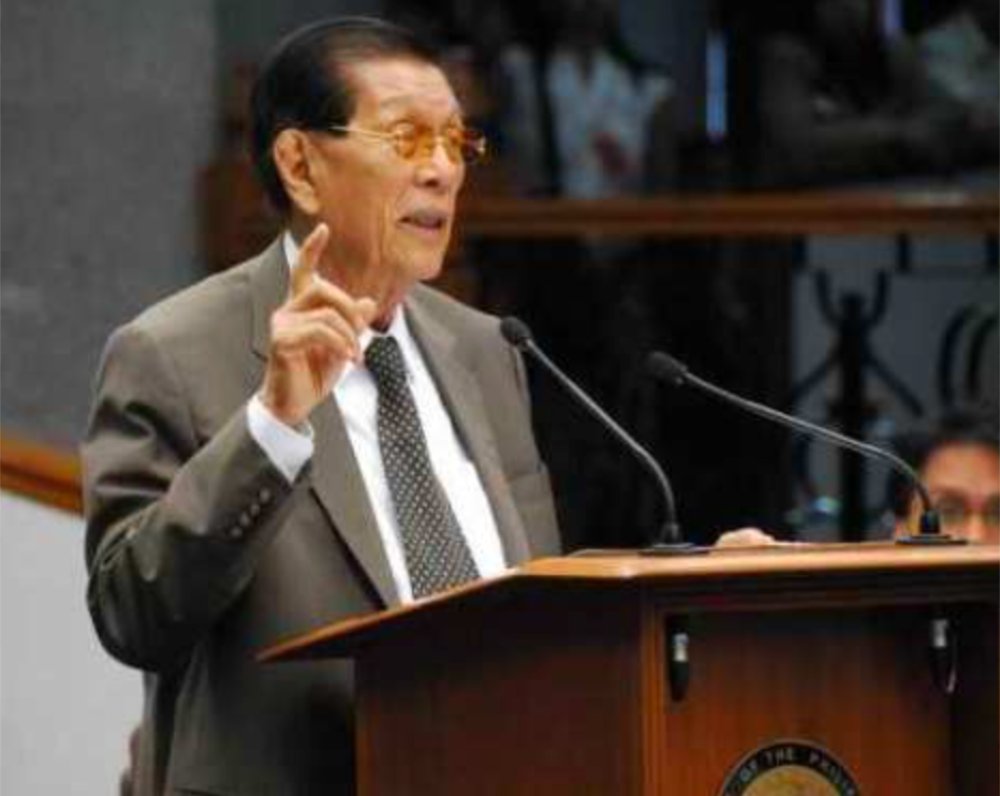
His most powerful era in the chamber began in November 2008 when he was elected senate president following the resignation of Manny Villar.
Under his leadership, the Senate passed key laws such as the CARP Extension, the Anti-Torture Act, the Expanded Senior Citizens Act, the Anti-Child Pornography Act, the National Heritage Conservation Act, and the Real Estate Investment Act.
Re-elected senate president in 2010, he pledged “fairness to all members” and the protection of the chamber’s institutional independence.
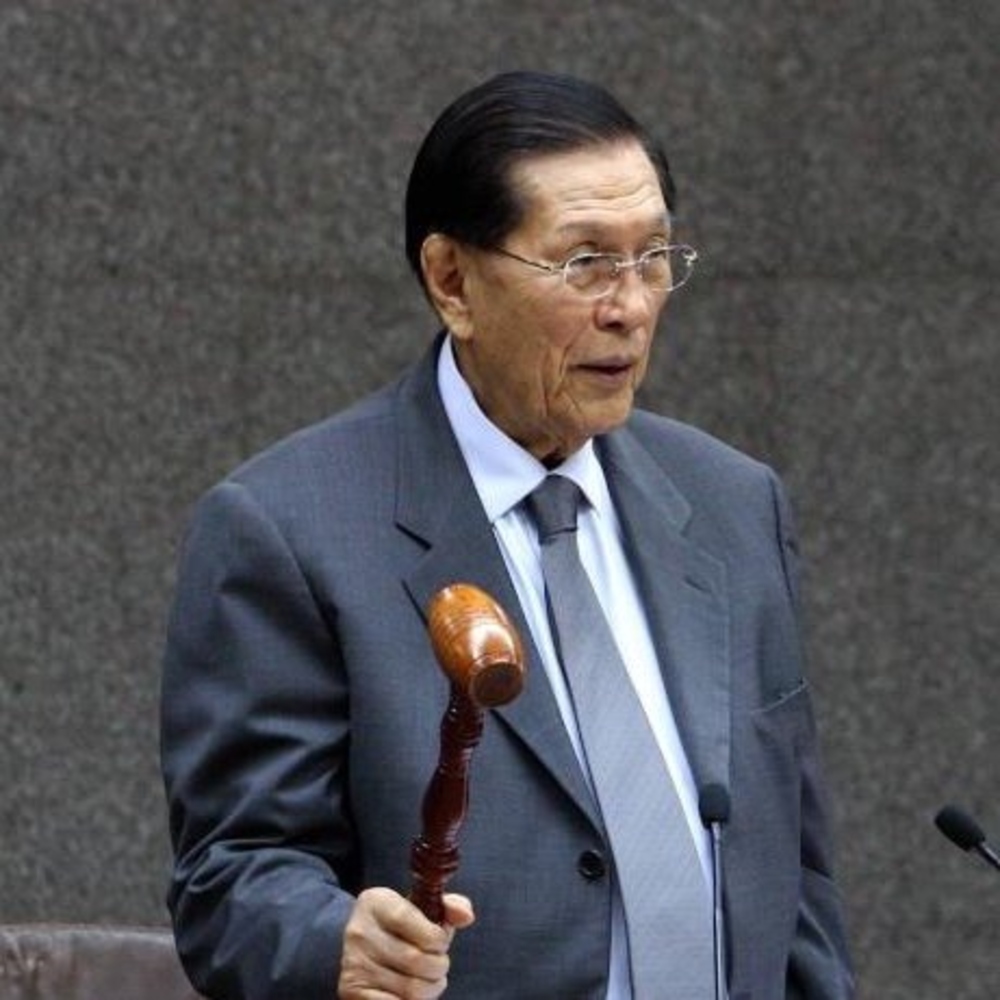
In 2012, Enrile presided over the impeachment trial of Chief Justice Renato Corona—yet another turning point in contemporary political history. He voted to convict.
That same year, he engaged in fierce clashes with Senators Antonio Trillanes IV and Miriam Defensor Santiago, involving foreign-policy back-channels, legislative priorities, and questions of propriety inside the chamber.
By early 2013, controversies over the distribution of Senate MOOE funds further fractured alliances around him.
After a failed attempt to vacate his post in January 2013, he ultimately resigned on June 5, 2013.
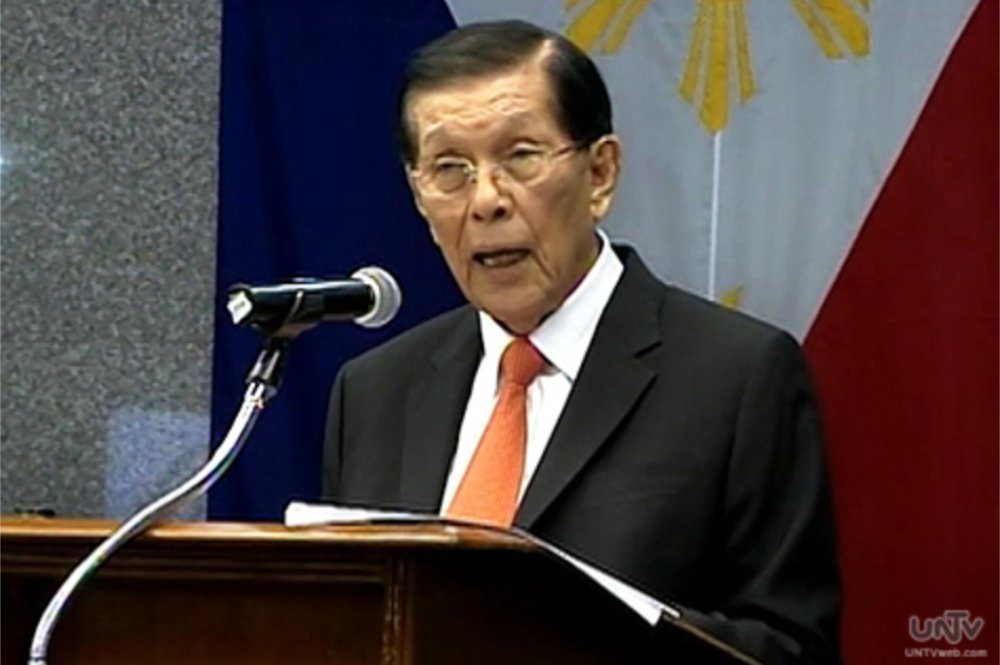
In his privilege speech, he acknowledged the institution’s permanence beyond any individual leader: “The Senate neither begins nor ends with Juan Ponce Enrile.
“This Chamber has its own honor to uphold, and its institutional integrity in the end means more to the people than all of us combined.
“My entire record as a public servant, my performance as a Senator of the Republic, and my conduct as Senate President is all up for the nation to judge, whether fairly or unfairly.
“But now that the election noise has quieted down, I lay claim to nothing more than the right to vindicate my sullied name.”
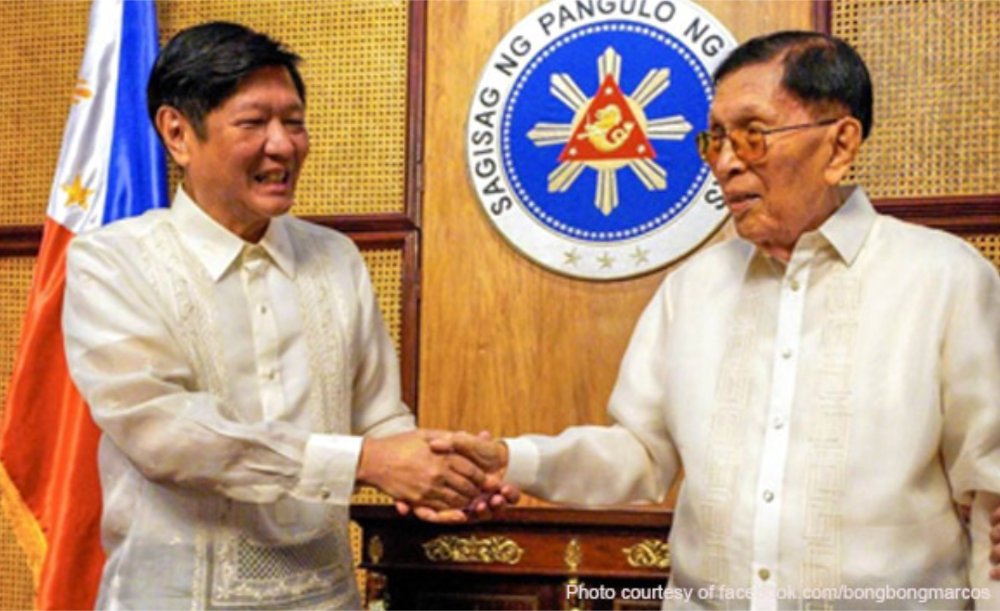
Before his passing, he served as chief presidential legal counsel of the 17th Philippine President Ferdinand “Bongbong” Marcos Jr.
(Sources: Senate of the Philippines speech archive; SunStar Bacolod report on Enrile’s resignation; Philippine Daily Inquirer coverage of his June 5, 2013 resignation; Senate Electoral Tribunal biography; Rolling Stone Ph)
Juan Ponce Enrile's controversies
Despite being wanted in circles that many could only aspire to enter, it cannot be refuted that JPE's long life ran parallel to controversies that shadowed his public reputation.
Alleged 1972 “ambush” that helped justify Martial Law — The reported attack on JPE’s car near Wack-Wack on Sept. 22, 1972, became part of the public rationale for Proclamation No. 1081; later accounts and investigations raised serious doubts about whether the incident was staged.
Source: Philippine Daily Inquirer explainer (Oct 8, 2012)
1995 “dagdag-bawas” vote-manipulation scandal — JPE was named in election protests arising from alleged vote-shaving and vote-padding practices after the 1995 senate election (SET cases and later SC dispositions).
Source: Senate Electoral Tribunal case page
2013 MOOE “cash gifts” / operating funds controversy — As senate president, JPE authorised additional Maintenance and Other Operating Expenses (MOOE) disbursements that critics called selective “cash gifts” to allies and which sparked accusations of patronage and impropriety.
Source: Senate press statement and clarification
Coco Levy Fund Scam — JPE had been linked in reports and court proceedings to the Coco Levy funds controversy, which involved the collection and alleged misallocation of levies on coconut farmers, as well as billions in assets.
Source: Rappler
PDAF / Pork-Barrel Plunder Charges (2014 onward) — JPE was among those charged by the Ombudsman in connection with the Priority Development Assistance Fund (PDAF) scam; the case generated multiple filings with the Sandiganbayan and the Supreme Court. He was acquitted of graft charges related to the alleged diversion of ?172.8 million in public funds linked to the pork-barrel scam on October 24, 2025.
Sources: Supreme Court / Sandiganbayan case materials and announcements
A Romantic at Heart
Between kinship and literature lay the parts of JPE that rarely reached the heat of the Senate floor.
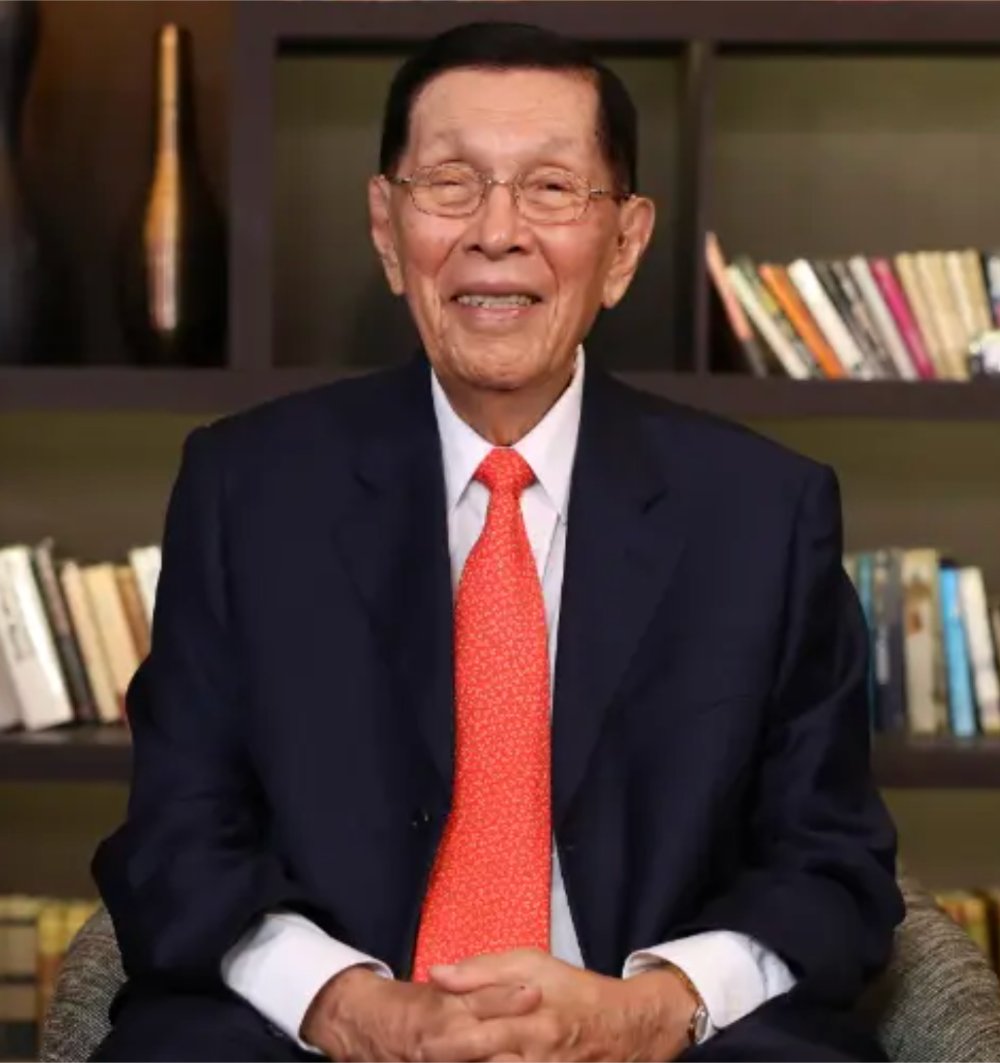
Befitting someone born on the 14th of February, JPE carried a Valentine’s Day instinct for devotion that manifested itself in a lifetime of choosing his wife Cristina Castañer-Enrile again and again.
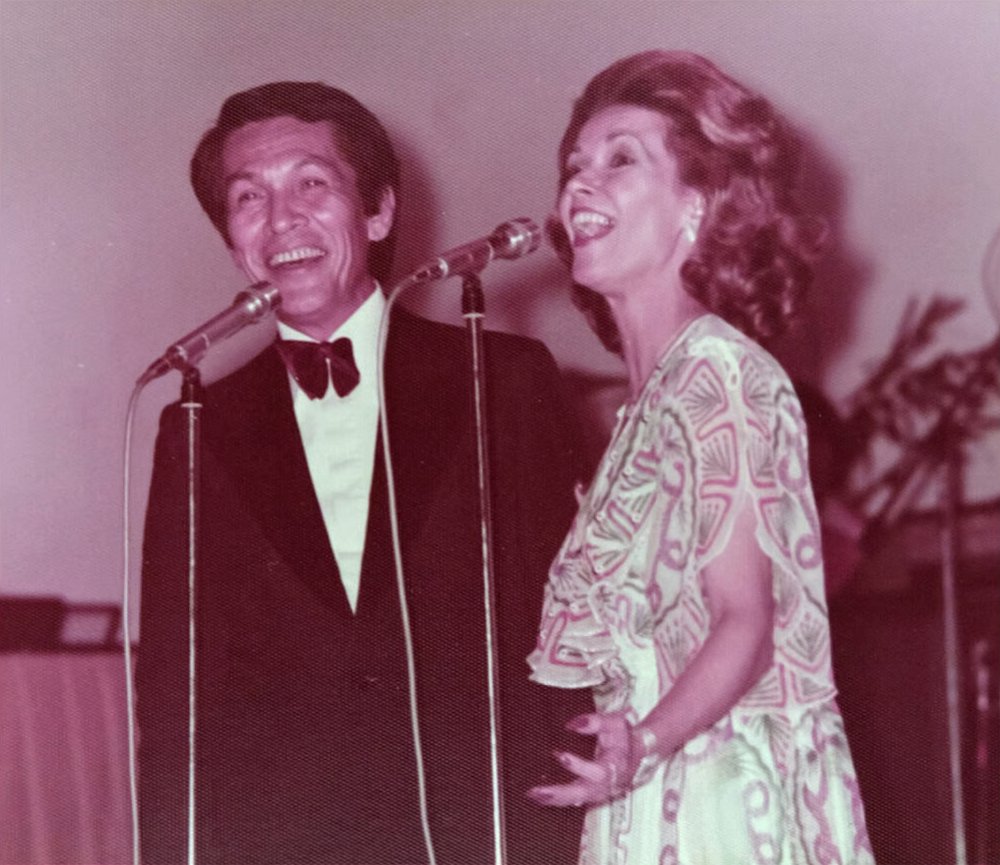
In a feature published by the Daily Tribune on 14 February 2024, the day he turned one hundred, he spoke of their first date with striking clarity.
He had been a young lawyer with limited income. They went to Swiss Inn. He ordered pork knuckles with sauerkraut.
He admitted he could no longer remember what she ordered, saying only that “she was not a very forward person. Quiet but serious in the way she handled herself from her thoughts to the way she talked.”
They talked about her college days and his time abroad. “Nothing very special,” he said.
“I never said I love you, she never said that she loved me. We just engaged each other in a conversation.”
Yet the words arrived eventually.
“I guess along the way, I finally said I love you. Almost daily after marrying her.”
He believed marriage was simple at its core: “If you like her and you want to live with her, and you think that you can live with them until death do you part, then marry her.”
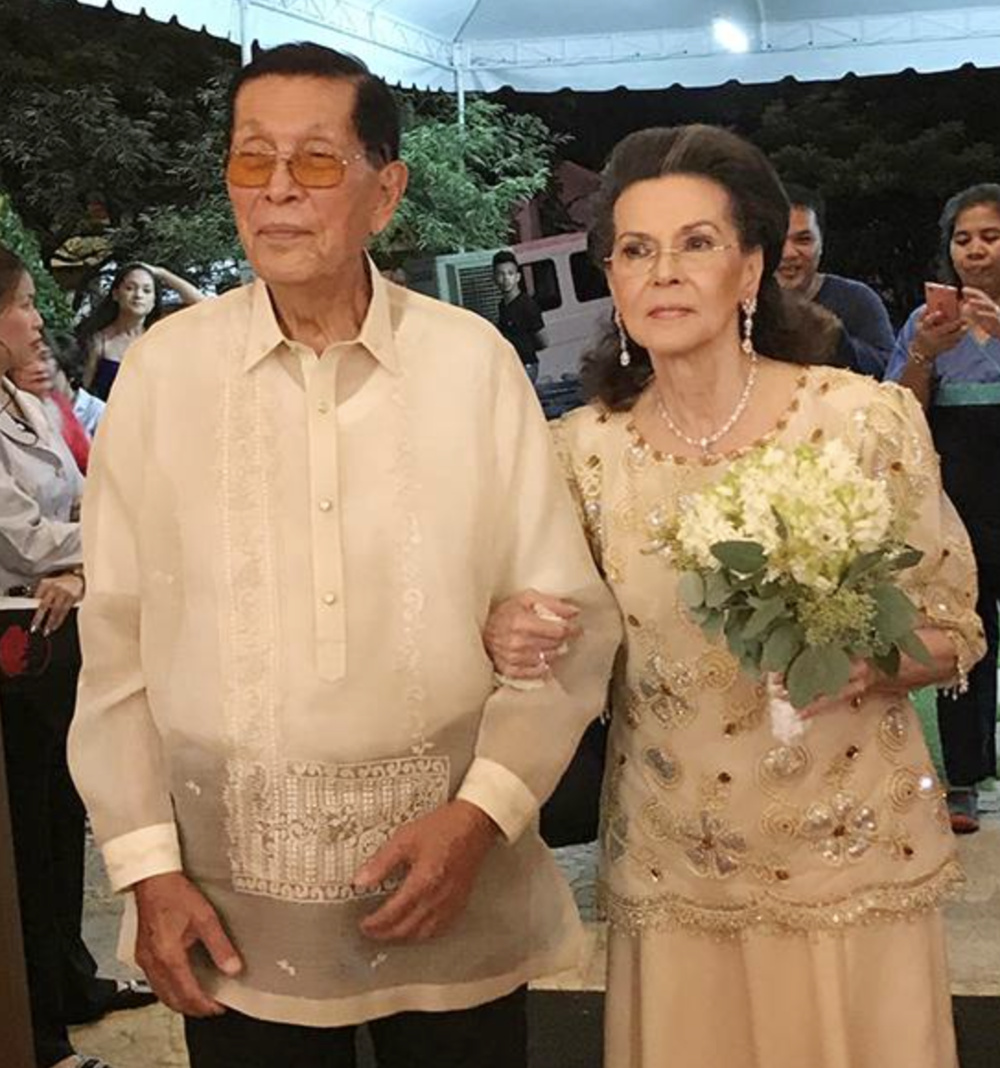
His humor surfaced in unexpected corners of that interview. When asked at what age he “lost his innocence,” he laughed and said, “That is something I cannot tell you.”
When the conversation shifted to aphrodisiacs, he dismissed the idea entirely.
“No, never. Nuoong araw, pinag-usapan iyang kantaritas sa probinsiya. E, hindi ko alam kung ano yun. Akala ko pangalan ng babae.”
He described himself as kuripot when it came to romance: “Just ordinary gifts. Bibigyan mo ng pabango, panyolito.”
Together, JPE and Cristina welcomed and raised two children: Jack and Katrina.
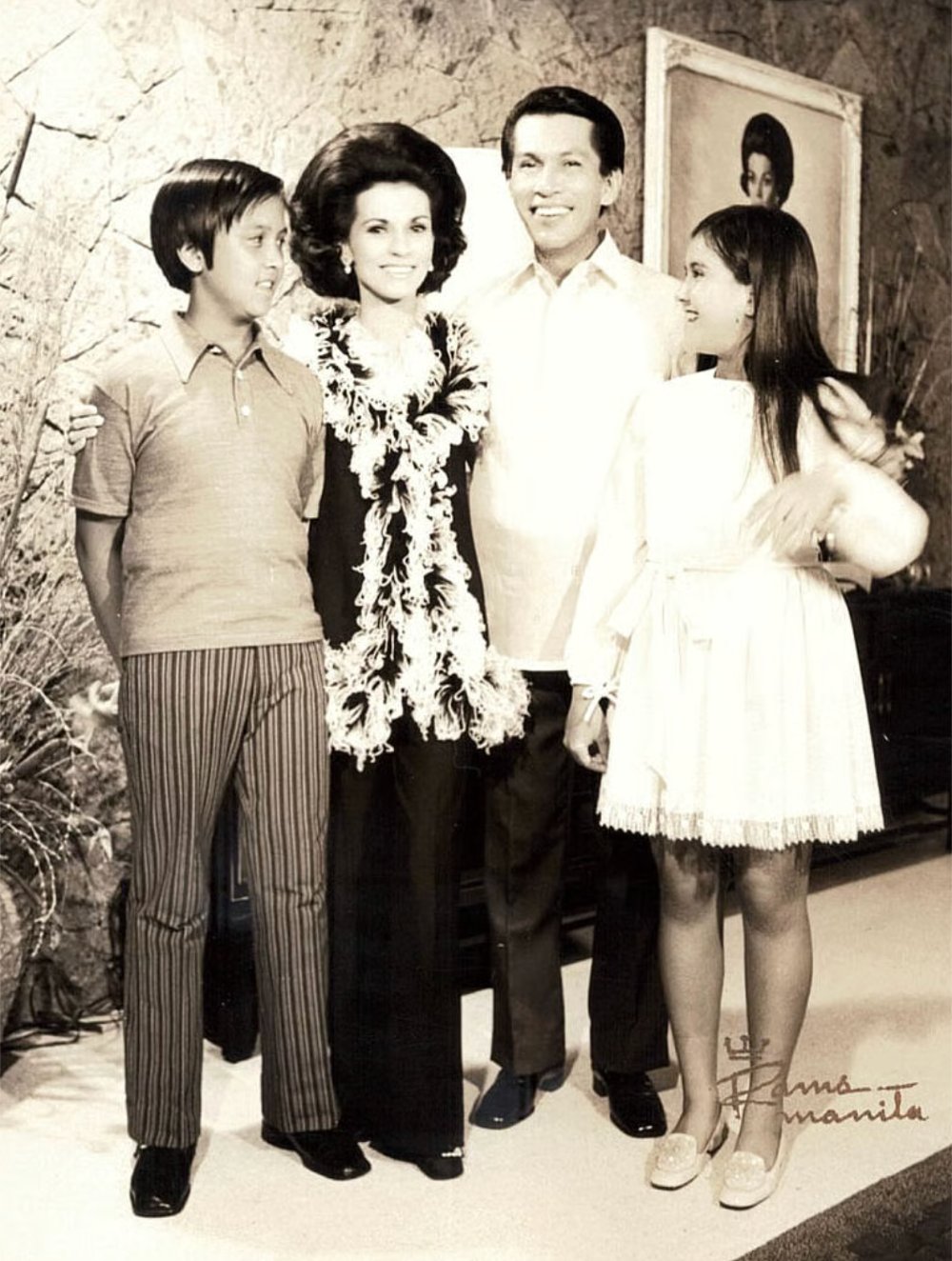
Jack served as congressman for Cagayan’s 1st District and held leadership roles in the family’s business ventures.
Katrina, meanwhile, built her own name in the corporate sphere as President and CEO of JAKA Investments—most famous for creating and expanding Delimondo, the family-owned canned-goods brand.
JPE often spoke of his children with a warmth rarely seen in his legislative demeanor.
Profiles noted how fatherhood gave him a center of gravity that contrasted sharply with the volatility of his public life.
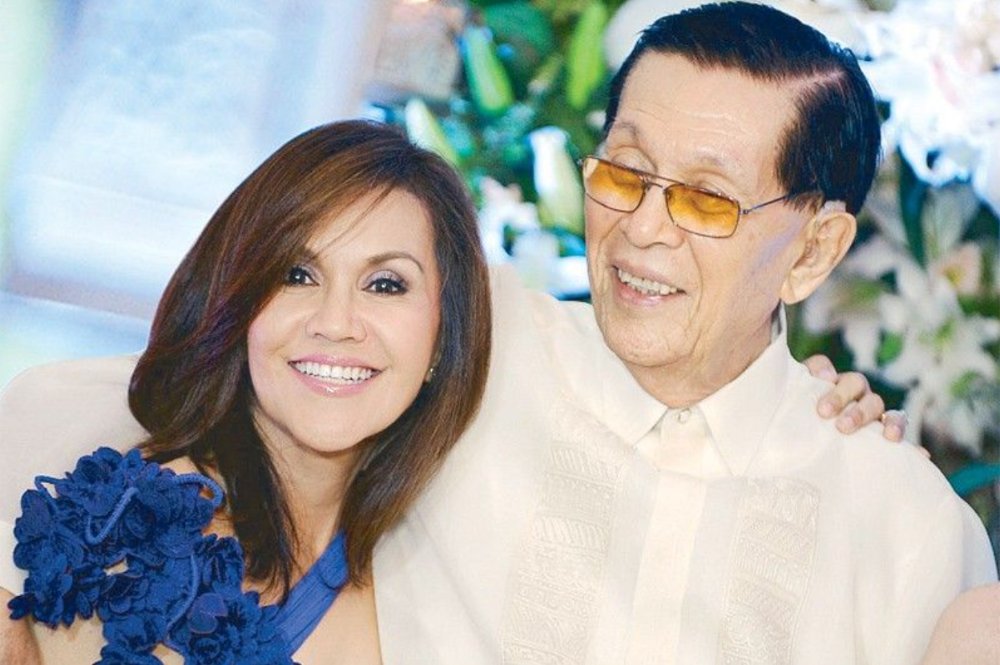
For someone born in 1924, JPE could also be unexpectedly modern.
On same-sex marriage, he said, “Why not?” He cited Yuval Noah Harari and explained gender and companionship in practical terms.
“Kung gusto nila, babae sa babae and they want to live together forever. Anong kaibahan niyan sa boy and girl? The only difference is they cannot have their own children. But they can adopt.”
He applied the same reasoning to men: “Pag lalaki, dalawang Y chromosome. Sa babae, dalawang X chromosome. If they want to live together forever, what’s wrong with that?”
Books were another refuge in his life.
In a 2012 profile, he cited authors he returned to in the late hours—Khalil Gibran, Shakespeare, Omar Khayyam, and Lloyd Douglas—revealing a preference for meditations on fate, power, and human frailty.
Reading, he once said, was a habit formed in youth, when borrowed books were among the few luxuries he could afford.
PhilStar Life in February 2024, published literary works he read during the pandemic, as mentioned by JPE himself: “Every day, I read books. I did not waste my time during COVID.
“I am currently reading James Rickards’ books, like Currency Wars: The Making of the Next Global Crisis, The Death of Money: The Coming Collapse of the International Monetary System, The Road to Ruin: The Global Elite’s Secret Plan for the Next Financial Crisis.
“I learned using the computer myself; I am self-taught. Yes, I do social media, and yes, I understand terms like LOL. Google? Why Google when I have been on this planet for 100 years!”
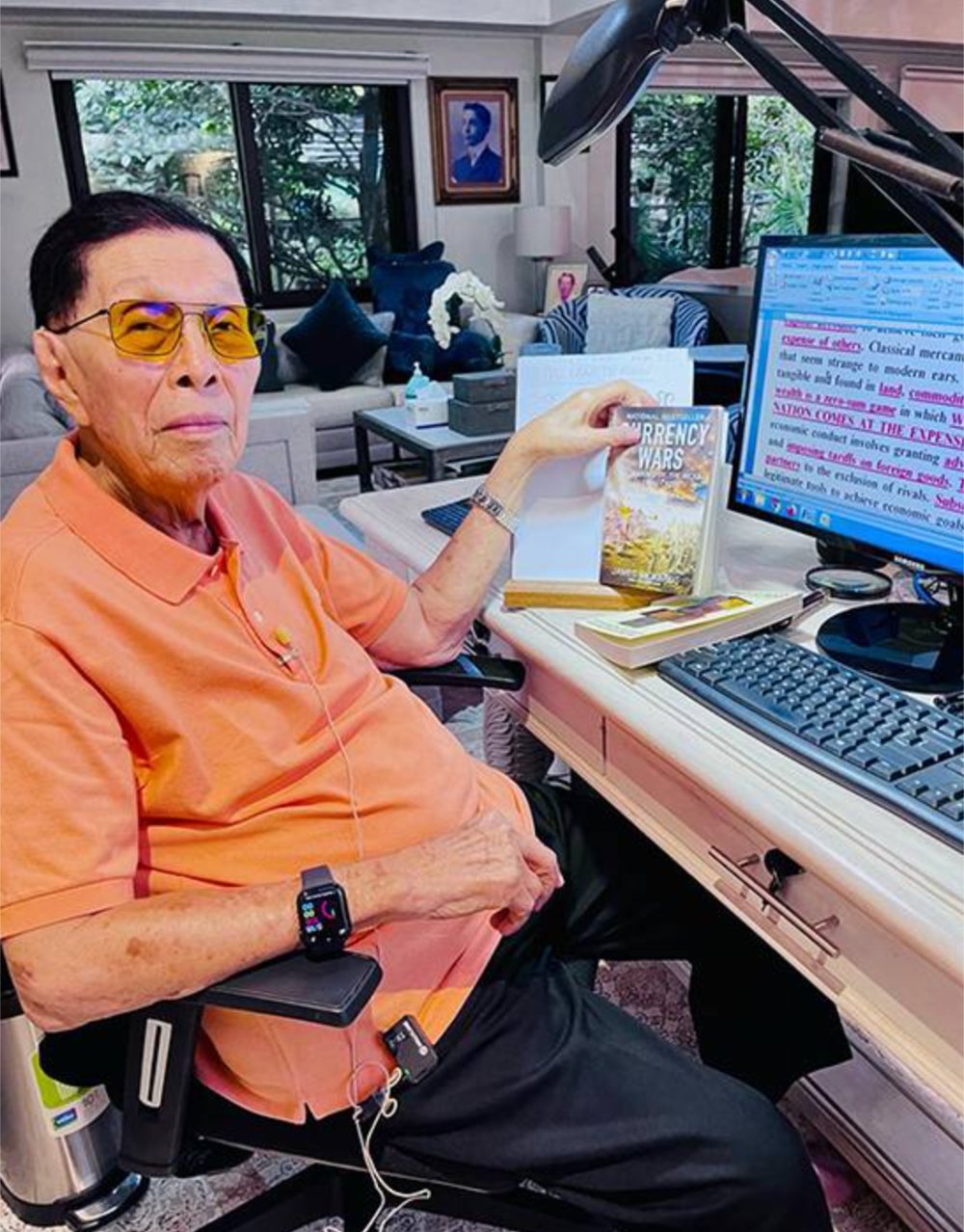
Those who worked with him across administrations described a disciplined and predictable man who was punctual, composed, fond of simple meals, and uninterested in excess.
On religion, JPE was born in the Philippine Independent Church (Aglipayan) and is widely reported to have converted to Roman Catholicism in early adulthood, at the age of 20—though he never made a big deal of it.
He kept a small circle of trusted friendships and was remembered by some early-career journalists for his patience in explaining legal or political jargon when asked.
(Sources: Daily Tribune, February 14, 2024; Philippine Daily Inquirer, July 2012; The Philippine Star lifestyle features; GMA News Online; Politiko.com.ph article on Jack and Katrina Enrile’s youth; BusinessWorld Online)
"immortality" IN POPULAR CULTURE
For younger generations, JPE was tagged and mentioned less as a statesman and more as a symbol of longevity.
His name often appeared in memes that painted him as indestructible, untouched by time, and somehow present in every chapter of Philippine history.
The humor worked because it rested on a nearly unbelievable truth. He had outlived entire political eras.
He had remained present long enough for history to circle back on itself more than once.

The online world made him a figure of fascination.
Social media users joked that he had witnessed the rise and fall of civilizations, that he had been around since the time of dinosaurs, that he had seen more than any Filipino could reasonably imagine.
GMA News once rounded up a set of memes Filipinos made at the start of the COVID-19 lockdown.
Each one used a format that made it look like JPE said the lines himself.
“Nabinigi ako sa lakas ng pagsabog. Big Bang na pala iyon.”
“Nung sinabi 'Let there be light!' Ako pa yung nagbukas ng ilaw nun.”
“Naaalala ko pa noong aking kabataan, sobrang saya ko lumalangoy sa dagat tapos biglang nahati sa gitna.”
A movie still featuring Leonardo DiCaprio and Kate Winslet even included him as one of the survivors of Titanic in 1912.
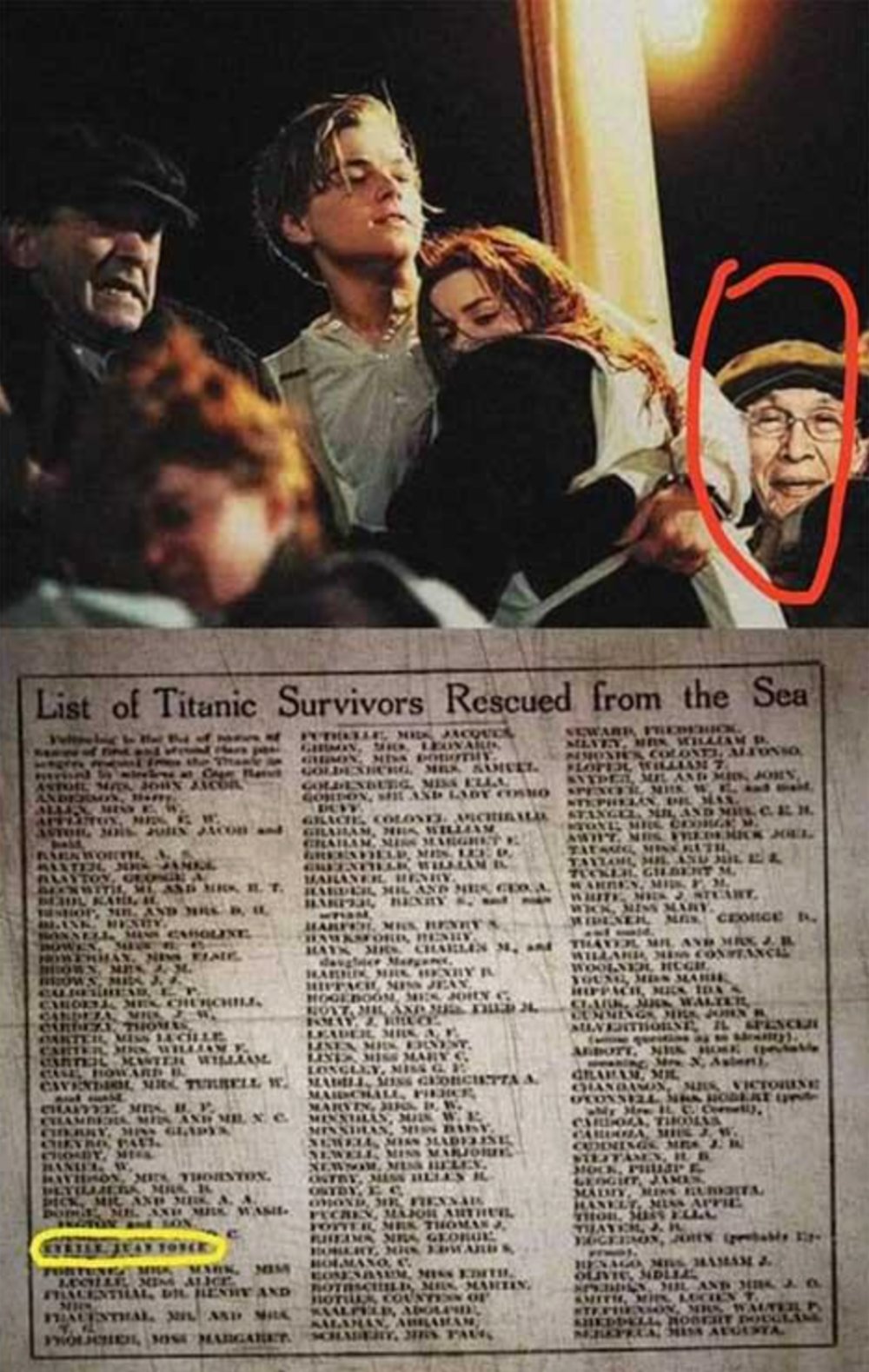
In all of these fascinations, some remain true:
That JPE outlived two of the longest-reigning monarchs of the 20th century—United Kingdom's Queen Elizabeth II and King Rama IX of Thailand; was alive in the same period where inventors of the first car (Carl Benz) and the first plane (Orville Wright) were still around; older than the creation of Mickey Mouse (1928), the first Academy Awards (1929), the Berlin Wall (1961), Wall Street Crash (1929), Spanish Civil War (1936), and World War II (1939).
The contrast between myth and man created its own kind of affection.
(Source: GMA News, Esquire Ph)
Sickness and Death
According to statements delivered in the Senate and confirmed by those close to him, JPE entered critical condition on November 11, 2025, confined in an intensive care unit as he battled pneumonia.
After a lifetime of absorbing the pressures of war, politics, controversy, and reinvention, that strength began to fade.
The body that had carried him across so many eras could no longer keep its rhythm.
On November 13, 2025, he died at the age of one hundred and one.
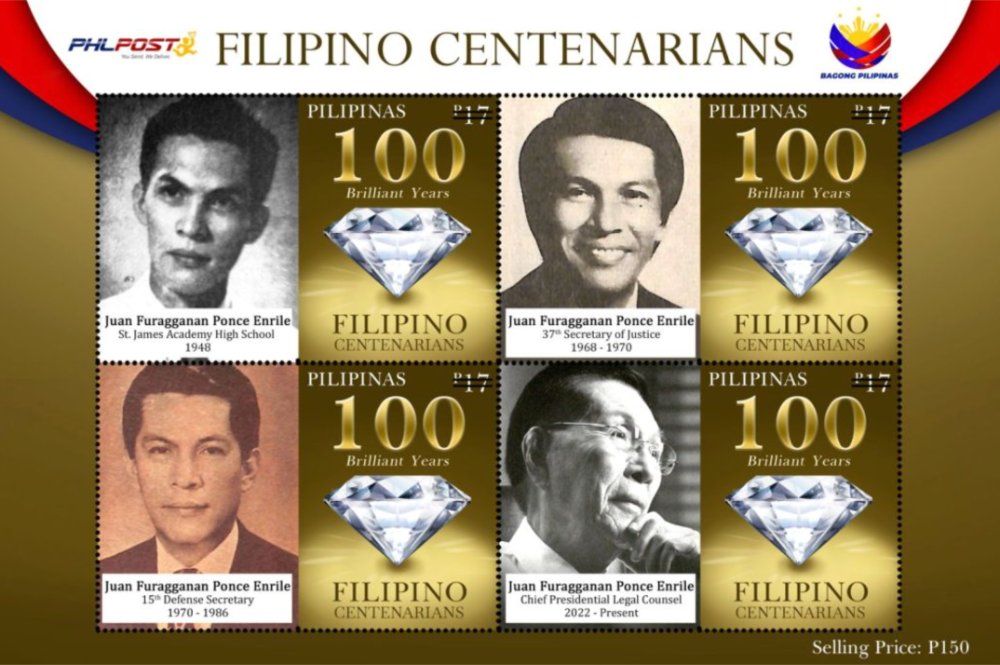
Katrina, his daughter, announced his passing in a Facebook post:
“It is with profound love and gratitude that my father, Juan Ponce Enrile, peacefully returned to his Creator on November 13, 2025, at 4:21 p.m., surrounded by our family in the comfort of our home.
“It was his heartfelt wish to take his final rest at home, with his family by his side. We were blessed to honor that wish and to be with him in those sacred final moments.”
Tributes from colleagues, protégés, critics, and ordinary citizens appeared in the hours that followed.
Century after century may pass before the Philippines sees another figure quite like Juan Ponce Enrile.
Few Filipinos lived long enough to witness so much of the nation’s transformation, and fewer still played roles in so many of its pivotal chapters.
With his lungs finally at rest, the long journey they powered comes to an end.