



In DreamWorks Animation’s Forgotten Island lies a Philippines that pulses with traditions handed down through generations.
The film’s Filipino identity is unmistakable; it would take a considerable stretch of the imagination to see it otherwise.
Directors Joel Crawford and Januel Mercado, best friends themselves, knew what they were doing when they set out to introduce Filipino culture to a global audience.
Although their primary plot device banks on friendship and memories, they leave little untouched when it comes to relatability.
Read: Now Showing: Forgotten Island, Plump Blossom, CinePanalo filmfest
You see this as soon as you take your seat in the cinema.
The conceivably Pinoy classroom set-up instantly draws you in, as Jo, voiced by H.E.R., gives a class presentation on the mythical creature known as the manananggal.
From there, the story explores Jo’s long-standing friendship with Raissa, voiced by Liza Soberano, through a nostalgic montage that brings 1990s Philippines vividly to life.
With each treasured memory finding its own place on their ever-growing charm bracelets, audiences are ushered through a sprawling walkthrough of what it means to grow up within a Filipino community.
One of the film’s early sequences offers perhaps the clearest example.
Jo arrives at a party by tricycle and walks into a scene filled with mountains of pika-pika and kakanin, karaoke that includes someone singing Frank Sinatra's “My Way” no less, and enough people to quantify the common local phrase “dala ang buong barangay.”
She encounters tinikling, lechon, and that all-too familiar Jesus poster frame hung in most local homes, before a tita directs her to Raissa using the unmistakable Filipino habit of lip-pointing or nguso.
For Pinoys, none of these details needs explaining. They’re instantly recognizable, and that’s what makes them funny.
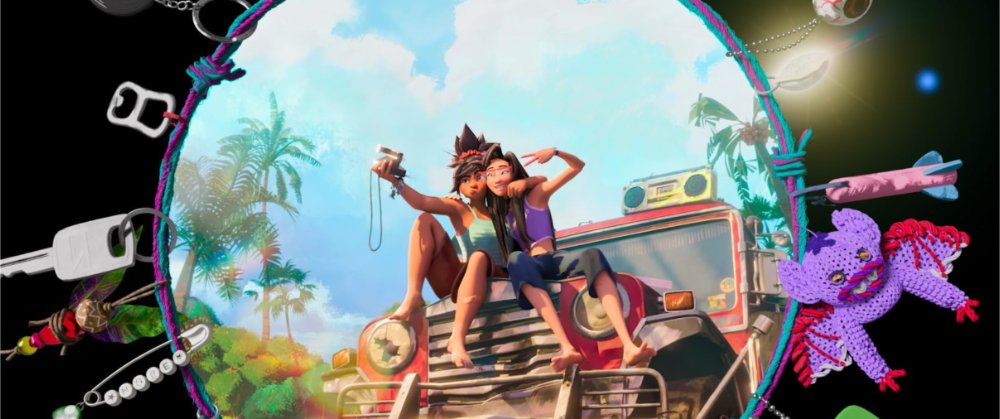
Nakali awakens a world lost to memory
If the Philippines of Jo and Raissa induces a sense of kinship, Nakali opens a window to the colorful world of Philippine mythology—something that has unfortunately become increasingly distant.
The film populates its fantastical canopy with creatures familiar to many Filipino children once encountered through bedtime stories, school lessons, family folklore, or the occasional cautionary tale from a lola.
There are manananggals, tiyanaks, kapres, duwendes, sirenas, and other creatures drawn from the rich mythology woven into Filipino culture.
For all their familiarity, these creatures are no longer as deeply embedded in everyday Filipino life as they once were.
Some of us may recognize a manananggal or a kapre immediately, while others may know them only by name.
A batibat, for instance, is not as immediately identifiable to many Filipinos today.
Rooted in Ilocano folklore, the batibat is traditionally described as a tree-dwelling spirit said to follow its tree when the wood is used to build a house.
It is said to prey on those who sleep near its post, pressing down on the sleeper's chest and inducing nightmares or the terrifying sensation of being unable to move.
Forgotten Island gives this relatively obscure figure a far more prominent role that becomes central to the film's very premise.
Batiba embodies the Memory Batibat—a fictitious interpretation of the creature who holds the key to Jo and Raissa's missing memories.
After the two friends find themselves in Nakali with no recollection of how they got there, their journey to recover those memories eventually leads them to Batiba.
However, in exchange of restoring what they have forgotten, they must each surrender memories they have of each other.
Read: Tatlong bagong urban legend sa showbiz: Totoo o fake news?
These stories have not disappeared entirely. But much like the memories at the heart of the film, they risk fading with each generation as they are passed down less and less.
Forgotten Island brings that world back into view, reminding audiences of the tales Filipinos have slowly begun to forget.
It does not treat these creatures as decorative additions to a fantasy adventure, but instead, settles them in at the heart of the story.
They were part of the chronicles through which generations of Filipinos made sense of the world around them.
Filipino mythology has always been technicolor, kooky, sometimes frightening, and often wonderfully imaginative.
A cast full of familiar voices
The film's casting endows that Filipino mythology an extra dimension.
Liza Soberano voices Raissa, the young woman preparing to leave the Philippines for the United States, while H.E.R. voices her best friend, Jo.
Dave Franco voices Raww, a lovable were-aspin who joins their adventure.
Manny Jacinto voices the tiyanak Bungi, while Jo Koy voices the kapre Datu.
Jenny Slate voices Batiba, and Ronny Chieng voices the duwende King Truffle Wuffle.
Then there is Dolly de Leon as Lola Fatima and Lea Salonga as the manananggal Manang.
The ensemble gives Nakali plenty of personality, but it also strengthens the film's connection to Filipino audiences.
Jo Koy brings his comedic sensibility to Datu, while Dave Franco gives Raww an awkward charm that suits his role as comic relief.
The Filipino performers, in particular, give the film that much-needed cultural continuity.
Their presence connects the mythology onscreen to the Filipino audiences who grew up hearing versions of these stories themselves.
It is a fitting cast for a film that spends so much of its time reminding us that some of the stories we thought we had outgrown are still worth remembering.
Read: Filipino voice cast of Forgotten Island reacts to trailer release
Liza Soberano finds something familiar in Raissa
Following her stint in Lisa Frankenstein (2024), Liza Soberano proves that her acting chops translate just as naturally to voice work.
The 28-year-old Fil-Am actress gives Raissa an assured performance, sounding entirely at home in the role.
Part of that ease comes from how closely the character's experience mirrors her own.
Raissa is preparing to leave the Philippines for the United States to study at CalTech. During their press tour, Liza has spoken about relating to that experience after making her own life in California.
She has talked about the importance of her Filipino upbringing and the stories she heard from her grandparents.
Those experiences hand her a personal connection to Raissa's fear of becoming disconnected from home.
She knows that while leaving can open the door to a new life, that distance can also change the way we relate to the people and places we came from.
The film understands that home can survive inside memory even after someone has physically left it.
We see it in the way Jo and Raissa's memories of home continue to shape their understanding of each other, even when the place they came from is no longer within reach.
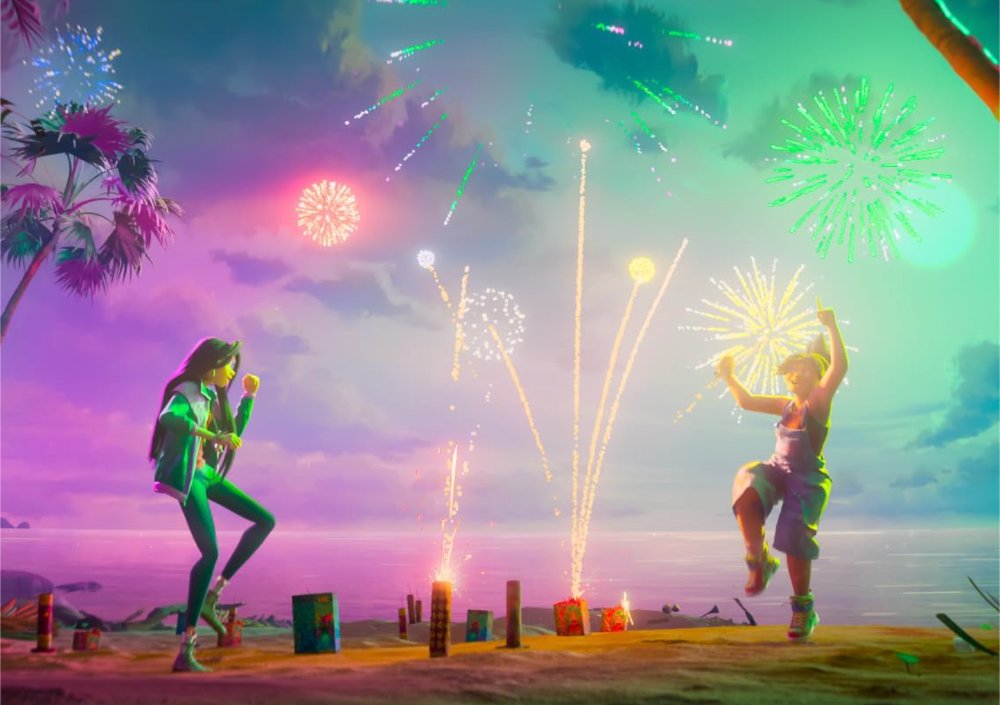
This runs through the film's depiction of the Philippines as well.
Rather than attempting to define the country through one sweeping image, Forgotten Island builds its perception of home through the details that linger in memory.
Filipino viewers may recognize their own childhood in the sound of karaoke coming from another room, in the food served at a family gathering, or in a story passed down by old relatives.
Our memories of the Philippines are personal, but they are also collective. We recognize pieces of our own lives in somebody else's memories.
As it goes, home is the accumulation of little things that become meaningful because we remember them.
Read: What you need to know about PEP Spotlight: SINE X Cinemalaya