
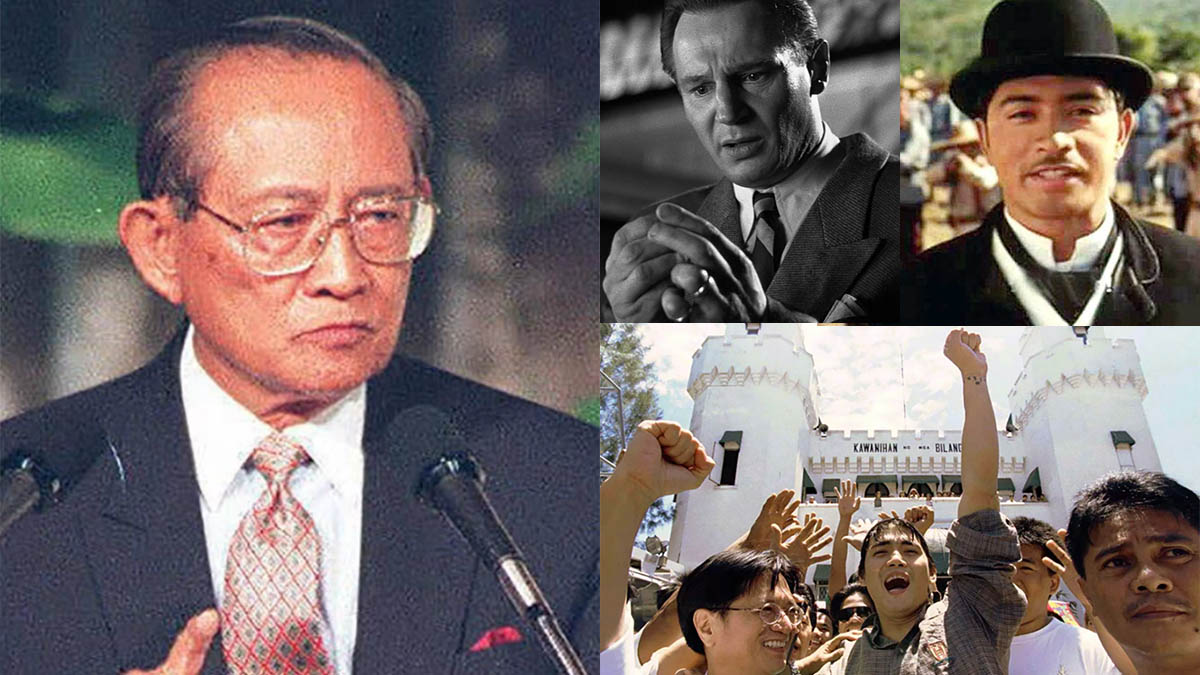

With the passing of Fidel V. Ramos at the age of 94, citizens and political analysts are now looking back at his legacy.
FVR as he was endearingly called, served as the country’s president from 1992 to 1998.
Like all presidents before and after him, the Ramos administration was far from perfect with its share of hits and misses.
Ramos symbolized stability in the post-EDSA Revolution era: solving the energy crisis, driving growth by reviving the country’s economy, strengthening bilateral ties with other nations, and brokering peace agreements with rebel groups.
On the other hand, his administration was also marred with allegations of corruption— the Clark Centennial Expo in Pampanga and PEA-Amari deal, and soliciting political contributions from outside sources.
For showbiz enthusiasts, the Ramos administration was filled with memorable moments that kept fans on the edge of their seats.
FVR's six years saw several juicy showbiz controversies that exploded into national issues and triggered senate hearings, to boot.
Who could forget the Metro Manila Film Festival (MMFF) scam and the Bruneiyuki scandal in 1994, or the Jojo Veloso controversy in 1996?
How about the senate led by Senator Vicente "Tito" Sotto conducting a probe on local bands (Eraserheads, Teeth, etc.) in 1995 for allegedly promoting drug use and other nefarious activites to the youth through their songs?
The MMFF scam, for one, hit international headlines, which irked and embarrassed the First Lady, Amelita “Ming” Ramos, as it coincided with her trip to Europe meant to boost tourism and investment in the Philippines.
Ming Ramos labeled the incident as “shameful and unfortunate.”
Here, we take a look at other significant showbiz-related events during FVR’s time, with their impact still being felt today, and probably, for many more years to come.
EXPOSED BREASTS, ADULTERY, AND CENSORSHIP
In 1994, the Movie and Television Review and Classification Board (MTRCB) found itself in the middle of high-profile controversies that gained global attention starting with the critically acclaimed film, Schindler’s List.
Set in the 1940s, the historical drama Schindler’s List follows the story of German industrialist Oskar Schindler, who saved many Polish-Jewish refugees from the Nazi’s Holocaust by employing them in his factories at the height of World War II.
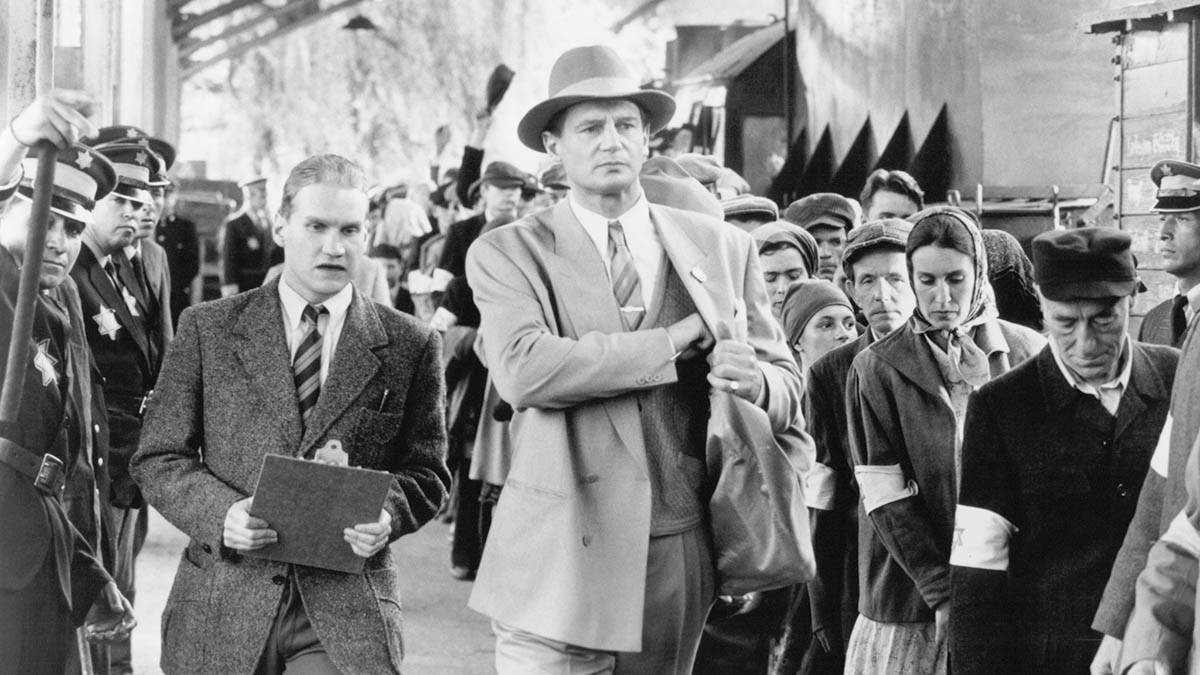
Liam Neeson is Oskar Schindler in Schindler's List
While the story was undeniably gripping, the MTRCB found some scenes—a graphic pumping sex act and shots of women’s breasts—revolting.
The MTRCB through its chairperson Henrietta Mendez branded the film “pornographic” and not fit for viewing by the local moviegoers.
MTRCB’s decision to ban the film in cinemas polarized the public.
Conservative groups applauded the move much to the dismay of liberal-minded sectors.
Lawyer and former COMELEC commissioner Haydee Yorac called the decision “idiotic,” adding that people inside the MTRCB “don’t understand art or the constitution.”
Schindler’s List director Steven Spielberg was upset that he ordered the film to be pulled out in the Philippines rather than be screened with cuts.
Said the MTRCB defiantly in a statement, defending its position, “To make an exemption and allow Schindler's List to be shown uncut would be like welcoming back porno movies.”
For Mendez, leaving the controversial scenes in the movie would “compromise the morals of Filipinos” and that Filipinos should “stand up for our values.”
The issue eventually reached the senate halls, with some lawmakers led by Raul Roco and Orly Mercado criticizing the MTRCB for its “narrow-mindedness” and calling for its abolition.
RAMOS INTERFERES
Abolishing the MTRCB was not on the president’s mind, though.
On March 4, 1994, Ramos through Executive Secretary Teofisto Guingona reversed MTRCB’s ruling and gave the film the go signal to be shown in its entirety.
In the end, Schindler’s List was given an R-15 rating instead of R-18 and was exhibited across the country on March 9, 1994.
But just as the issue surrounding Schindler’s List was simmering down came another hullabaloo.
This time, the MTRCB has its eyes on The Piano, a period drama film about a mute Scottish woman who travels to a remote part of New Zealand with her young daughter following her arranged marriage to an adventurer.
MTRCB labeled the award-winning film “pornographic” and gave it an X-rating due to its sexually explicit scenes and for supposedly endorsing adultery.

Harvey Keitel and Holly Hunter in The Piano
Adding to the drama was MTRCB’s decision to hand down its verdict a few minutes before the movie’s premiere at the Shangri-La Plaza in Mandaluyong.
Ramos once again intervened and overruled MTRCB’s ruling on the recommendation of Guingona, thus allowing The Piano to be seen in theaters.
RETHINKING MTRCB’S ROLE
Both these incidents prompted Ramos to reassess the function of the MTRCB as a regulatory board.
Formed in 1985, the MTRCB replaced the Board of Censors for Motion Pictures, which has existed since 1969.
The MTRCB’s primary role is to classify and review television shows, movies, and home videos.
It is directly under the Office of the President of the Philippines, joining other government agencies such as the Commission on Higher Education, Cultural Center of the Philippines, National Commission for Culture and Arts, Metropolitan Manila Development Authority, and National Historical Commission of the Philippines, among others.
Amid the Schindler’s List and The Piano controversies, Ramos instructed Guingona to study the possibility of limiting the MTRCB’s censoring powers and restructuring the agency.
Ramos eventually created an Appeals Committee within the MTRCB for the task of reviewing the pleas of producers and directors contesting the agency’s initial ratings and rulings.
Since its inception, the Appeals Committee has figured prominently in reversing several decisions by the agency to allow the screening of succeeding “controversial” foreign movies in the '90s such as The Bridges of Madison County, Belle Epoque, and the “feminist fairy tale” Antonia’s Line, to name a few.

Belle Epoque (1992)
Conservative groups dread that local producers would be emboldened to create more daring films disguised with socially relevant themes to gain the nod of the Appeals Committee.
It didn’t help that the early to mid-'90s saw the emergence of the so-called ST (Sex Trip) genre, which later transitioned to TF (Titillating Films) entering the 2000s.
Through it all, the MTRCB has found itself embroiled in battles, whether defending its stern position in the face of intense public pressure or reaching compromises to overturn previous decisions.
President Gloria Macapagal-Arroyo abolished the MTRCB Appeals Committee in 2004 but reinstated it in 2006 through executive order no. 572.
HOLLYWOOD RIZAL
Ramos’s last year in office coincided with the centennial anniversary of Philippine independence from Spanish rule.
Preparations to mark the occasion, however, started early on in his term and various projects were undertaken to stir nationalistic sentiments.
Executive Order No. 75 issued in 1993 saw the formation of the National Heroes Commission designed to recommend national heroes on the strength of their character and contributions to society.
Along with this role was the task of evaluating, recommending, and drafting criteria to define what makes a historical figure qualified to be recognized as a hero.
Talking about national heroes, it was during the time of Ramos when the idea of producing an international film based on the life of Philippine national hero Jose Rizal was floated around.
Renowned screenwriter and director Cirio H. Santiago, who at the time was the head of the Film Development Foundation of the Philippines, was said to be putting together a plan to make the ambitious project a reality.
Big Hollywood names were said to be appearing in the film led by Andy Garcia playing the role of Jose Rizal and Winona Ryder as Josephine Bracken.
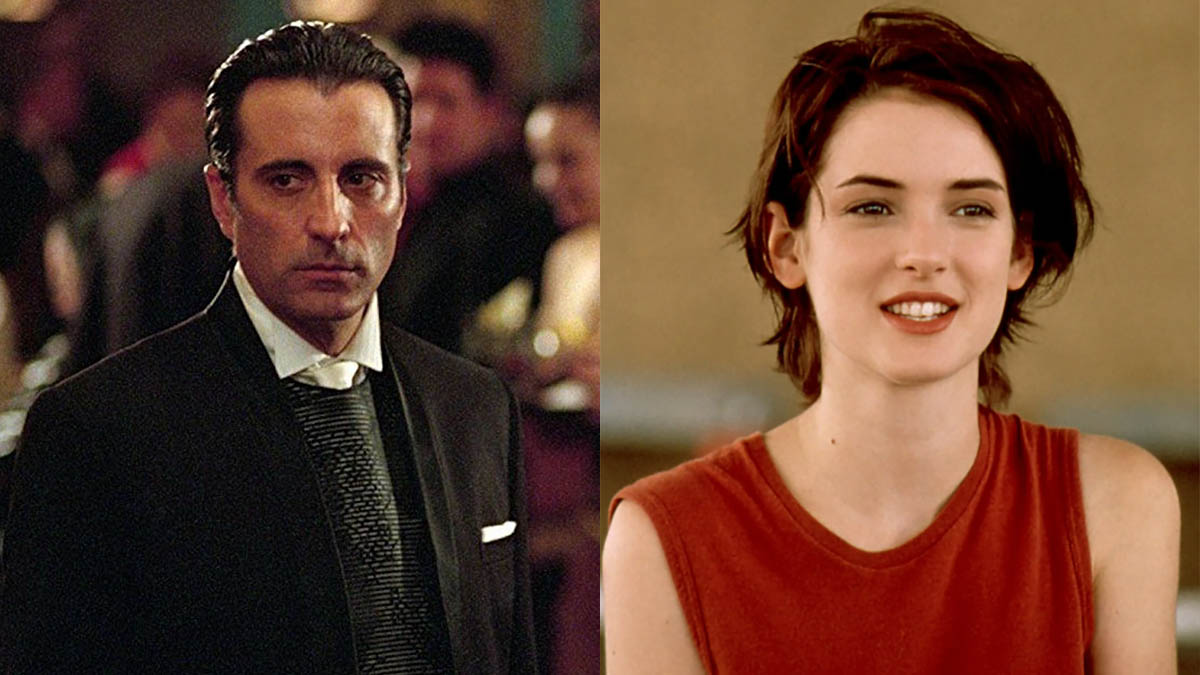
Andy Garcia and Winona Ryder
The Megastar Sharon Cuneta was reportedly being eyed to portray Leonor Rivera, Rizal’s childhood sweetheart, and the inspiration behind the character of Maria Clara in his novels Noli Me Tangere and El Filibusterismo.
American filmmaker Jonathan Demme (The Silence of the Lambs) was being considered to direct the biopic.
But the project, although approved by Ramos, fell through before it even started.
So what happened?
An article by entertainment columnist Norma Japitana on June 8, 1994, in the Manila Standard, said that foreign investors “are putting up $10,000,000 for the project, with our local investors putting up the below the line costs.”
Unfortunately, things did not go according to plan, perhaps because of the project’s magnitude both financially and logistically.
In the book Father & Son: Overlapping Ordinary Lives on the Sidelines of Extra-Ordinary Times 20th Century Philippines, author Lope Lindio recalled how financial constraints doomed the project from getting off the ground.
Wrote Lindio, “But he [Cirio Santiago] could not start the reel rolling until he hears the result of a Philippine initiative to get the governments of Spain, Germany, and Mexico to support the financing of the movie project.”
Meanwhile, GMA Films, the film production arm of GMA Network now known as GMA Pictures, was embarking on an ambitious movie project of its own based on the life of the Filipino hero.
It was said that GMA promised the National Centennial Commission that it would make a film about Rizal as its contribution to the centennial celebration.
That movie turned out to be the 1998 blockbuster (and star-studded) film José Rizal top-billed by Cesar Montano and directed by Marilou Diaz-Abaya.
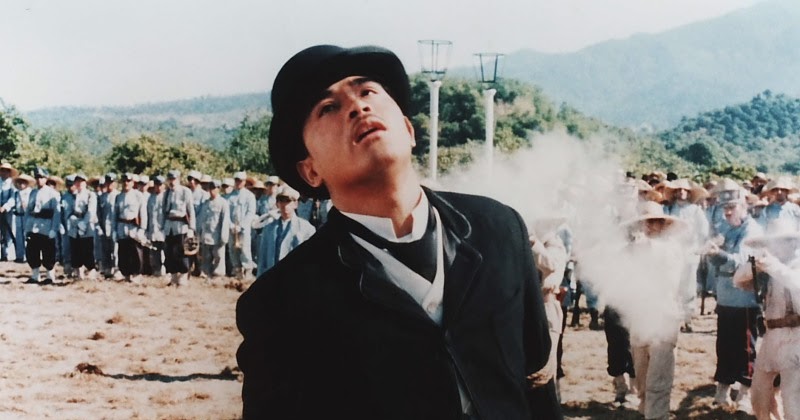
Cesar Montano in José Rizal
José Rizal to this day remains the definitive movie about Rizal's life based on historical literature.
It wasn’t the only Jose Rizal movie exhibited during the Ramos administration.
Jose Rizal: Ang Buhay ng Isang Bayani directed by Butch Nolasco and starring Pen Medina was shown in 1996.
There was also Tikoy Aguiluz’s Rizal sa Dapitan in 1997 starring Albert Martinez and Amanda Page, which was met with positive reviews by viewers and critics.
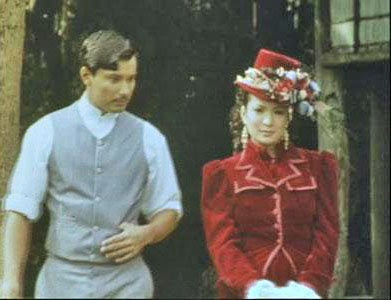
Albert Martinez and Amanda Page in Rizal Sa Dapitan
ROBIN PADILLA WALKS OUT OF PRISON
Actor Robin Padilla’s reign as an action superstar was cut short after he was convicted for illegal possession of firearms in 1994.
He was sentenced to a maximum of eight years in prison at the New Bilibid Prison in Muntinlupa by the Angeles City regional trial court.
Fortunately for Robin, he was granted a conditional pardon on parole by Ramos in 1998.
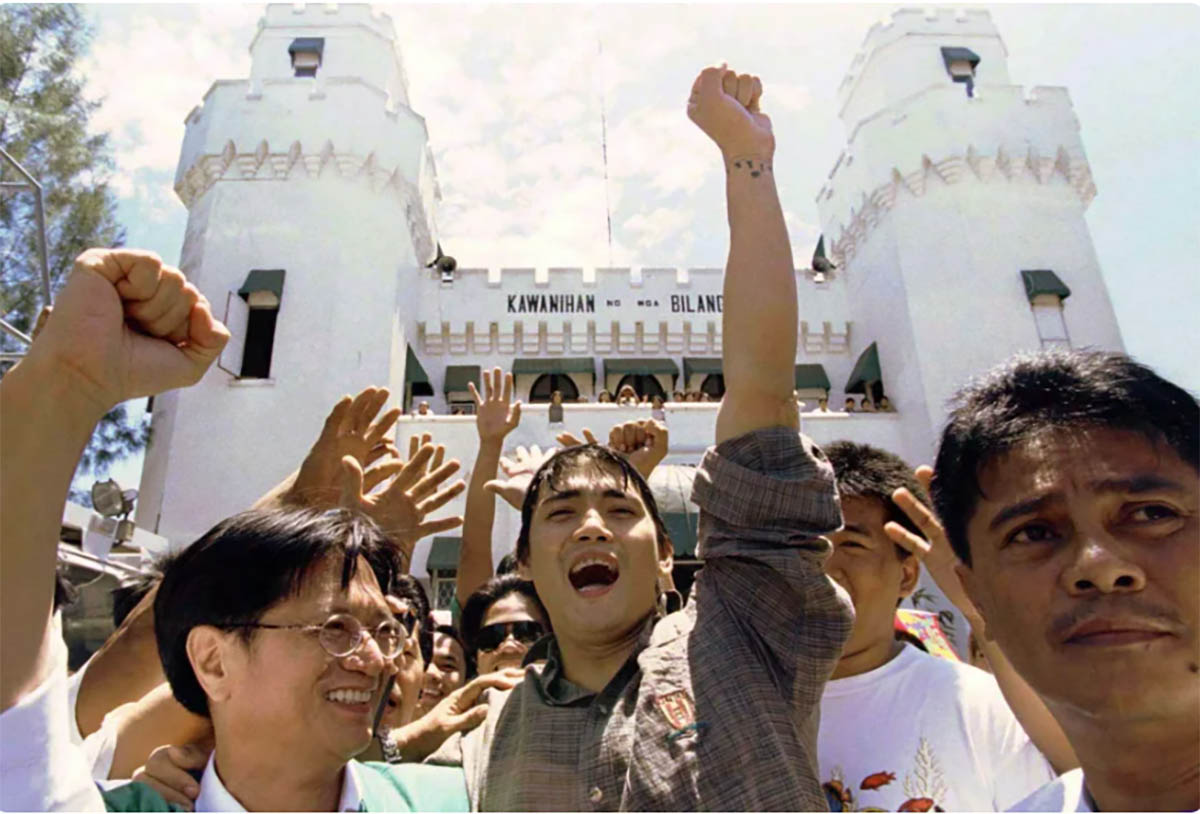
Speculations were rife that his release was brokered by then LAKAS- NUCD standard bearer and Ramos party mate, Jose de Venecia.
With him out of prison, Robin, said the rumors, was now free to help in de Venecia’s presidential bid, something that the actor himself denied vehemently.
As it turned out, de Venecia lost in the 1998 election to Joseph “Erap” Estrada, who served as Ramos’s vice-president and anti-crime crusader during his presidency.
Robin was given an absolute pardon in 2016 by President Rodrigo Duterte.
This means that Robin, dubbed as the “Bad Boy” of Philippine cinema, has regained his civil and political rights such as the right to vote and run for public office.
Robin did just that and even topped the senatorial race in the recent 2022 elections, garnering a staggering 27 million votes on his way to the Senate.
It can be said that Ramos paved the way for Robin's showbiz comeback and, years later, for hisforay into the world of politics.
The neophyte senator said in a statement following the death of the former president, “Sa pamumuno ni FVR, naibsan ang problema natin sa mga brownout, at pinaigting ang ating pagsisikap para magkaroon ng kapayapaan lalo na sa Mindanao.
“Maraming salamat, Boss FVR!”